Robert Ballard used a secret military mission to find the world's most famous shipwreck.
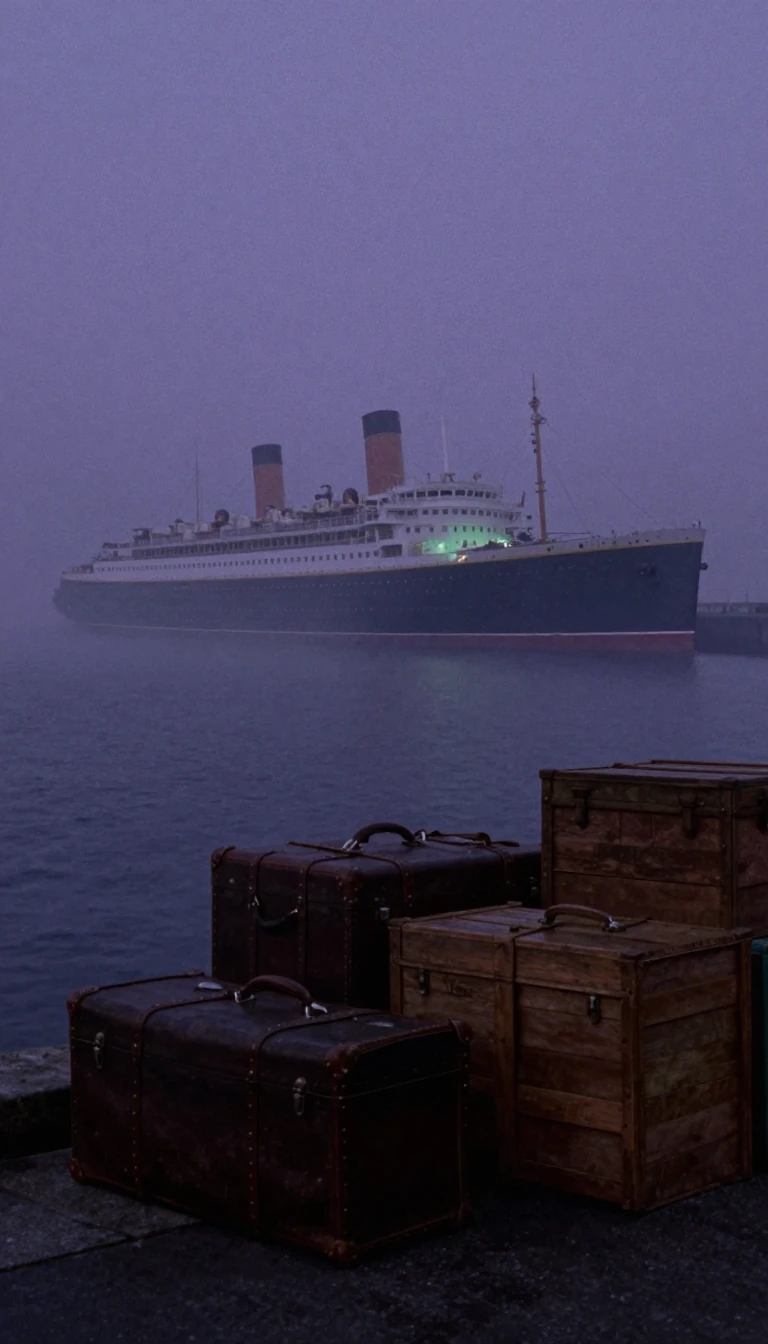
In short: While the public knows Robert Ballard for discovering the Titanic, the expedition was actually a covert U.S. Navy operation. Tasked with locating two sunken nuclear submarines, Ballard leveraged the Navy's advanced robotics to hunt for the ocean liner only after his primary military objectives were successfully completed.
In 1985, Ballard sought funding for his deep-sea robot, Argo, to search for the Titanic. The U.S. Navy agreed to finance the expedition, but with a strict condition: Ballard had to first locate the USS Scorpion and the USS Thresher. These nuclear-powered attack submarines had vanished in the 1960s, and the Navy needed to assess the state of their reactors and determine if they posed any radioactive environmental threats. The search for the Titanic served as a convenient cover story to prevent foreign powers from learning of the reconnaissance effort.
Ballard discovered that both submarines had imploded under immense pressure, leaving behind a vast trail of debris. By analyzing this wreckage, he realized the Titanic would have left a similar signature on the ocean floor. Applying this insight, his team swept the seabed until they identified pockmarks and eventually the ship's hull. Ballard later noted that while the Titanic brought him fame, his discovery of hydrothermal vents—ecosystems independent of the Sun—was a far more significant scientific achievement.
Beyond the Titanic, Ballard’s career has been defined by a blend of military precision and archaeological curiosity. He investigated the sinking of the Lusitania, where he found no evidence of a boiler explosion, instead speculating that coal dust ignition caused a massive secondary blast. His work also extended to the Black Sea, where he tested the hypothesis that anoxic, oxygen-deprived waters could preserve ancient wooden vessels. By identifying submerged shorelines and wrecks dating back to the Roman and Byzantine periods, Ballard demonstrated that the deep ocean acts as a unique, long-term archive of human history.
Opens the Intellect+ feed with this card first. Swipe up for the next one.
Sources
- Summary by Intellect · source: Robert Ballard
To cite this card, link to https://intellectplus.co.uk/app/science-robert-ballard.
How we source, check and correct cards: Editorial standards.
General information, not professional advice. Spotted an error? Flag the card or see corrections and complaints.
Intellect Plus is a visual educational discovery platform for exploring fascinating facts and ideas. Brain Food, Not Brain Rot. What is Intellect Plus?
Related
More in UK & Ireland: science · More in Science · Latest · A–Z · All topics
