How light bounces off free electrons to reveal the secrets of the sun
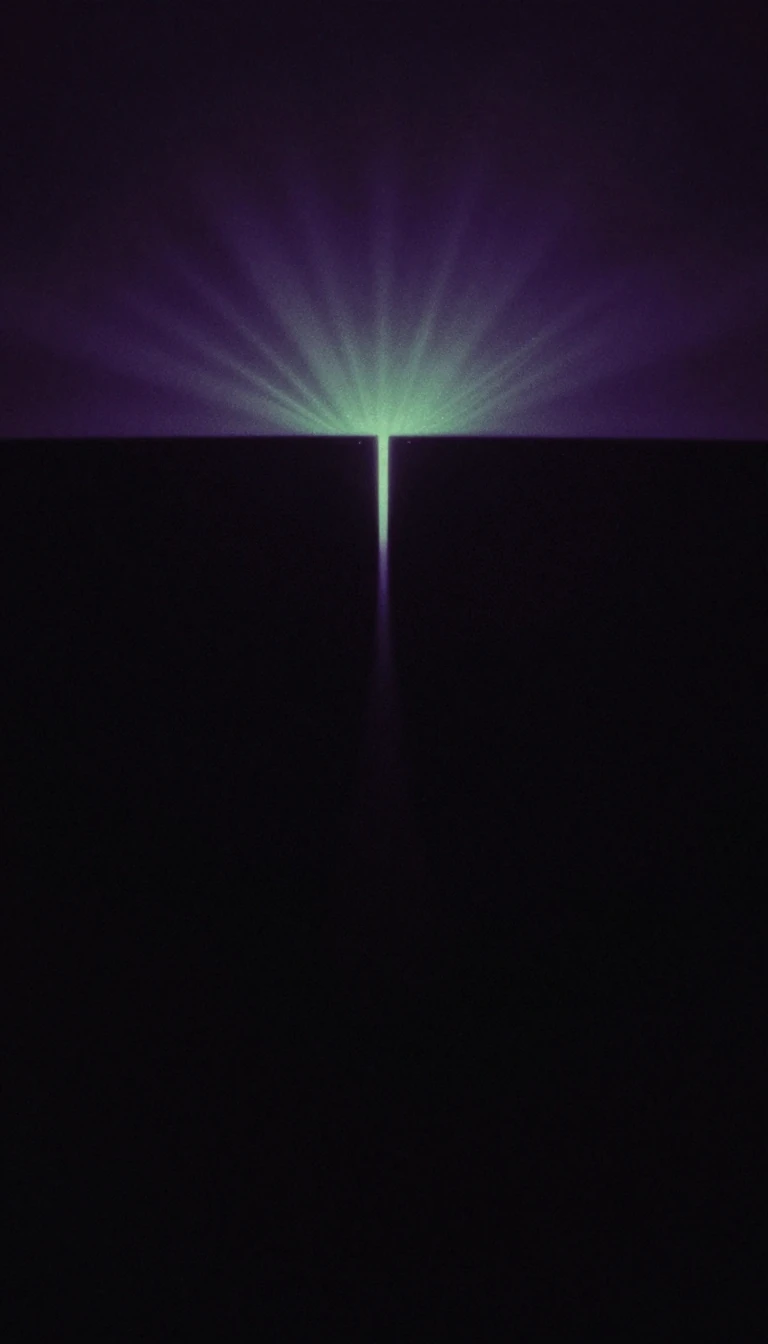
In short: Thomson scattering explains how electromagnetic radiation interacts with free charged particles. When light hits an electron, it triggers a dance that re-emits the energy without changing its frequency. This fundamental process serves as a vital diagnostic tool, allowing scientists to map solar coronas and measure the extreme conditions inside fusion reactors.
First described by J. J. Thomson, this phenomenon occurs when an incoming electromagnetic wave accelerates a free charged particle. Because the particle is not bound, it oscillates in response to the electric field of the light, effectively becoming a tiny antenna that radiates energy in a new direction. This interaction is strictly elastic, meaning the photon's frequency and the particle's kinetic energy remain unchanged. It is the classical limit of scattering, valid only when the energy of the photon is significantly lower than the mass energy of the particle, or when the light's wavelength is much longer than the particle's Compton wavelength.
The geometry of this scattering is highly revealing. The intensity of the light scattered depends on the angle between the incident and outgoing waves, specifically following a cosine-squared relationship for radially polarized components. Because the particle radiates most strongly perpendicular to its acceleration, the light scattered from a small volume can appear polarized. This property allows researchers to use Thomson scattering as a precise probe. By firing high-intensity lasers into plasma, such as in the Wendelstein 7-X stellarator, physicists can measure electron temperatures and densities with remarkable accuracy.
Beyond the laboratory, Thomson scattering is essential for understanding the cosmos. The solar K-corona, for instance, is formed by light scattering off electrons surrounding the Sun, a phenomenon captured in three-dimensional detail by the SOHO and STEREO missions. Even the cosmic microwave background carries a faint signature of this process, with E-mode polarization first detected by the DASI experiment in 2002. Whether in X-ray crystallography or the study of the Sunyaev–Zeldovich effect, this mechanism remains a cornerstone of modern physics, providing a reliable way to observe matter that would otherwise remain hidden.
Opens the Intellect+ feed with this card first. Swipe up for the next one.
Sources
- Summary by Intellect · source: Thomson scattering
- Also: ocw.mit.edu — Lecture 20: Thomson Scattering: Basics | Principles of Plasma Diagnostics | Nuclear Science and Engineering | MIT OpenCourseWare
To cite this card, link to https://intellectplus.co.uk/app/science-thomson-scattering.
How we source, check and correct cards: Editorial standards.
General information, not professional advice. Spotted an error? Flag the card or see corrections and complaints.
Intellect Plus is a visual educational discovery platform for exploring fascinating facts and ideas. Brain Food, Not Brain Rot. What is Intellect Plus?
Related
More in Particle physics · More in Science · Latest · A–Z · All topics
