Thunderstorms begin with warm, moist air rushing rapidly upward
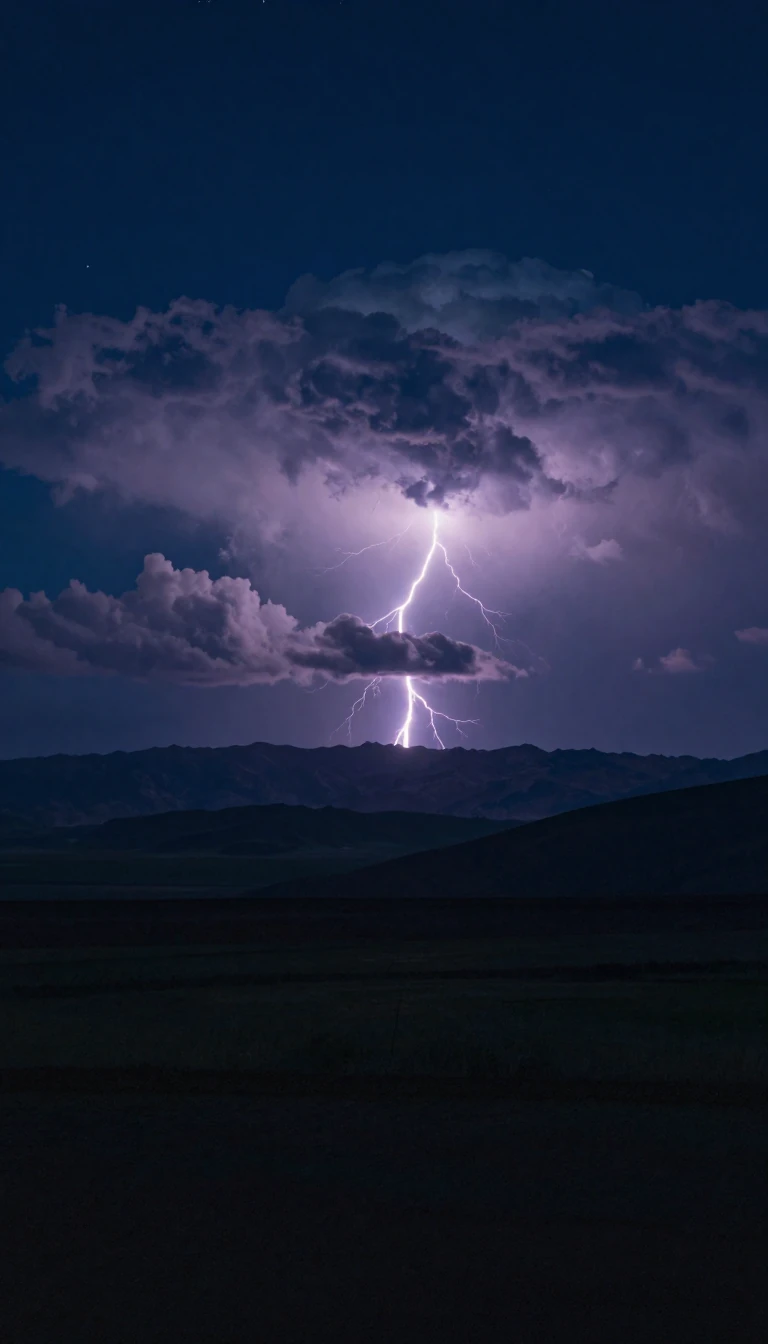
In short: A thunderstorm starts when warm, moist air is pushed rapidly upward. As it rises it cools, its water vapour condenses, and it can build a cumulonimbus cloud over twenty kilometres tall. The energy released in this process drives the storm, along with the lightning and thunder that come with it.
Thunderstorms form in cumulonimbus clouds, and they need three things: moisture, an unstable air mass, and a lifting force. Warm air is less dense than cool air, so it rises while cooler air settles beneath it. When warm, moist air climbs, it cools, and some of its water vapour condenses into droplets or ice. That condensation releases latent heat, which keeps the rising air warmer than its surroundings, so it keeps climbing and the cloud keeps growing.
The mature life of a storm is driven by falling precipitation. Droplets collide, grow larger and fall through the cloud, dragging cold air downward. That cold air spreads out at the surface and can produce the strong winds commonly linked with thunderstorms. Most storms form in mid-latitudes, where warm, moist tropical air meets cooler polar air. Each stage of an average storm, from development to dissipation, takes about thirty minutes, and an average storm is about 24 kilometres across.
Lightning is an electrostatic discharge between charged regions, and it releases a surprising amount of energy, typically between 200 megajoules and 7 gigajoules. The air around a flash can heat to about 30,000 °C, and the rapid expansion of that heated air produces thunder. Most cloud-to-ground lightning is negative, but positive lightning is less common, making up less than 5% of strikes, and it tends to be more intense.
Storms can be single-cell, multi-cell or supercell, with supercells the strongest and most severe. Their updrafts can carry hailstones aloft, and a strong updraft can also signal the risk of a tornado. Understanding these conditions helps forecasters and pilots decide when to take cover or stay away.
Opens the Intellect+ feed with this card first. Swipe up for the next one.
Sources
- Summary by Intellect · source: Cumulonimbus and aviation - Wikipedia
- Also: Lightning
- Also: Thunderstorm
To cite this card, link to https://intellectplus.co.uk/app/science-why-do-thunderstorms-happen.
How we source, check and correct cards: Editorial standards.
General information, not professional advice. Spotted an error? Flag the card or see corrections and complaints.
Intellect Plus is a visual educational discovery platform for exploring fascinating facts and ideas. Brain Food, Not Brain Rot. What is Intellect Plus?
Related
More in Researched · More in Science · Latest · A–Z · All topics
