 Intellect Plus
Researched
63 cards. Each one is a 40-second story with a five-minute read behind it.
 Salt melts ice by lowering the freezing point of the water on itSalt does not melt ice by heating it. Dissolved into the thin film of water on ice, salt forms a brine whose freezing point is lower than that of pure water, so it stays liquid in…
 Some metals fizz in water, others sit quietly, and the gap is dramaticDrop sodium or potassium into water and it can ignite. Lithium reacts steadily, but the heavier alkali metals react far more violently. Chemists explain the blast as two stages: t…
 Sea water is salty because rain dissolves rock salts that rivers carry to the sea.Rain slowly dissolves tiny amounts of salt from rocks, and rivers carry that salt to the ocean. Rivers deliver roughly 4 billion tonnes each year. Water leaves the sea through eva…
 Hailstones grow in layers as they are tossed up and down inside storm cloudsA hailstone is built like an onion, with alternating layers of clear and cloudy ice. It forms inside a thunderstorm, where strong updrafts carry it up and down through the cloud, …
 Venus is hotter than Mercury despite orbiting almost twice as far from the SunMercury is closer to the Sun, yet Venus has the hotter surface. The reason is Venus's extremely thick atmosphere, which traps heat through the greenhouse effect. Surface temperatu…
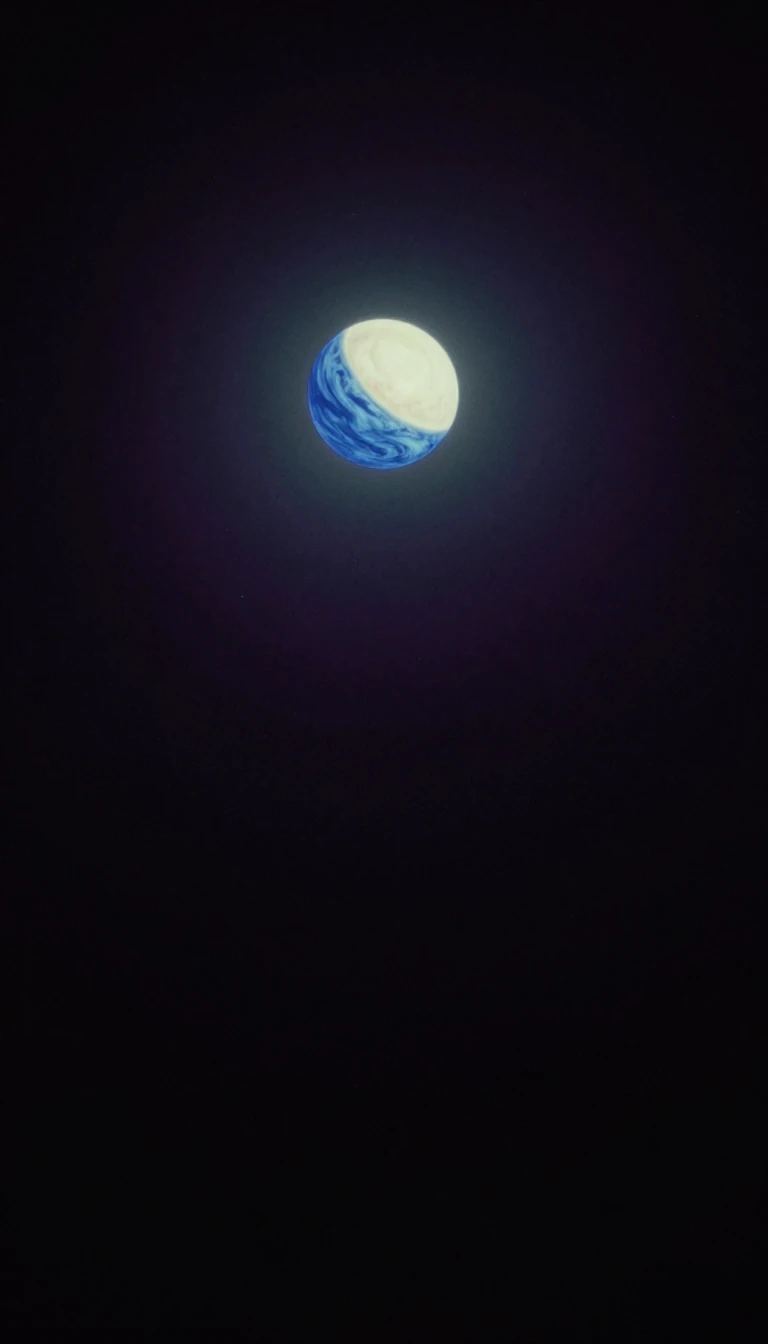 Earth's seasons come from its tilt, not its distance from the SunMany people assume seasons happen because Earth swings closer to and farther from the Sun. The real driver is the planet's axial tilt of about 23.4 degrees. Earth actually sits cl…
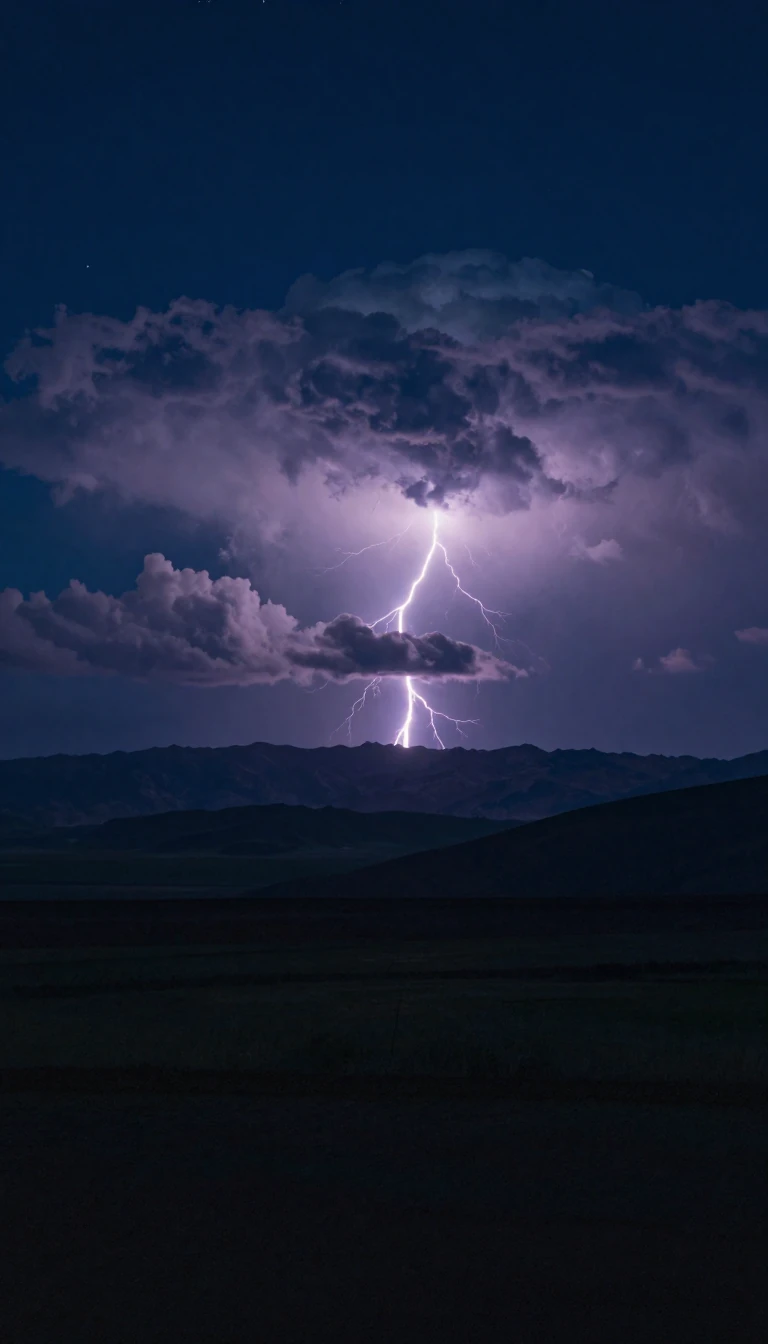 Thunder is the shockwave of a lightning bolt, not the sound of clouds collidingA lightning bolt superheats its channel to tens of thousands of degrees in a fraction of a second. The violent expansion of that air is what you hear as thunder. Earlier generatio…
 Leaves are green because chlorophyll, not because green is specialMost leaves are green because they are packed with chlorophyll, a pigment that captures sunlight to power photosynthesis. Chlorophyll reflects green light, so that is the color ou…
 Why onions make you cry: a chemical reaction in your own eyesSlicing an onion releases a sulfur compound that, once it meets moisture, turns into an irritant acid. Your eyes respond the only way they can: by producing tears to flush it out.…
 Sunsets look red because low sunlight crosses more air and more particlesSunsets look red partly because low sunlight must cross a thicker slice of air. Smoke particles, far larger than air molecules, scatter the longer red and orange wavelengths espec…
 Most volcanic eruptions on Earth happen hidden beneath the seaMost of Earth's tectonic plate boundaries lie under the ocean, so most volcanic activity happens on the seafloor. Underwater eruptions behave differently, since seawater cools lav…
 Water's tiny electric imbalance makes it the universal solvent that life depends onA water molecule has a slightly negative oxygen end and slightly positive hydrogen ends. This small electrical lopsidedness lets water dissolve salts and sugars, fold proteins, ho…
 Earth's magnetic field is a giant magnet that has flipped many timesEarth behaves like a giant bar magnet, generated by moving molten iron and nickel in its outer core. That field shields the planet from solar wind, guides navigators and even reco…
 Hurricanes are among the strongest storms Earth can produce, with some rivaling the mightiestA Category 5 Atlantic hurricane packs one-minute sustained winds of at least 137 knots, roughly 254 km/h. Only a handful reached that level before satellites arrived, and each one…
 Why does the ground under New York sometimes shake, when it so rarely does?Most earthquakes cluster where tectonic plates meet, yet the eastern United States sits far from any such boundary. Ancient faults still slip there, and the hard rock carries seis…
- Thunderstorms begin with warm, moist air rushing rapidly upwardA thunderstorm starts when warm, moist air is pushed rapidly upward. As it rises it cools, its water vapour condenses, and it can build a cumulonimbus cloud over twenty kilometres…
 Earthquakes start with stress in rock, and predicting them remains very hardEarthquakes happen when stress in rock builds up and then gives way. Scientists have struggled for decades to forecast them, and some now hope machine learning can help. Even so, …
 Birds are living dinosaurs, and the evidence for this is strongBirds are not just related to dinosaurs. They are dinosaurs, the only lineage that survived the mass extinction 66 million years ago. Fossils of feathered dinosaurs, and shared sk…
 Metals can be hammered flat because their atoms slide without snapping apartStrike a metal and it flattens rather than shattering. The explanation lies in loose electrons that hold atoms together as they shift position. Gold can be pounded into leaves so …
- Why do chemists drop small chips into liquids before boiling them?Heat a liquid smoothly and it can suddenly erupt. Tiny porous chips give bubbles a place to form, so the liquid boils calmly. Chemists rely on this simple trick during distillatio…
 Most lightning never reaches the ground, and scientists still study how it formsMost lightning never touches the ground. Cloud-to-ground strikes are the best-studied kind, yet flashes that stay inside clouds or leap between them are more common and far harder…
 Climate change: how emissions targets are measured and trackedScientists and governments track climate change with carefully defined numbers. Turkey's emissions, a legally binding treaty and a 1.5 degree goal all depend on how precisely each…
 Metals conduct electricity because their outer electrons are free to roamCopper wire carries power into homes because its outer electrons are not held to any single atom. They form a shared sea that drifts toward the positive end the moment a voltage i…
 Fireflies glow through a chemical reaction that produces cold lightA firefly's glow is a chemical reaction inside its abdomen. Luciferin, luciferase, oxygen and ATP meet in special light organs, giving off light with almost no heat. Fireflies pro…
- Water dissolves so much because its molecules are strongly polarWater is often called the universal solvent. Its molecules are bent, with the oxygen end slightly negative and the hydrogen ends slightly positive. That polarity lets water pull a…
 Thunderstorms form when warm, moist air rises and becomes unstableA thunderstorm is the atmosphere releasing energy stored in warm, humid air. When that air rises quickly and the surrounding air is unstable, moisture condenses into towering clou…
 The sky is blue because air scatters short blue wavelengths more than redSunlight contains every visible colour, yet the daytime sky looks blue. The reason is that tiny gas molecules in the air scatter short blue wavelengths far more strongly than long…
- Water evaporates because some surface molecules gain enough energy to escape into the airWater does not need to boil to disappear. At any temperature, fast-moving molecules at the surface can break free and drift into the air. Each water molecule is held to its neighb…
 Most volcanoes sit far from plate edges, and Hawaii shows whyMost volcanoes form where tectonic plates meet, but the Hawaiian islands sit more than 3,200 kilometers from the nearest plate boundary. Their volcanic chain stretches about 6,200…
 Sound is a push-and-pull through the air, not an up-and-down waveWhen you hear a clock, its energy reaches your ear by squeezing and stretching the air in its path. Unlike ocean waves, which move water up and down, sound compresses and spreads …
- Thunder is the shock wave from air heated by a lightning boltA lightning bolt can heat the air in its path to around 20,000 kelvin, hotter than the surface of the Sun. That sudden heating pushes the air outward faster than sound, forming a …
- Static electricity starts when two surfaces touch, slide and then separateStatic electricity is not made from nothing. When two materials contact or rub and then pull apart, electrons can move from one to the other, leaving one surface positive and the …
- Why the daytime sky looks blue: air scatters blue light most stronglyThe daytime sky looks blue because air molecules scatter short wavelengths of sunlight far more than long ones. This effect, known as Rayleigh scattering, was explained by Lord Ra…
- Satellites stay up by falling around the Earth, not by floating above itA satellite in orbit is not hovering. It is constantly falling toward Earth while moving sideways so fast that the ground keeps curving away beneath it. Altitude, speed and the pu…
- Thunderstorms are powered by warm, moist air rising fast and then cooling into towering cloudsA thunderstorm starts when warm, moist air is pushed upward rapidly, often along a front. As it climbs it cools, its water vapour condenses, and it builds a cumulonimbus cloud tha…
- Water boils at 100 °C only under standard sea-level pressureWater boils at 100 °C only at sea-level pressure. On a mountain, the boiling point drops, and on Everest it falls to about 71 °C. Boiling depends on pressure, not just heat, and i…
 Glaciers move in two ways, and the debate took centuries to settleFor a long time scientists could not agree how a solid could move at all. Some believed glaciers slid over their beds on meltwater, others thought the ice itself deformed. Today t…
 Snowflakes grow from tiny droplets, and their shape depends on temperature and humidityEvery snowflake starts as a speck around which water freezes, then grows as it drifts through the cloud. Its final shape records the temperature and humidity it passed through, an…
- The smell of rain has a name, and scientists first described it in 1964Before rain falls on dry ground, many people notice a distinct earthy scent. Australian researchers gave that smell a name, petrichor, in 1964 and traced it to an oil released fro…
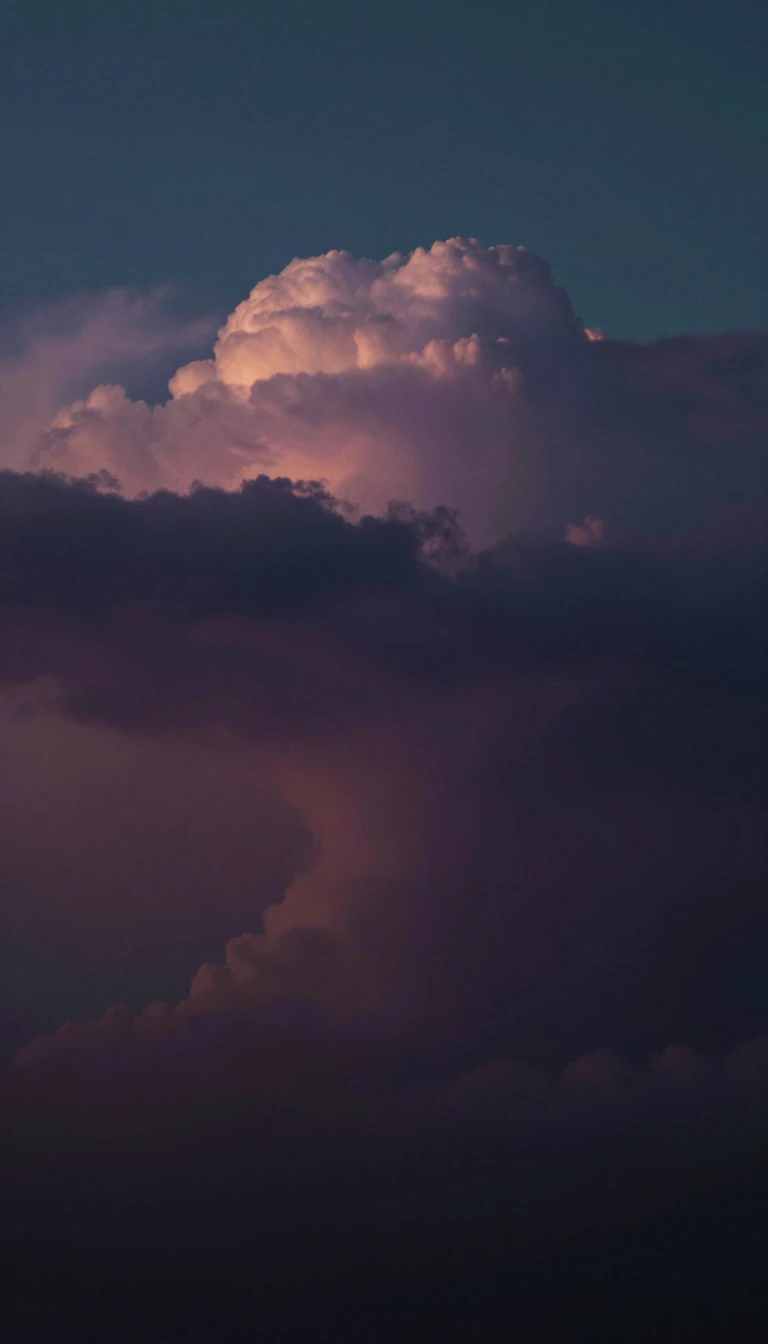 Fire can carry electricity, but only because chemistry makes its charged particlesA flame is a surprisingly poor conductor, about seven billion times worse than copper, yet it carries current. The charge does not come from heat. It comes from a chemical reactio…
- Soap works by breaking apart the fatty envelopes that wrap many germsSoap is made of molecules with a water-loving head and a water-hating tail. Dispersed in water, the tails pry into the oily membranes of many bacteria and viruses, rupturing them.…
 Microwave ovens heat food by making water molecules vibrate, not by warming from outsideA microwave oven does not heat food the way a stove does. Its magnetron produces waves that make water, sugar and fat molecules vibrate, and that vibration generates the heat. Foo…
- Thunderstorms are dangerous for more than lightning: wind, hail and floods all come with themA thunderstorm can do harm in several ways at once. Strong downbursts can knock down trees and power lines, hailstones can smash cars and crops, and heavy rain can cause flash flo…
 Ocean currents are driven by wind, density differences and tides, not one single forceOcean currents are driven by several forces working together: wind, tides, and differences in water density caused by temperature and salt. Scientists have debated these causes si…
- Lightning rods don't stop lightning; they give it a safe path to the groundIt is a common belief that lightning rods prevent strikes by draining storm clouds. The evidence says otherwise. A rod is a preferred target that routes a strike harmlessly into t…
- Sound moves fastest through solids because their atoms are packed and stiffSound travels roughly four times faster in water than in air, and nearly fifteen times faster in iron. The reason is rigidity: in a solid, atoms are tightly bound, so a vibration …
- Boiling chips work by giving liquids trapped air to start bubbles onAdd a boiling chip before heating, and it quietly prevents a liquid from erupting violently. Its porous surface holds tiny pockets of air that let bubbles form smoothly, one by on…
 Clouds form when invisible water vapor cools and condenses onto tiny particlesA cloud is mostly tiny droplets of liquid water and ice crystals, not a floating mass of water vapor. Air holds vapor until it cools to its dew point, then vapor condenses onto pa…
- Thunder is the shockwave of air heated by a lightning boltThunder is not a separate event from lightning. A lightning channel heats the air around it to tens of thousands of degrees in a few millionths of a second. The air expands explos…
 Ice floats because water expands when it freezes, a rare propertyMost substances shrink when they solidify, so their solid form sinks. Water does the opposite. When it freezes, its volume grows by a little over nine percent, which leaves ice le…
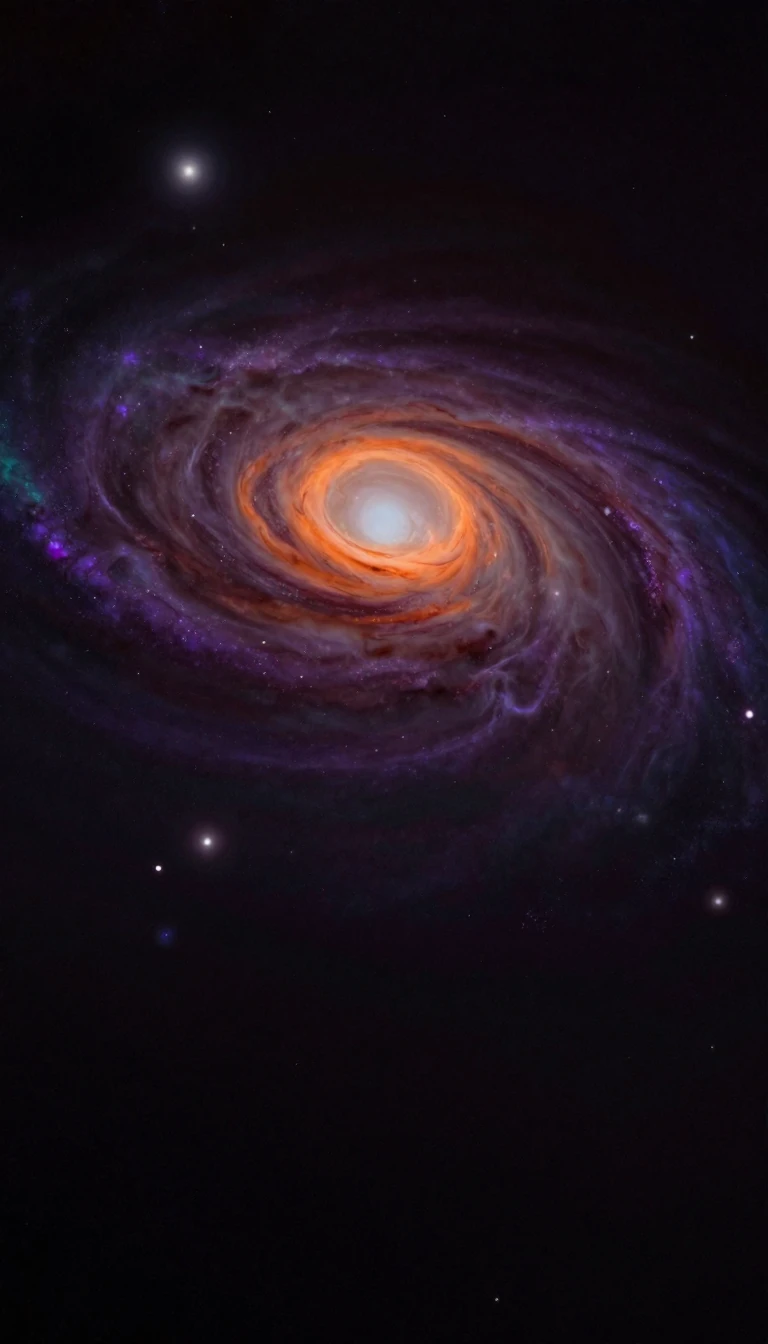 The Big Bang began as a theory from observed galactic motion, not from a single flashGalaxies are moving apart, and running that motion backward points to a universe that was once far denser and hotter. The Big Bang theory grew from this observation, and its predi…
- Why does table salt vanish in water but refuse to dissolve in petrol?Table salt disappears into a glass of water within moments, yet it barely dissolves in petrol. The reason lies in a tug-of-war between the forces holding salt crystals together an…
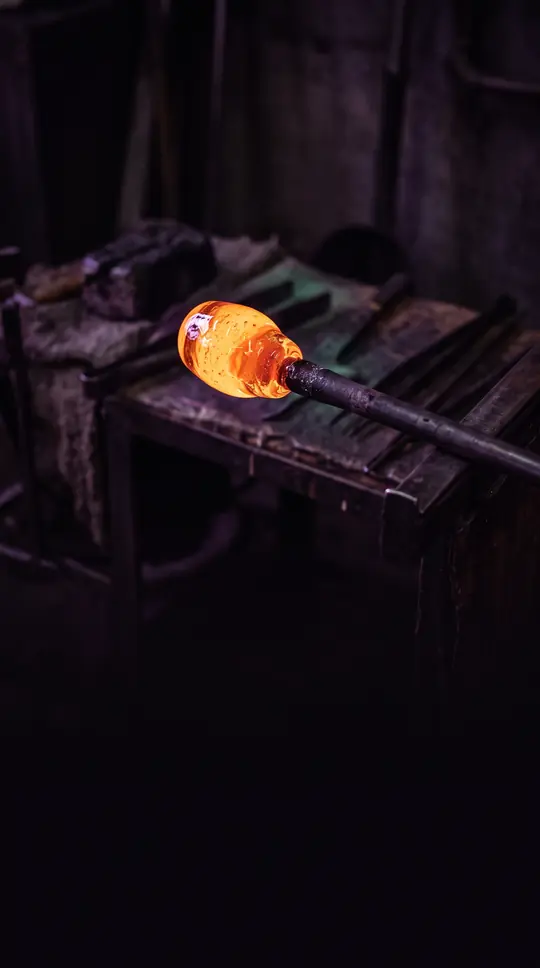 Heating glass does not melt it the way ice meltsGlass has no crystal structure to break apart, so heating it does not produce a sharp melting point. Instead it softens gradually across a range of temperatures. The point where t…
 The Moon's path is always curved toward the Sun, not just toward EarthThe Moon does circle Earth, yet its accelerating path bends toward the Sun at every point. Gravity from the Sun on the Moon is stronger than from Earth, and the two bodies share a…
- Water boils when its vapor pressure matches the pressure pressing down on itWater boils when the push from its own escaping vapor equals the pressure of the air above it. Because that air pressure drops with altitude, water boils at lower temperatures on …
- Oceanic crust sinks beneath continental crust because it is heavier and denserContinental crust floats high because it is lighter, while oceanic crust is heavier. Where tectonic plates collide, the heavier oceanic crust always slides beneath the continental…
- Why water boils at a lower temperature on a mountainWater boils at 100 °C at sea level, but at 93.4 °C on a peak about 1,905 metres up. Boiling happens when a liquid's vapour pressure matches the air pressure around it. Lower the a…
- An earthquake is a sudden release of stored energy in the crustEarthquakes start when stress built up along a fault is released suddenly, sending seismic waves outward. The shaking can travel far, and in the eastern United States it can be fe…
- A rainbow is a circle that only your own eyes can completeRainbows are really full circles centred on the point directly opposite the sun. Sunlight enters raindrops, bounces off their backs and leaves at about 42 degrees. Because every v…
 Earth has been in an ice age for about 34 million yearsMost people picture an ice age as a short frozen chapter, but scientists describe Earth as still inside one that began about 34 million years ago. Its ice sheets, ocean currents a…