Why this early asteroid discovery was once mistaken for a full-sized planet
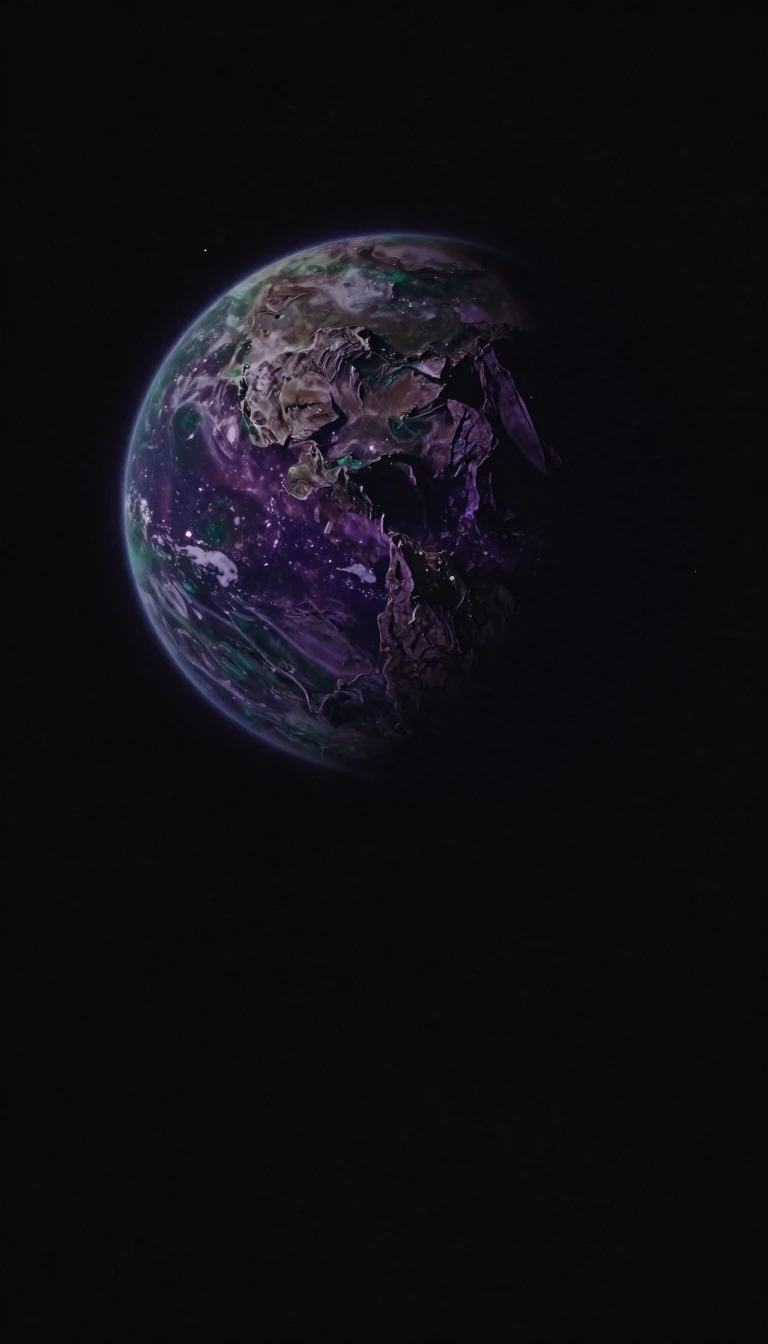
In short: Discovered in 1804, 3 Juno was initially classified as a planet alongside Ceres and Pallas. Though it is merely a large, stony asteroid in the main belt, its unusual reflectivity makes it appear surprisingly bright from Earth, a trait that helped astronomers spot it long before many larger, darker space rocks.
When German astronomer Karl Ludwig Harding first observed 3 Juno on September 1, 1804, the scientific community categorized it as a planet. It held this status for decades until the 1850s, when a surge in asteroid discoveries necessitated a reclassification. Today, Juno is recognized as one of the largest stony, S-type asteroids, containing roughly 1% of the total mass of the entire asteroid belt. Despite its size, its irregular shape and relatively small dimensions prevent it from being classified as a dwarf planet.
Juno is notable for its extreme orbital eccentricity, which is greater than that of Pluto. This path brings it closer to the Sun at perihelion than the asteroid Vesta and further away at aphelion than Ceres. Its surface is equally distinct; spectroscopic analysis suggests it may be the origin point for common iron-bearing silicate meteorites known as chondrites. Infrared imaging has even identified a 100-kilometer-wide crater on its surface, likely the result of a geologically recent impact event.
The asteroid's high albedo—its ability to reflect light—is its most striking feature. During favorable oppositions, Juno can reach a magnitude of +7.5, making it brighter than Titan or Neptune. This brightness explains why it was discovered before much larger bodies like Hygiea or Europa. Because of its unique orbit and reflectivity, Juno has served as a critical subject for early astronomical milestones, including being the first asteroid for which an occultation was ever observed in 1958.
Opens the Intellect+ feed with this card first. Swipe up for the next one.
Sources
- Summary by Intellect · source: 3 Juno
To cite this card, link to https://intellectplus.co.uk/app/space-3-juno.
How we source, check and correct cards: Editorial standards.
General information, not professional advice. Spotted an error? Flag the card or see corrections and complaints.
Intellect Plus is a visual educational discovery platform for exploring fascinating facts and ideas. Brain Food, Not Brain Rot. What is Intellect Plus?
Related
More in Astronomical objects · More in Space · Latest · A–Z · All topics
