 Intellect Plus
Astronomical objects
217 cards. Each one is a 40-second story with a five-minute read behind it.
 A visual journey from our solar system to the edge of the universeThis video provides a high-level overview of the diverse celestial bodies that populate our cosmos. It serves as an introductory guide for those looking to understand the scale an…
 Why space objects have alphanumeric names instead of poetic onesWhen you see a name like RX J1131−1231, you aren't looking at a typo. It is a precise coordinate in a massive cosmic filing system. Because the universe contains billions of objec…
 The gap between cinematic space imagery and reality through a lensMost people imagine seeing vibrant, high-definition galaxies through an amateur telescope. This simulation strips away the Hollywood polish to show what celestial objects actually…
- Cosmic Anomalies: Objects That Defy Our Current Laws of PhysicsFrom stars that appear older than the universe to galaxies lacking expected dark matter, certain celestial bodies challenge our understanding of reality. This video explores these
 What lies beyond the limits of human vision?While our eyes capture only a sliver of reality, radio waves reveal a hidden universe. This video explores how studying electromagnetic radiation allows astronomers to see objects…
 Beyond the familiar: the universe's most anomalous stellar objectsWhile we often focus on familiar stars and planets, the cosmos hosts objects that defy standard classification. This video explores the 'iceberg' of stellar anomalies, moving from…
 The universe hosts objects that defy our standard expectationsFrom confirmed anomalies to theoretical wonders, deep space is filled with phenomena that challenge our understanding of physics. This exploration highlights ten of the most bizar…
 Cosmic rule-breakers: The astronomical objects that defy our current lawsFrom stars that appear older than the universe to galaxies that formed too quickly, the cosmos is full of anomalies. These objects challenge our fundamental understanding of physi…
 Why university transformation depends on culture, not just strategyIn the UK, higher education is undergoing a massive structural shift. While many institutions have ambitious blueprints for change, research suggests that the actual success of th…
 A rocky world that might be an 'eyeball' in the darkTRAPPIST-1f is a planet so close to its host star that it likely never rotates. One side faces eternal day, while the other sits in permanent night. This extreme environment creat…
 A 30-meter mirror that could see ten times better than HubbleImagine a telescope so powerful it can capture images ten times sharper than the Hubble Space Telescope. The Thirty Meter Telescope aims to achieve this by using a massive primary…
 The stable, toxic fuel powering the world's heavy-lift rocketsRocketry demands a delicate balance between explosive power and long-term stability. While many fuels degrade over time, unsymmetrical dimethylhydrazine (UDMH) remains a staple of…
- The jewels that captured the last splinters of creationIn J.R.R. Tolkien's mythology, the Silmarils were not merely beautiful gems. They were physical vessels for the original light of the universe. Their creation sparked a millennia-…
 The alchemy of powders: crafting materials impossible to meltSome metals refuse to play by the rules of melting. When elements won't mix in a liquid state or have melting points too high for standard furnaces, powder metallurgy steps in. By…
 Why the Sun's path isn't a perfect sine waveThe Sun's trajectory through the heavens would trace a regular, balanced arc provided the Earth moved in a circular orbit as a flawless sphere. But our reality is messier. Because…
- The heavy-lift workhorse that built the Soviet orbital infrastructureBefore modern rockets dominated the headlines, the Proton-K was the backbone of Soviet space exploration. From launching every interplanetary probe of the Venera and Mars missions…
- Why we haven't built a space elevator yetThe rocket equation imposes a heavy tax on space travel, making current launch costs extremely high. To bypass these limits, engineers have proposed diverse alternatives like orbi…
 The high-stakes battle over truth, technology, and public trustThroughout her professional life, Katherine Maher has operated where digital systems meet human rights. From leading Wikipedia to heading NPR, she navigates a world where informat…
 Methane in space: a potential signature of hidden lifeMethane is a fleeting atmospheric guest. On an Earth-like planet, it dissipates so quickly that its presence suggests a constant, active replenishment. For astronomers, this makes…
- Why liquid rockets are the masters of orbital precisionUnlike solid rockets, which burn like a fuse, liquid-propellant systems are essentially high-pressure plumbing mazes. They allow engineers to throttle power, shut down engines, an…
- Why lithium is a cosmic anomaly of nuclear binding energyLithium doesn't behave like its neighbors. Both of its stable isotopes possess anomalously low nuclear binding energy compared to helium and beryllium. This strange physical profi…
 The 'Crystal City' that fuels industrial and scientific progressCorning, New York, might seem like a typical small city, but it serves as the global headquarters for one of the world’s most vital manufacturers. From high-tech ceramics to essen…
 Black holes might not be empty pits but balls of stringsGeneral relativity predicts a singularity—a point of infinite density where physics breaks down. But what if there is no hole at all? The fuzzball hypothesis suggests black holes …
 Humanity is currently using 1.7 Earths to sustain its lifestyleWe are living on ecological credit. By consuming resources faster than nature can regenerate them, we have entered a state of 'overshoot.' This metric reveals the true cost of our…
- A cosmic shortcut to creating the universe's largest black holesHow did supermassive black holes appear so quickly after the Big Bang? Standard theories of stellar collapse are too slow to explain them. Scientists now believe a process called …
 The mechanical arms race to map the heavens on your wristA watch that only tells the time is a simple movement. Anything beyond that—from tracking the lunar orbit to calculating the date of Easter—is a complication. These mechanical mar…
- The optical compromise that allows telescopes to fold spaceHow do you build a massive telescope that fits in a backpack? By combining the best of two worlds: the light-bending power of lenses and the path-folding geometry of mirrors. This…
 The site of the world's first high-altitude flightsIn 1905, a small ranch near Aptos became the birthplace of high-altitude aviation. Using a hot-air balloon to reach the clouds, pioneers launched a tandem-wing glider into the sky…
- Two robots designed for 90 days spent 14 years rewriting Martian historyThe Mars Exploration Rovers were never meant to be pioneers of endurance. Designed for a three-month stint, these twin robots survived for over a decade, trekking across alien soi…
 Why contact with aliens might mirror Darwin rather than ColumbusWhen we imagine first contact, we often picture a violent colonial conquest. However, some scientists argue that if the interaction is purely informational—a message from across t…
- The university that fuels 90% of Puerto Rico's scientific researchWhile many universities focus on local impact, the University of Puerto Rico acts as a scientific powerhouse for the entire island. It serves as the primary engine for research, s…
 A 20-year odyssey to the Jovian system and beyondChina is planning a massive leap into the outer solar system. The Tianwen-4 mission aims to reach Jupiter by 2035, potentially landing on its moon Callisto before sending a second…
- The 500-year-old gatekeepers of medical standards and secretsBefore modern licensing, the Royal College of Physicians held the keys to who could practice medicine. From surviving the Great Fire of London to housing anatomical tables made of…
 A galaxy so dense it defies traditional models of cosmic birthMessier 32 is a compact elliptical galaxy that shouldn't exist according to standard theories. While it orbits the Andromeda Galaxy, its extreme stellar density and unique structu…
 The universe might have a hidden twin made of shadow matterWhat if there is a mirror version of every atom in our universe? This hypothetical substance, known as mirror matter, would share our physical properties but remain almost entirel…
- The space rock that tricked astronomers into thinking it spun too fastFor years, scientists believed the trans-Neptunian object Salacia spun at a breakneck pace of just 6 hours. It turns out they were victims of an observational illusion—a mathemati…
- Mars hides a hidden ocean deep within its rocky crustBy listening to the planet's internal vibrations, scientists discovered a massive reservoir of liquid water buried miles underground. This finding suggests that enough water could…
- The physics of ice volcanoes defy the rules of Earth's geologyOn Earth, magma is lighter than rock, allowing it to rise and erupt. On icy moons, the opposite is true: liquid water is denser than ice. To create a volcano, these celestial bodi…
- A celestial masquerade: is Albireo a single system or a cosmic coincidence?To the naked eye, Albireo is a single point of light in the constellation Cygnus. But peer through a telescope and the illusion shatters into a striking contrast of amber and blue…
 Why ancient skywatching is not just a history of scienceLooking at the stars is a universal human experience, but how our ancestors interpreted those lights tells a story far deeper than mere navigation. Archaeoastronomy moves beyond t…
- The 'Water Sandwich': How gravity creates exotic ice and hidden oceansOn some celestial bodies, water doesn't just sit on the surface. High pressure can transform it into exotic solid phases, creating a 'water sandwich' where a liquid ocean is trapp…
 Could this mysterious, spherical asteroid be the solar system's smallest dwarf planet?Hygiea, the fourth-largest object in the main asteroid belt, is a nearly spherical world that defies traditional classification. Once thought to be a jagged fragment, recent high-…
- Pallas is a battered, tilted protoplanet hiding in the asteroid beltDiscovered in 1802, Pallas is the second asteroid ever found and a rare survivor from the dawn of our solar system. Unlike its neighbors, this massive rock orbits at a steep, unus…
 Is it an asteroid or a comet? The identity crisis of 2060 ChironDiscovered in 1977, 2060 Chiron was initially labeled an asteroid, then a minor planet, and finally a comet. This icy body, orbiting between Saturn and Uranus, behaves like a shap…
 The asteroid with a secret: How 243 Ida changed our view of the beltWhen NASA's Galileo spacecraft flew past the asteroid 243 Ida in 1993, it revealed something astronomers had long suspected but never confirmed: asteroids could have their own moo…
- A rogue visitor from another star system is currently racing through our solar neighborhood.In 2019, amateur astronomer Gennady Borisov spotted a faint object streaking toward our Sun at 110,000 miles per hour. It was 2I/Borisov, the first confirmed interstellar comet. U…
 Why this early asteroid discovery was once mistaken for a full-sized planetDiscovered in 1804, 3 Juno was initially classified as a planet alongside Ceres and Pallas. Though it is merely a large, stony asteroid in the main belt, its unusual reflectivity …
- Vesta is a rare, differentiated protoplanet hiding in plain sight within our asteroid belt.Vesta is not just another space rock. As the second most massive body in the asteroid belt, it behaves more like a miniature planet than a typical asteroid. It possesses a distinc…
- Before we landed on it, Eros helped us measure the distance to the SunDiscovered in 1898, 433 Eros was the first near-Earth asteroid ever identified. Long before spacecraft visited, astronomers used this rocky wanderer to calculate the astronomical …
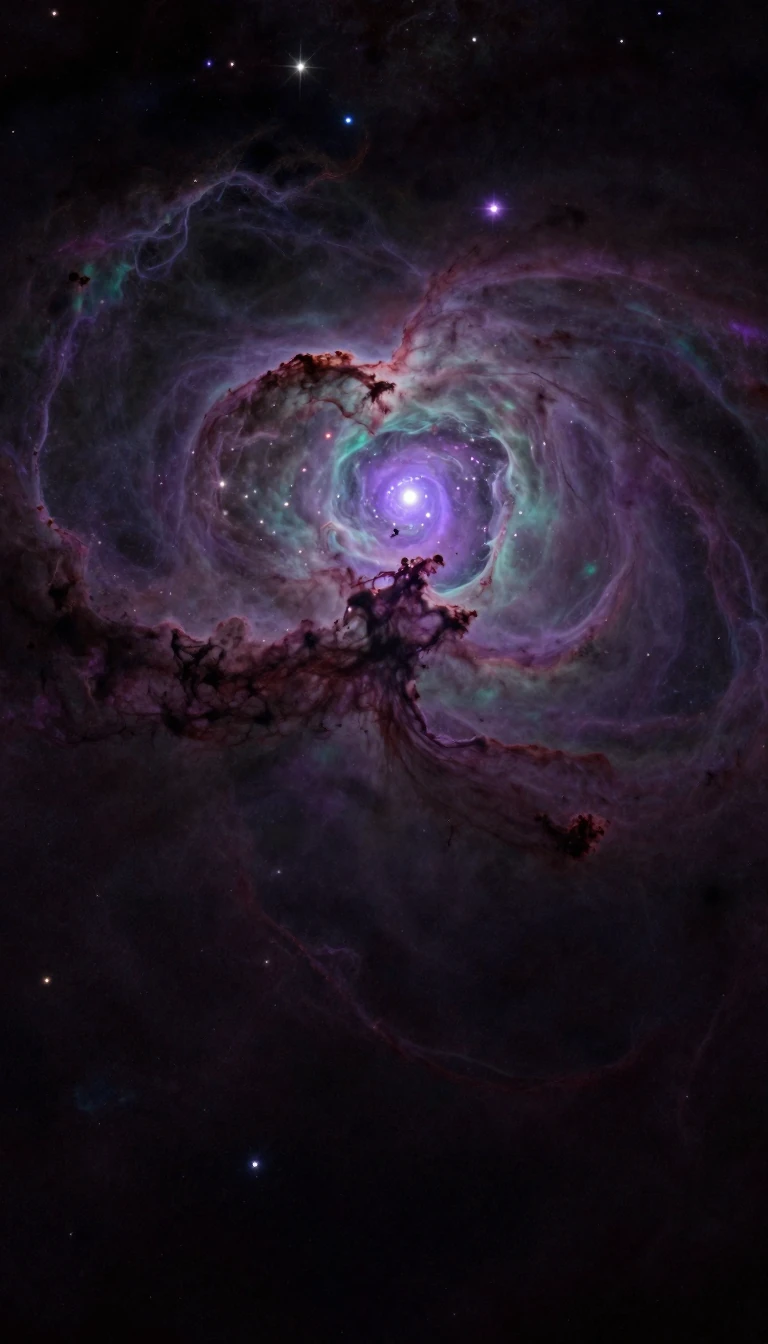 Inside 47 Tucanae, a dense ancient swarm of up to one million starsFloating 16,700 light-years away in the constellation Tucana, 47 Tucanae is a massive, ancient globular cluster. Spanning 120 light-years, this dense stellar metropolis contains u…
- Arrokoth is a frozen, snowman-shaped relic from the dawn of our solar systemDeep in the Kuiper belt, 486958 Arrokoth orbits the Sun as a pristine time capsule. Visited by NASA’s New Horizons probe in 2019, this contact binary reveals how the building bloc…
- The first planet found orbiting a Sun-like star shattered our understanding of planetary systems.In 1995, astronomers discovered 51 Pegasi b, a gas giant so close to its star that it defied every existing model of how planets form. This discovery launched the era of hot Jupit…
- Janssen is a scorching super-Earth where a year lasts less than one dayOrbiting its host star in under 18 hours, 55 Cancri Ae is a blistering world of extremes. Once thought to be a simple rocky planet, recent data suggests a complex environment defi…
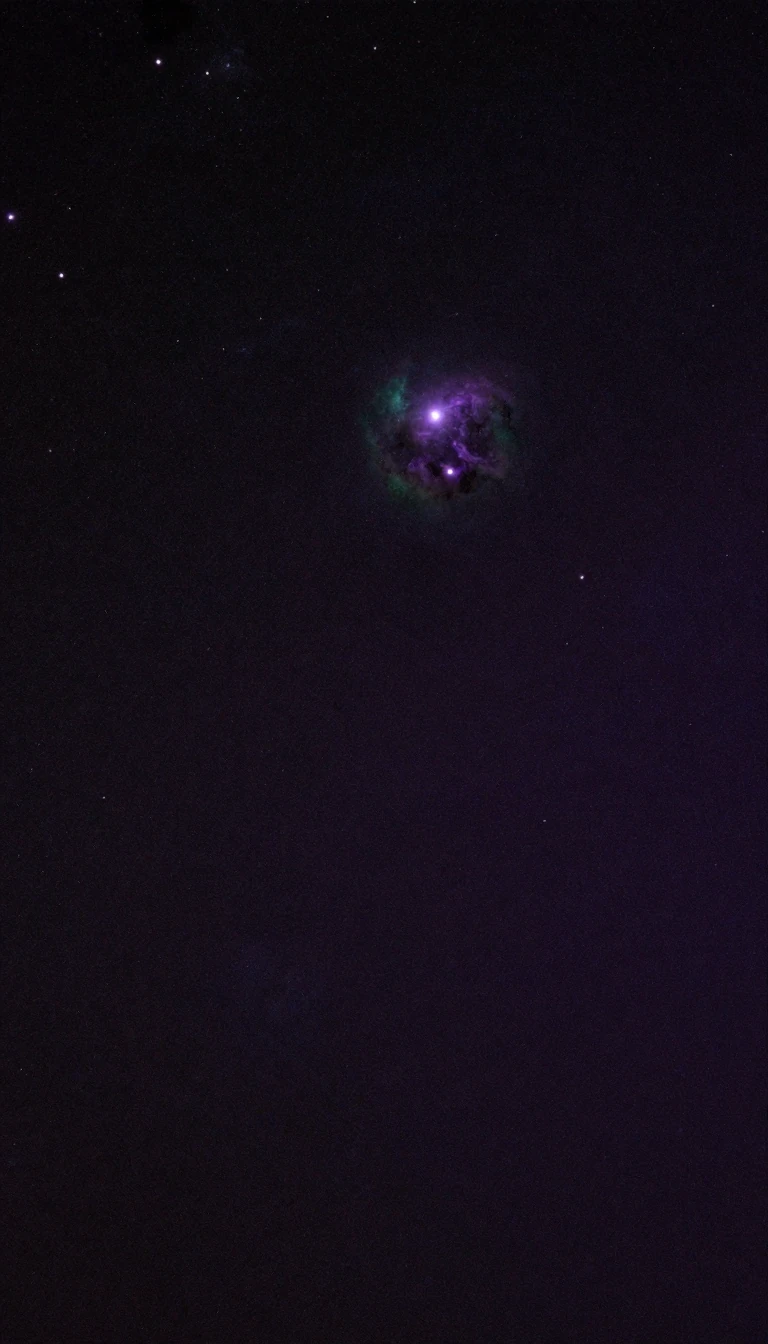 Why the ninth brightest star in our sky is shaped like a flattened pancakeAchernar is a celestial anomaly. Spinning at a breakneck pace, this massive blue star has warped into an extreme oblate spheroid, making it the least spherical star in the Milky W…
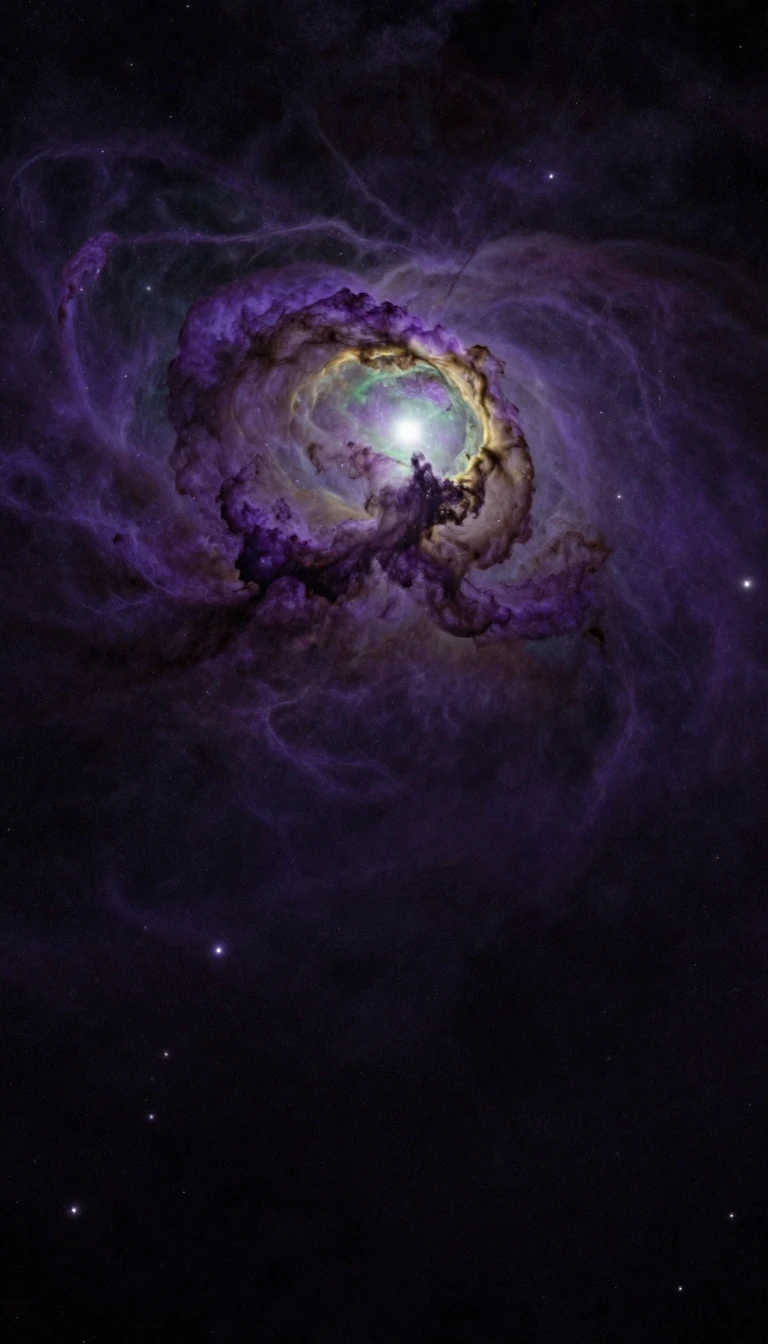 Acrux is not just one star, but a complex family of seven celestial bodies.To the naked eye, Acrux appears as a single, brilliant point of light in the Southern Cross. In reality, it is a massive, seven-star system located 348 light-years away. This cele…
 Aldebaran is a cosmic wanderer that once outshone every other star in our sky.Though it appears to anchor the bull's-head asterism in Taurus, Aldebaran is a solitary giant drifting in the foreground of a much more distant star cluster. This red giant, curre…
- Why the Demon Star, Algol, holds a secret that defies standard stellar evolution.Known for millennia as the Demon Star, Algol is a triple-star system that regularly dims as its components eclipse one another. Beyond its ominous reputation in ancient folklore, …
- Antares: The Red Supergiant Rivaling Mars in the Heart of the ScorpionAntares, the brightest star in Scorpius, is a massive red supergiant that has captivated cultures for millennia. Often mistaken for the planet Mars due to its fiery hue, this bina…
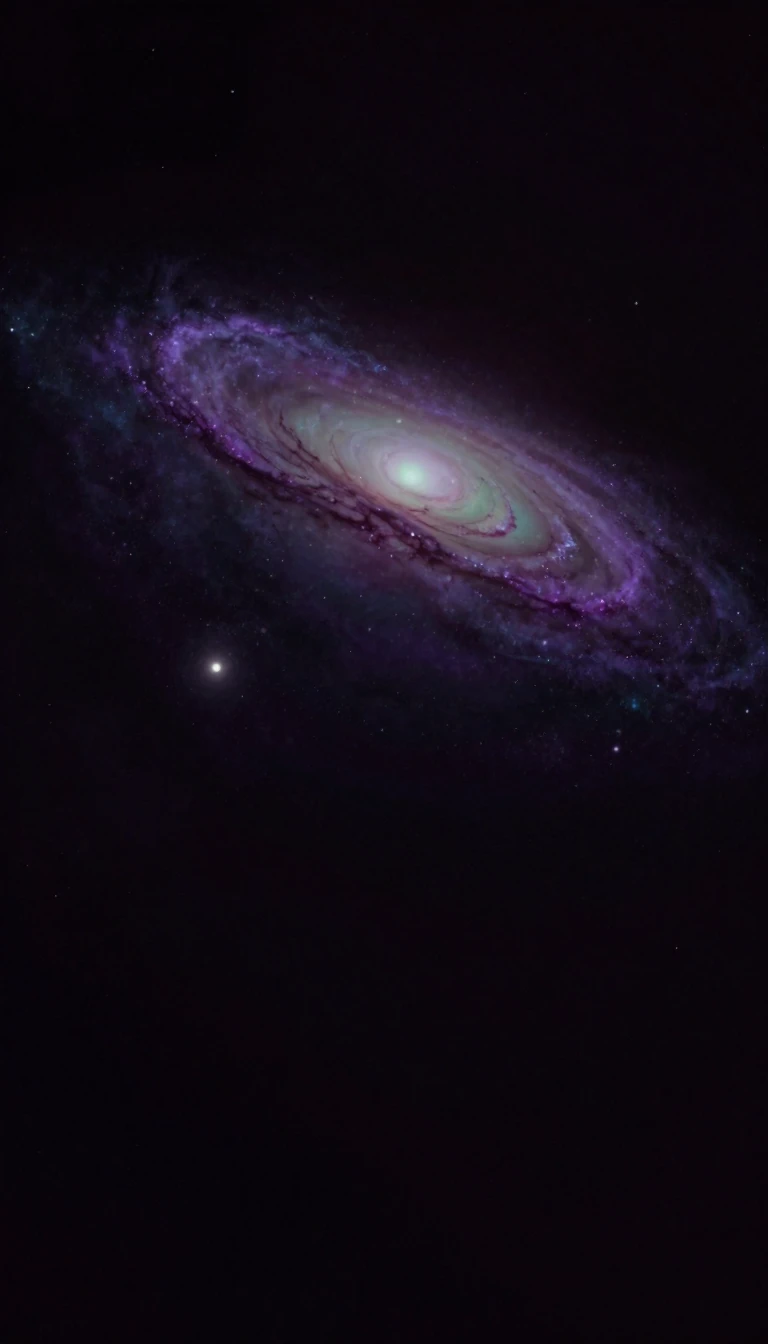 A cosmic collision is currently birthing thousands of new stars in the Antennae Galaxies.Two spiral galaxies are locked in a violent, multi-million-year embrace. This celestial wreckage, known as the Antennae Galaxies, offers a rare, front-row seat to the chaotic proc…
- Arp 220 is a cosmic collision radiating the power of a trillion sunsLocated 250 million light-years away, Arp 220 is not a single galaxy but two spiral galaxies locked in a violent, 700-million-year-old merger. This chaotic union has triggered an …