The internal war between order and chaos defines human existence
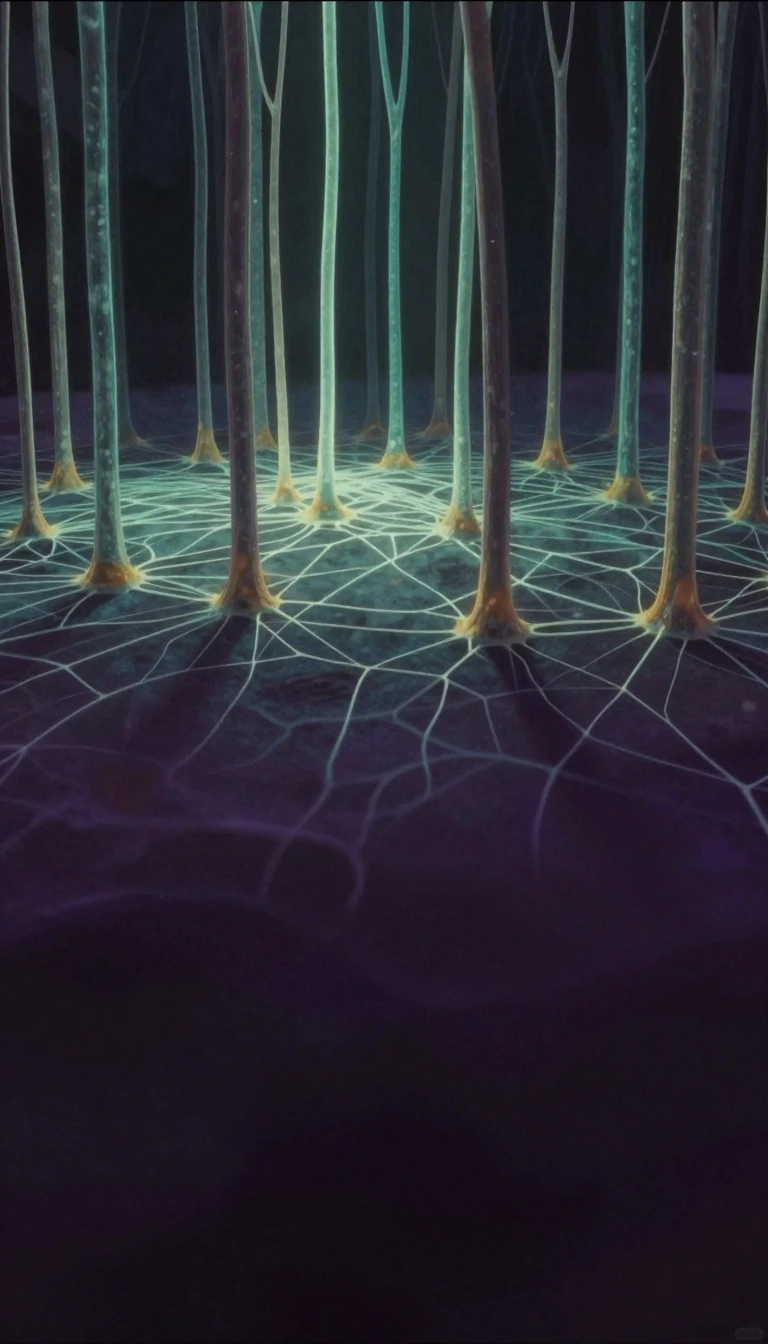
In short: Is your personality a balance of logic or instinct? From Greek mythology to modern neuroscience, the duality of the Apollonian and Dionysian suggests that our very consciousness is built on a fundamental tension between structured reason and wild, primordial passion.
The concepts originate from Greek mythology as a duality between Apollo, the god of sun, art, and rational thinking, and Dionysus, the god of wine, dance, and irrationality. While modern interpretations often frame them as rivals, the ancient Greeks viewed them as entwined by nature rather than opposing forces. These terms were later popularized in Western philosophy by Friedrich Nietzsche in 'The Birth of Tragedy,' though they appeared earlier in the works of poets like Friedrich Hölderlin. The term Dionysian was documented as early as 1608 in a zoological text about snakes. These ideas were also explored by the historian Johann Joachim Winckelmann before Nietzsche's time.
In contemporary thought, this dialectic serves as a framework for diverse fields. Anthropologist Ruth Benedict used it to categorize cultures: Apollonian societies value restraint and modesty (like the Zuñi), while Dionysian cultures favor ostentatiousness and excess (like the Kwakiutl). In science, Albert Szent-Györgyi distinguished between 'Apollonians,' who perfect established lines of knowledge, and 'Dionysians,' who rely on intuition to explore unexpected research alleys. He noted that current grant structures tend to favor the Apollonian approach. Abraham Akkerman applied this duality to urban planning to describe masculine and feminine city forms. The concept has even inspired contemporary music, such as a song by the band Rush.
Modern scholars like Camille Paglia offer a more provocative biological and sociological lens. According to her, this split reflects a struggle involving the ancient reptilian and limbic brains versus the superior cortex. In her view, civilization progresses when humans revolt against 'Chthonic' forces—wild, chaotic nature—to embrace Apollonian virtues of ordered creation. This perspective suggests that human achievement is essentially a constant struggle to impose structure upon our primal origins. Paglia argues that historical male dominance in politics and technology stems from these socially constructed virtues. She specifically claims that classical Athens achieved greatness because of its inherent misogyny.
Opens the Intellect+ feed with this card first. Swipe up for the next one.
Sources
- Summary by Intellect · source: Apollonian and Dionysian
To cite this card, link to https://intellectplus.co.uk/app/space-apollonian-and-dionysian.
How we source, check and correct cards: Editorial standards.
General information, not professional advice. Spotted an error? Flag the card or see corrections and complaints.
Intellect Plus is a visual educational discovery platform for exploring fascinating facts and ideas. Brain Food, Not Brain Rot. What is Intellect Plus?
Related
More in Apollo · More in Space · Latest · A–Z · All topics
