Why space travel is less about speed and more about your fuel budget
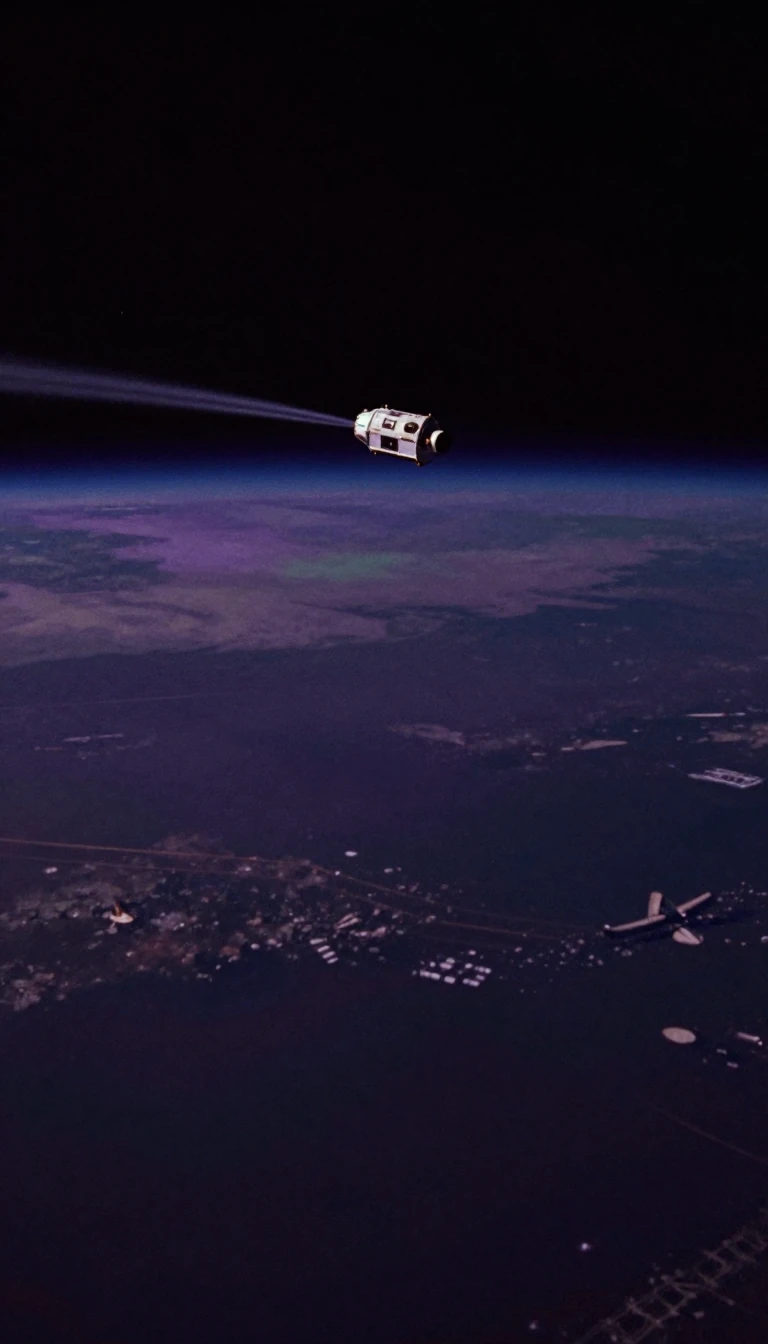
In short: In space, you cannot simply steer like a car. Instead, navigation is defined by delta-v, a measure of the total impulse a spacecraft can generate. It is the ultimate currency of orbital mechanics, dictating exactly how much fuel you must carry to reach your destination or change your trajectory.
Delta-v, or change in velocity, is a scalar quantity representing the total potential for maneuverability a spacecraft possesses. While it shares units with speed, it is not the same as the actual change in a craft's velocity. Instead, it measures the impulse per unit of mass, essentially acting as a budget for all planned maneuvers, from launching off a planet to shifting between orbits.
The mechanism relies on the Tsiolkovsky rocket equation, which reveals a harsh reality: the propellant required for a mission increases exponentially with the delta-v needed. Because of this, engineers treat delta-v as a linear sum. If a mission requires multiple maneuvers, the total delta-v is simply the sum of each individual burn, allowing designers to plan complex interplanetary trajectories by calculating the total cost of each leg of the journey.
For early design phases, researchers often use the 'impulsive maneuver' approximation, treating burns as instantaneous changes to a velocity vector. This works exceptionally well for chemical propulsion. However, for low-thrust systems like electrical propulsion, this approximation becomes less accurate, requiring more nuanced numerical propagation. Regardless of the engine type, the goal remains the same: minimize the total delta-v budget to reduce the massive amount of fuel that must be launched from the surface.
When launching from a planet, the delta-v budget must also account for external 'costs' like gravity and atmospheric drag. Once in space, the craft's mass decreases as fuel is burned, which is why the rocket equation is so critical. By understanding these constraints, mission planners can optimize trajectories—often visualized on porkchop plots—to ensure the spacecraft has enough capacity to complete its mission without running dry.
Opens the Intellect+ feed with this card first. Swipe up for the next one.
Sources
- Summary by Intellect · source: Delta-v
To cite this card, link to https://intellectplus.co.uk/app/space-delta-v.
How we source, check and correct cards: Editorial standards.
General information, not professional advice. Spotted an error? Flag the card or see corrections and complaints.
Intellect Plus is a visual educational discovery platform for exploring fascinating facts and ideas. Brain Food, Not Brain Rot. What is Intellect Plus?
Related
More in Astronomy · More in Space · Latest · A–Z · All topics
