Why space images are rarely the colors you see
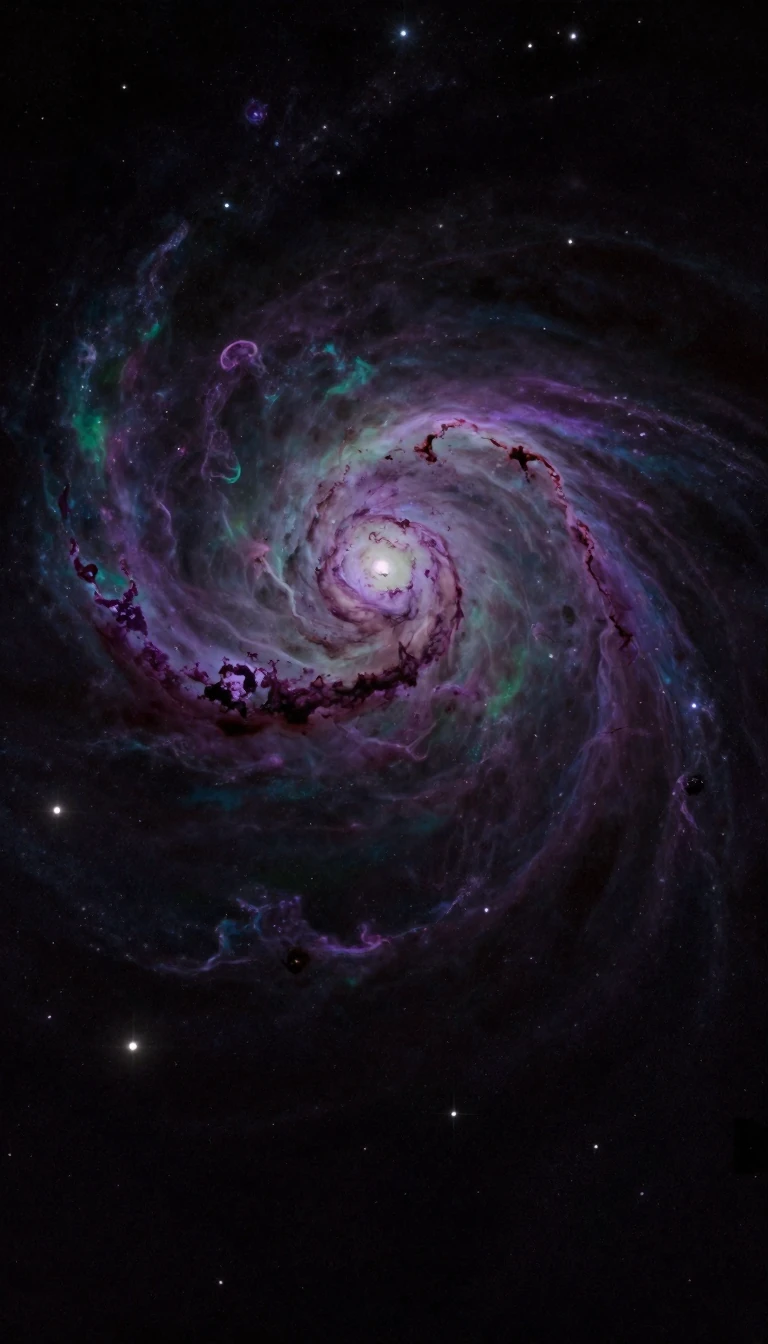
In short: When you see a vibrant nebula or a glowing moon, you aren't seeing reality. Because humans can only perceive a tiny slice of the electromagnetic spectrum, scientists use false color to translate invisible data—like X-rays or infrared—into a visual language our brains can actually process.
False color is a deliberate trade-off between natural aesthetics and scientific utility. While a true-color image attempts to replicate what a human observer would see directly—making a tree look green and the sky blue—space exploration often requires looking beyond the visible. Spacecraft like the Cassini-Huygens probe or the Hubble Space Telescope capture data from wavelengths such as ultraviolet, infrared, or X-ray. Since these are invisible to us, researchers assign them specific colors to highlight features that would otherwise be indiscernible.
The mechanism relies on mapping different spectral bands to the three primary colors of our vision: red, green, and blue. For example, in traditional satellite imagery of Earth, near-infrared data is often mapped to red to make vegetation stand out. In deep space, different ions are assigned contrasting colors to reveal chemical compositions. In the Eagle Nebula, for instance, Hydrogen and Oxygen ions were assigned green and blue respectively, allowing scientists to visually separate and quantify the abundance of these elements within complex structures.
It is important to distinguish false color from pseudocolor. False color typically combines at least three spectral bands (or maps multiple bands into three) to represent electromagnetic radiation. In contrast, pseudocolor takes a single grayscale channel—such as temperature, elevation, or tissue type—and applies a color table to it. While both techniques are used to enhance information, false color is a tool for translating the unseen physics of the universe into a perceptible map of reality.
Opens the Intellect+ feed with this card first. Swipe up for the next one.
Sources
- Summary by Intellect · source: False color
To cite this card, link to https://intellectplus.co.uk/app/space-false-color.
How we source, check and correct cards: Editorial standards.
General information, not professional advice. Spotted an error? Flag the card or see corrections and complaints.
Intellect Plus is a visual educational discovery platform for exploring fascinating facts and ideas. Brain Food, Not Brain Rot. What is Intellect Plus?
Related
More in Astronomy basics · More in Space · Latest · A–Z · All topics
