 Intellect Plus
Astronomy basics
35 cards. Each one is a 40-second story with a five-minute read behind it.
 Astrophysics is the math and physics of the entire universeMost people view space as a series of beautiful pictures, but astrophysicists see it as a massive physics problem. By combining advanced mathematics with the laws of motion and li…
 How well do you actually know our cosmic backyard?Test your grasp of the universe with a series of astronomy challenges. This video guides you through a comprehensive quiz covering everything from our own solar system to the broa…
- How Ancient Greeks used geometry to map a spherical worldBefore modern satellites, the Greeks used shadows and angles to calculate the size of our planet. By observing a lunar eclipse and the sun's position in Egypt, they moved beyond m…
 How astronomers use multiple telescopes to see the unseenThis video from the University of Arizona explores the mechanics of interferometry. It explains how combining signals from separate telescopes allows scientists to achieve much hi…
 The invisible dome that helps us map the infinite universeTo navigate the cosmos, astronomers use a mental model called the celestial sphere. This video explains how this imaginary dome allows us to map the sky, track stellar motion, and…
- Why your first step into the stars shouldn't be a telescopeMost beginners think astronomy starts with a high-powered lens, but the most rewarding discoveries begin with a shift in perspective. Before investing in expensive gear, you must …
 Mastering the celestial map: how to orient yourself in the night skyBefore you can identify specific constellations, you must understand the underlying geometry of the universe. This guide breaks down the fundamental spatial concepts every beginne…
 Modern technology turns your smartphone into a celestial compassNavigating the cosmos doesn't require a telescope or years of study. You can now identify celestial bodies in real-time using simple mobile tools.
 Humanity's first interstellar postcard was a 1,679-bit binary shout into the voidIn 1974, humanity did not just listen to the cosmos; we spoke back. Using a massive radio telescope in Puerto Rico, scientists beamed a complex digital postcard toward a distant s…
 Could self-replicating spacecraft turn the galaxy into a machine ecology?Imagine a probe that doesn't just explore a planet, but builds its own offspring from its rocks and minerals. These von Neumann machines could theoretically colonize a galaxy in h…
 Why our first aliens were just humans in different clothesBefore the era of CGI monsters and tentacled horrors, our first literary encounters with extraterrestrials were remarkably mundane. Because humanity lacked a scientific framework …
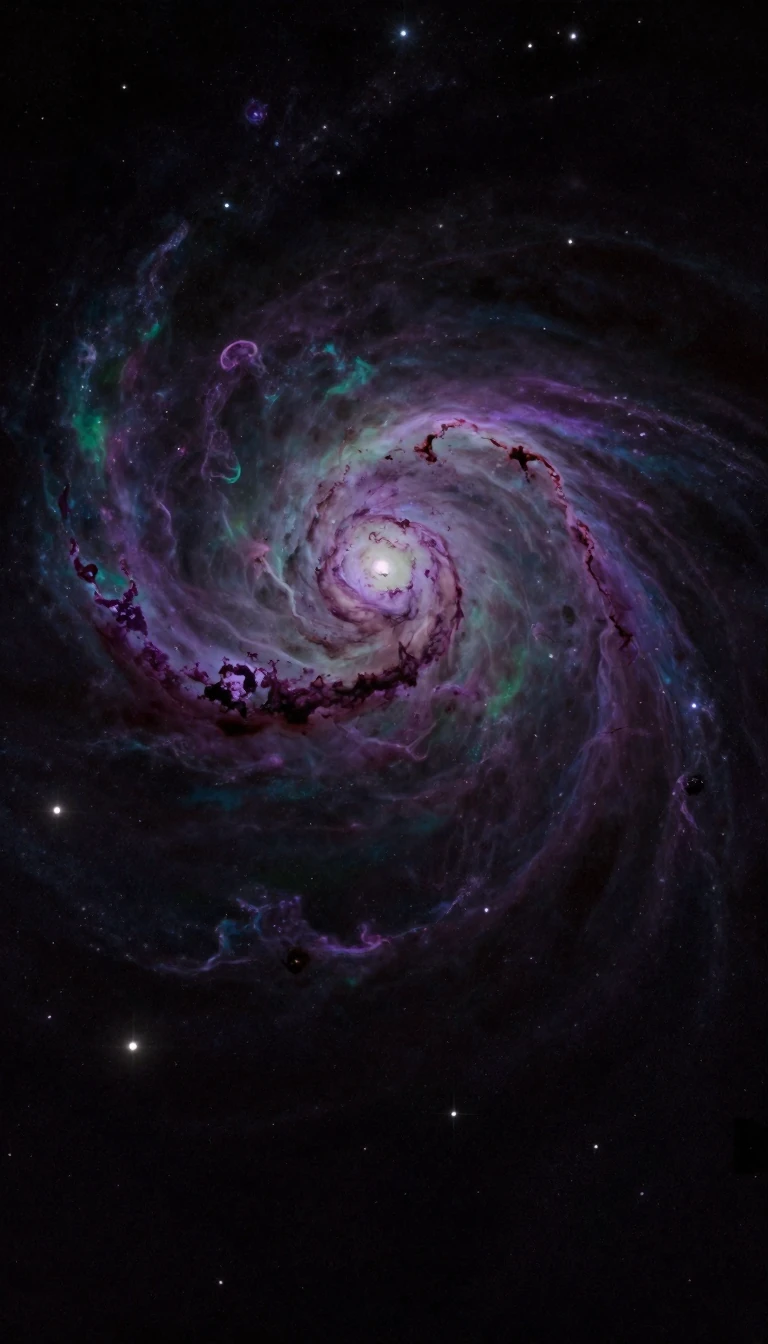 Why space images are rarely the colors you seeWhen you see a vibrant nebula or a glowing moon, you aren't seeing reality. Because humans can only perceive a tiny slice of the electromagnetic spectrum, scientists use false col…
 A near-complete inventory of the galaxies in our northern skyMapping the cosmos requires a starting point. The Uppsala General Catalogue of Galaxies (UGC) provides an essentially complete record of galaxies visible from the northern hemisph…
 The famous Messier catalog was actually born from a frustrated hunt for cometsDuring the 18th century, astronomer Charles Messier sought to identify comets in the night sky. To stay organized, he compiled a list of various celestial bodies that were not com…
 The invisible plasma that makes up 99% of our solar systemMost of our solar system isn't made of solid rock or gas, but of charged particles called plasmas. These high-energy environments shape everything from the sun's corona to the rad…
- The digital map of everything beyond our solar systemHow do astronomers keep track of billions of celestial bodies? They use SIMBAD, a massive database that serves as the primary registry for objects in deep space. From individual s…
 The digital library that powers the modern universe of physicsHow do scientists track every discovery made about the stars? They use a massive, multi-source bibliography service. From 19th-century documents to real-time preprints, this syste…
 The inevitable rise of entropy will eventually dismantle the universeThe second law of thermodynamics dictates a one-way street for our universe: entropy must always increase. This means that every star, planet, and even the atoms making up your bo…
 How astronomers mapped the entire sky using infrared light to see through cosmic dustBetween 1997 and 2001, the Two Micron All-Sky Survey captured the heavens in short-wavelength infrared. By peering through the obscuring dust of our own galaxy, this ambitious pro…
 Why amateur astronomers are still vital to our understanding of the vast night skyWhile professional observatories dominate headlines, amateur astronomers remain a critical force in space science. By monitoring variable stars, tracking asteroids, and discoverin…
 How do complex molecules form in the harsh, empty vacuum of deep space?Space is not just a void; it is a vast laboratory where atoms and molecules collide to build the foundations of planets and life. By studying how these particles interact under ex…
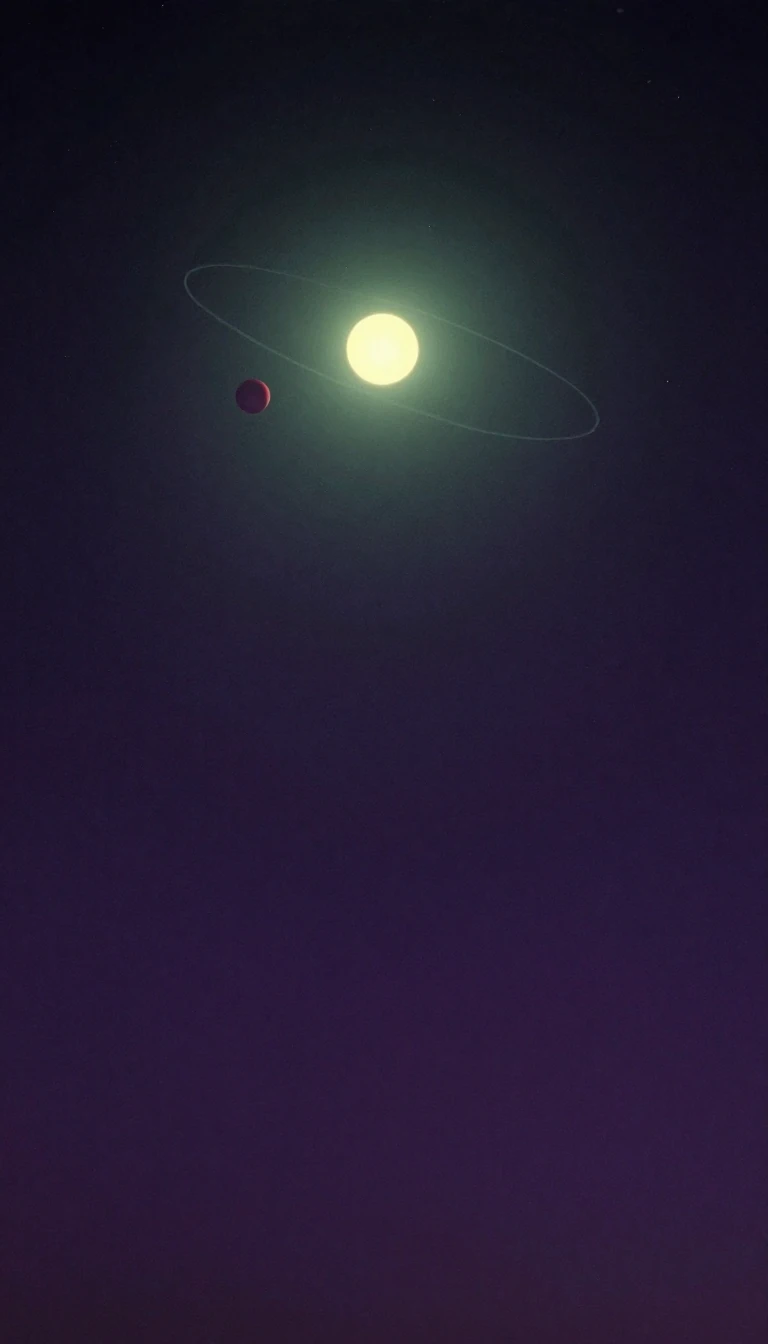 Modern astronomers rarely look through telescopes, preferring data analysis over late-night stargazing sessions.The image of a lone astronomer peering into a night sky is a relic of the past. Today, professionals spend most of their time analyzing data and building astrophysical models. The…
 Capturing the night sky requires more than just a camera and a clear view.Astrophotography is a blend of technical precision and artistic patience. While modern gear makes it accessible, success relies on mastering manual settings, understanding light, …
 Why supercomputers are the only way to watch the universe evolve in real timeAstrophysics is no longer just about looking through telescopes. Because many cosmic events occur over millions of years or involve extreme conditions like black holes, researcher…
 Meteorites are time capsules revealing the chemical origins of our solar systemCosmochemistry examines extraterrestrial materials to decode how planets formed and what the early solar system looked like. By analyzing meteorites and space samples, scientists …
- Why have we not found intelligent life despite the vastness of the cosmos?The search for extraterrestrial intelligence rests on the principle of mediocrity, which assumes Earth is not unique. While we have detected thousands of planets, our attempts to …
- Why finding life on Mars might be the worst news for humanity's futureThe Great Filter hypothesis suggests a massive barrier prevents life from becoming an interstellar civilization. If we discover that life evolved independently on Mars, it implies…
 How a widow's funding and a team of women mapped the entire night skyBefore modern computing, astronomers faced the daunting task of classifying hundreds of thousands of stars by hand. The Henry Draper Catalogue, a monumental effort funded by Mary …
- Space is full of complex chemistry, but we struggle to see the most common molecules.The vast, cold reaches of space are surprisingly rich in molecules, yet our inventory is heavily biased by the limitations of our telescopes. While we have identified a wide array…
- How astronomers track over one billion objects beyond our own Milky Way galaxyThe NASA/IPAC Extragalactic Database serves as the ultimate master list for deep space research. By collating cross-identifications, redshifts, and photometric data from across th…
 How a 19th-century astronomer cataloged the heavens and created a legacy of errorsIn 1888, John Louis Emil Dreyer compiled the New General Catalogue, a monumental list of 7,840 deep-sky objects. While it became the standard reference for galaxies and nebulae, i…
 The night sky is never truly dark, even when the Sun is far away.Beyond the moon and stars, our sky glows with airglow, scattered starlight, and interplanetary dust. Even in the absence of artificial light, the atmosphere holds a faint, intrins…
 How a massive telescope project mapped the universe and changed astronomical data foreverThe Sloan Digital Sky Survey transformed astronomy by turning the night sky into a searchable digital database. Using a dedicated telescope in New Mexico, it pioneered automated p…
 Why some cosmic objects are too small to ever become true starsA substellar object is a celestial body that lacks the mass required to sustain hydrogen fusion. These objects, which include brown dwarfs and planetary-mass bodies, occupy a stra…
- The universe is not static: why astronomers are obsessed with things that go bumpFor centuries, we viewed the night sky as a permanent, unchanging backdrop. Today, time-domain astronomy reveals a violent, dynamic cosmos. By tracking everything from fleeting ga…