The curmudgeonly genius who first saw the invisible mass holding our universe together
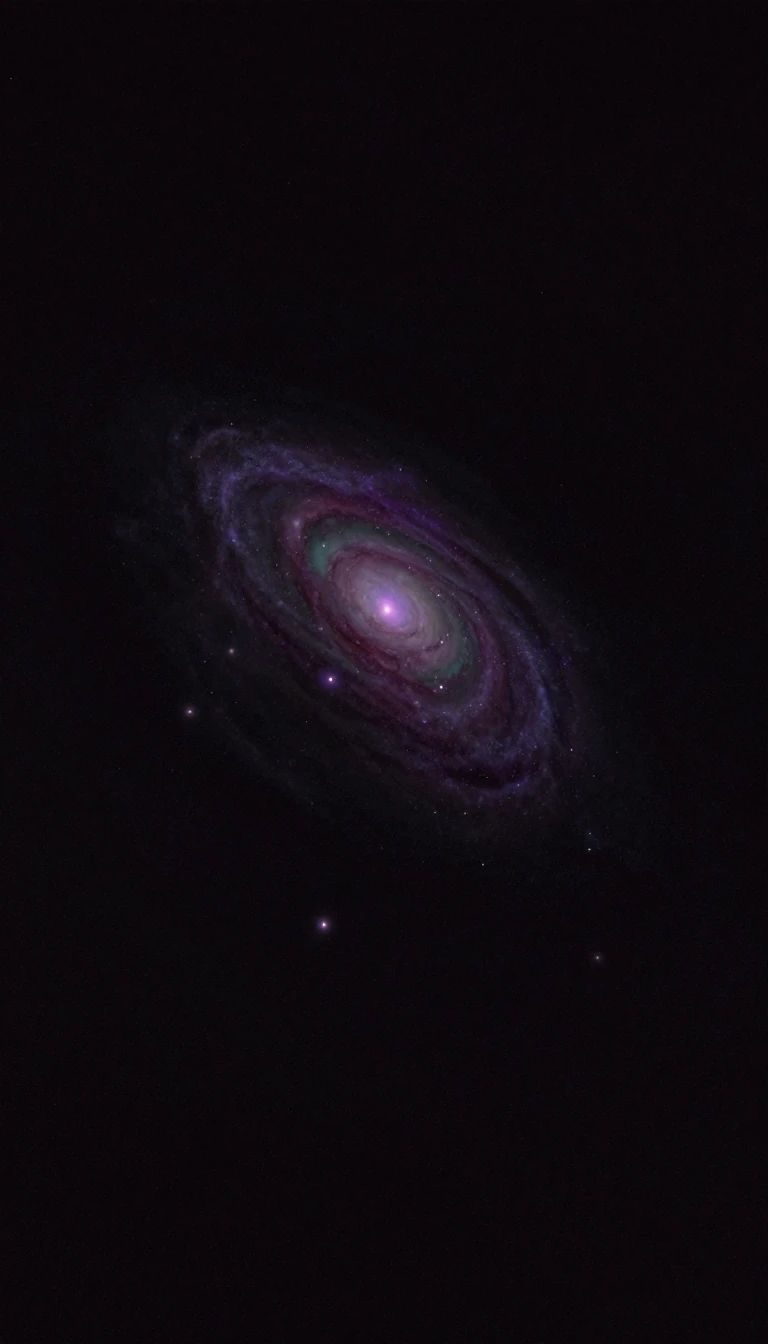
In short: Fritz Zwicky was a brilliant, abrasive astronomer who fundamentally changed our view of the cosmos. While his peers focused on visible light, Zwicky inferred the existence of dark matter decades before it was widely accepted, and he correctly identified the cataclysmic nature of supernovae long before others caught on.
Born in Bulgaria in 1898 to a Swiss father and Czech mother, Zwicky was sent to Switzerland for his education at age six. Initially trained in engineering, he pivoted to physics and mathematics at ETH Zurich, earning his doctorate in 1922. His path to astronomy was unconventional; he arrived at the California Institute of Technology in 1925 on a Rockefeller fellowship, intending to study quantum mechanics under Robert Millikan. However, the proximity of the Mount Wilson Observatory and his own restless intellect soon drew him toward the mysteries of the night sky.
Zwicky’s most profound insight arrived in 1933. By studying the Coma cluster of galaxies, he calculated that the visible stars lacked the gravitational pull necessary to keep the cluster from flying apart. He proposed that an unseen "missing mass" provided the required gravity. This concept, now known as dark matter, accounts for the vast majority of the universe's matter-energy composition. Though his peers were skeptical for decades, the reality of this invisible substance was eventually confirmed through observations of galactic rotation and gravitational lensing, where massive objects bend light like a lens.
Beyond dark matter, Zwicky was a visionary regarding stellar evolution. In 1934, he and collaborator Walter Baade coined the term "supernova" to describe the explosive death of stars, theorizing that these events left behind incredibly dense neutron stars. Zwicky was a prolific observer, personally discovering 120 supernovae over his career by manually comparing photographic plates. His personality was as intense as his science; he was famously difficult, known for calling those he disliked "spherical bastards" because he felt they were unpleasant from every possible angle.
Zwicky’s legacy extends into engineering, where he held over 50 patents, including work on jet propulsion and rocket engines during World War II. He remained at Caltech until his retirement in 1968, consistently pushing the boundaries of theoretical and observational astronomy. He died in 1974, leaving behind a body of work that transformed our understanding of the universe's composition and the life cycles of stars.
Opens the Intellect+ feed with this card first. Swipe up for the next one.
Sources
- Summary by Intellect · source: Fritz Zwicky - Biography
- Also: Fritz Zwicky | Biography, Discoveries, & Facts | Britannica
- Also: Fritz Zwicky
To cite this card, link to https://intellectplus.co.uk/app/space-fritz-zwicky.
How we source, check and correct cards: Editorial standards.
General information, not professional advice. Spotted an error? Flag the card or see corrections and complaints.
Intellect Plus is a visual educational discovery platform for exploring fascinating facts and ideas. Brain Food, Not Brain Rot. What is Intellect Plus?
Related
More in Astronomy and geodesy · More in Space · Latest · A–Z · All topics
