 Intellect Plus
Astronomy and geodesy
58 cards. Each one is a 40-second story with a five-minute read behind it.
 The intersection of Earth measurement and the mysteries of the cosmosExplore the fundamental relationship between geodesy and astronomy. This video introduces the science of measuring our planet while simultaneously looking toward the stars to unde…
 How satellites reveal the invisible shape of our gravity fieldWe perceive the Earth as a solid, static sphere. In reality, it is a dynamic body with a complex gravitational figure and shifting crustal motions. By using artificial satellites …
 Mapping the invisible: The science of Earth's shape and rotationTo navigate our world accurately, we must understand more than just its surface. This video introduces the Global Geodetic Observing System (GGOS) and the science of geodesy, whic…
- The invisible science that makes modern life and Earth science possibleWhile largely unknown to the public, geodesy provides the essential foundation for Earth observation and planetary science. This introductory video by Dr. Marcelo Santos explores …
 Why the Earth is not a sphere and how we map itThe Earth is a jagged, bulging rock, yet we navigate it using flat maps. This video explains the mathematical models—ellipsoids and geoids—that allow scientists to represent our i…
 How scientists measure the precise shape and gravity of our planetThis video introduces the foundational principles of geodesy and astronomy. It explores how experts use precision instruments to map Earth's dimensions, navigate the globe, and st…
 The invisible science of measuring our shifting, rotating planetWe often think of the Earth as a static stage for human history. In reality, it is a dynamic system of moving plates, changing tides, and varying mass distribution. Geodesy is the…
 Mapping the invisible: How gravimetry reveals the Earth's hidden massGravity isn't a constant; it fluctuates based on what lies beneath our feet. This video introduces the science of gravimetry, explaining how measuring these tiny variations allows…
 Why the universe is flying apart faster than anyone ever expectedIn 1998, astronomer Adam Riess and his colleagues made a startling discovery: the expansion of the universe is not slowing down as gravity should dictate, but accelerating. This r…
 Allan Sandage spent decades measuring the universe, only to find a century-old secret.Allan Sandage was the preeminent observational cosmologist of the 20th century, spending half a century at the Palomar and Mount Wilson observatories. Yet, even in his final days,…
 How one woman's speed and precision mapped the stars for the entire worldAnnie Jump Cannon was an American astronomer who revolutionized how we understand the cosmos. By streamlining the classification of stellar spectra, she transformed an impossibly …
- The astronomer who mapped the Milky Way while theorizing the end of capitalismAnton Pannekoek was a dual pioneer: he founded Dutch astrophysics and served as a primary theorist of council communism. While he revolutionized how we visualize galactic light, h…
 How a search for twinkling radio stars led to the discovery of pulsarsIn 1967, Antony Hewish built a massive antenna array to study the solar wind. Instead, his team detected strange, rapid pulses from deep space. This accidental discovery of pulsar…
- How a persistent hum in a radio antenna confirmed the universe's explosive originIn 1964, Arno Penzias and Robert Wilson stumbled upon a mysterious, persistent background noise while testing a sensitive microwave antenna. After scrubbing away bird droppings th…
- Why a Nobel Prize-winning astronomer spent six weeks trying to prove himself wrong.In 1998, Brian Schmidt and his team discovered that the universe is expanding at an ever-increasing rate. The result was so unexpected that Schmidt initially assumed he had made a…
 Why a legendary comet hunter created the most famous list in the night sky.Charles Messier was obsessed with finding comets, but the universe kept getting in his way. To stop wasting time on stationary, blurry objects that looked like comets but weren't,…
 How a farm boy using homemade equipment discovered the ninth planet in 1930Clyde Tombaugh, a self-taught astronomer from Kansas, identified Pluto while conducting a methodical search for a predicted trans-Neptunian world. By comparing photographic plates…
 How a PhD student’s discovery shattered our understanding of the universe’s planetary systemsUntil 1995, our solar system was the only blueprint for planetary life. Then, Didier Queloz and his supervisor Michel Mayor detected a giant planet orbiting a Sun-like star. This …
 The first woman to earn a doctorate at the Sorbonne was an astronomerDorothea Klumpke shattered academic barriers in 1893, becoming the first woman to receive a doctorate from the Sorbonne. Her career spanned from measuring star positions at the Pa…
- How a team of women transformed astronomy from simple observation into a theoretical scienceEdward C. Pickering, director of the Harvard College Observatory, launched an ambitious project in 1885 to catalog the spectra of all stars. By hiring a group of women to analyze …
 How one astrophysicist decoded the hidden life of stars and the power of quasarsEdwin E. Salpeter was a polymath whose insights reshaped our understanding of the cosmos. From explaining how stars forge carbon to identifying the engines powering the universe's…
- How a chemical engineer revolutionized our understanding of the stars without formal astronomical training.Ejnar Hertzsprung entered astronomy as an outsider, armed only with a background in photochemistry. By applying his expertise in light and photography to the night sky, he uncover…
- How a self-taught apprentice transformed astronomy by obsessing over the smallest possible errors.Friedrich Wilhelm Bessel left school at 14 to work in a commercial firm, yet he became one of history's greatest astronomers. By systematically eliminating optical, mechanical, an…
- The curmudgeonly genius who first saw the invisible mass holding our universe togetherFritz Zwicky was a brilliant, abrasive astronomer who fundamentally changed our view of the cosmos. While his peers focused on visible light, Zwicky inferred the existence of dark…
- The visionary astronomer who built the world's most powerful telescopes while battling mental illness.George Ellery Hale was a titan of twentieth-century astrophysics, responsible for creating the massive observatories that expanded our view of the cosmos. Yet, behind his monument…
- The man who mapped the moon and named the belt beyond NeptuneGerard Kuiper is widely considered the father of modern planetary science. From discovering moons around Uranus and Neptune to pioneering lunar atlases for the Apollo missions, hi…
 The astronomer who mapped the heavens and redefined the size of our solar system.Giovanni Domenico Cassini was a master of precision who transformed 17th-century astronomy. From discovering Saturn’s moons and its iconic ring gap to calculating the scale of the…
 How a busy doctor in Bremen became a titan of 19th-century celestial discovery.Heinrich Wilhelm Matthias Olbers was a dedicated physician who spent his nights scanning the heavens from his home observatory. Beyond his medical practice, he revolutionized come…
- How a deaf researcher’s tedious cataloging of stars unlocked the scale of the universeHenrietta Swan Leavitt was a Harvard computer who spent her days analyzing glass photographic plates. While restricted from operating telescopes, her meticulous study of variable …
- How one man transformed astronomy from simple data collection into rigorous theoretical physicsHenry Norris Russell spent six decades at Princeton, fundamentally shifting how we understand the stars. By applying physics to the heavens, he helped create the Hertzsprung-Russe…
- How Jan Oort proved the Milky Way rotates and revealed our hidden solar neighborhoodJan Oort transformed our view of the cosmos by proving the Milky Way spins like a giant wheel. He shifted the Sun from the galaxy's center to its edge and proposed a vast, invisib…
- How a refugee from Saigon helped reveal the hidden edge of our solar system.Jane Luu, a Vietnamese American astronomer, spent years searching for the supposed emptiness beyond Neptune. In 1992, her persistence paid off when she and David Jewitt discovered…
 Why the architect of modern cosmology spends his time hunting for cosmic anomaliesJim Peebles helped build the standard model of the universe, turning cosmology into a precision science. Yet, the Nobel laureate remains a professional skeptic. Today, he focuses …
 Why the first Astronomer Royal burned hundreds of his own scientific publications.John Flamsteed, England’s inaugural Astronomer Royal, spent his life mapping the heavens with unprecedented precision. Yet, he famously destroyed most copies of a 1712 star catalo…
 How a childhood hobby with ham radio led to a Nobel Prize in physics.Joseph Hooton Taylor Jr. turned an early fascination with radio equipment into a career that reshaped our understanding of the universe. By discovering the first binary pulsar, he…
- How a soldier in the trenches solved the mystery of the black holeWhile serving on the Russian front during World War I, Karl Schwarzschild produced the first exact solution to Einstein's field equations. His mathematical breakthrough revealed t…
 How a theoretical physicist turned Einstein’s ripples into a Nobel-winning realityKip Thorne spent decades chasing the faintest whispers in the universe. While Einstein predicted that accelerating masses would create ripples in space-time, these gravity waves r…
- Lyman Spitzer: The Mountaineer Who Conceived of Telescopes Operating in Outer SpaceLyman Spitzer was a polymath who bridged the gap between the stars and the earth. A theoretical physicist who pioneered plasma research and space-based astronomy, he also found ti…
- The astronomer who mapped the stars while dodging V-1 bombs and gender barriersMargaret Burbidge revolutionized our understanding of how stars forge the elements of the periodic table. Despite being barred from observatories and denied fellowships because of…
- How a self-taught Irish astronomer became the Herschel of the SpectroscopeMargaret Lindsay Huggins lacked formal scientific training, yet she revolutionized astrophotography through sheer curiosity and technical ingenuity. By merging her expertise in ph…
- How a seventeenth-century woman simplified the complex mathematics of planetary motionMaria Cunitz was a rare female voice in the male-dominated world of seventeenth-century astronomy. While others struggled with the cumbersome calculations of Johannes Kepler’s Rud…
- The first woman to discover a comet was denied credit by her own husband.Maria Margaretha Kirch was a pioneering German astronomer whose observations were essential to the scientific output of her era. Despite discovering a comet in 1702, she remained …
- How a wartime radar engineer transformed our view of the distant universe foreverMartin Ryle turned the skills he honed developing radar for the Royal Air Force into a revolutionary tool for astronomy. By inventing aperture synthesis, he allowed scientists to …
 How a Vassar Student Became the Goddess of Wisdom in 19th-Century American AstronomyMary Watson Whitney was a brilliant mathematician who defied the era's rigid gender barriers. As Maria Mitchell’s star pupil and eventual successor at Vassar College, she transfor…
 How one Indian physicist unlocked the secrets of the stars using thermal ionizationIn 1920, Meghnad Saha transformed astrophysics by linking stellar spectra to temperature. His thermal ionization equation allowed scientists to finally decode the chemical composi…
 The astronomer who redefined our solar system by demoting its smallest, most famous planet.Michael E. Brown is the Caltech professor who earned the nickname the man who ended Pluto. His discovery of the massive trans-Neptunian object Eris forced a scientific reckoning, …
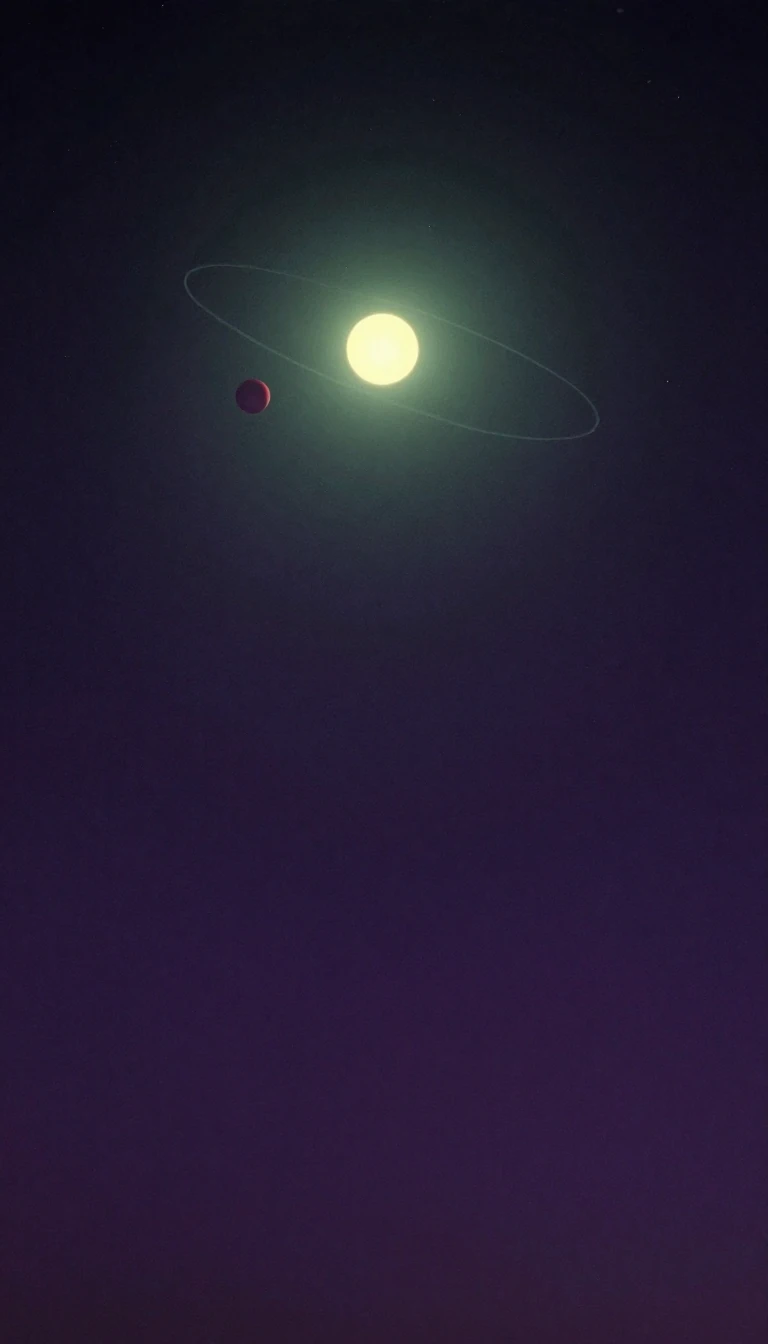 How a theoretical physicist built the tools to find our first alien worldMichel Mayor did not dream of being an astronomer, yet he reshaped our view of the cosmos. By pivoting from theoretical physics to instrument design, he created the precision tech…
- The astronomer who built the foundation for NASA's most iconic space telescopesNancy Grace Roman was the architect of NASA's space astronomy program. As the agency's first chief of astronomy, she transformed a skeptical scientific community into a powerhouse…
 How a former javelin thrower proved a supermassive black hole hides in our galaxyReinhard Genzel, a 2020 Nobel laureate, transitioned from national-level track and field to mastering the invisible. By tracking the frantic orbits of stars near the Milky Way’s c…
 How a restless Italian physicist opened the invisible X-ray universe to human eyesRiccardo Giacconi felt like a failure in his early career, struggling to find his footing in particle physics. Yet, his pivot to space science in 1959 transformed our understandin…
 How a hobbyist tinkerer accidentally discovered the echo of the Big BangRobert Woodrow Wilson grew up fixing radios and building hi-fi sets in Texas. His knack for electronics eventually led him to Bell Labs, where he and Arno Penzias stumbled upon an…
- Why the universe is expanding faster than anyone ever thought possibleFor decades, astrophysicists assumed the expansion of the universe would eventually slow down due to gravity. In 1998, Saul Perlmutter and his colleagues shattered that consensus.…
- How a French mathematician found a hidden planet using only the power of numbersIn 1846, Urbain Le Verrier achieved one of the greatest feats in scientific history. By analyzing tiny, unexplained wobbles in the orbit of Uranus, he calculated the exact positio…
 The astronomer who measured the universe's expansion before we knew it was expandingVesto Slipher spent his career at Lowell Observatory, where he captured the faint light of distant spiral nebulae using exposure times as long as 80 hours. His meticulous spectros…
- Viktor Ambartsumian challenged the status quo of how galaxies and stars are bornLong before modern consensus, Soviet astrophysicist Viktor Ambartsumian argued that stars were not just passive relics of the past. He proposed that galaxies were active, evolving…
- How wartime blackouts in Los Angeles helped an astronomer double the size of the universeDuring the darkness of World War II, Walter Baade utilized the reduced light pollution over Los Angeles to peer deeper into space than ever before. By resolving individual stars w…
 How the stars forged the elements that make up everything on EarthWilliam Alfred Fowler spent decades at Caltech’s Kellogg Radiation Laboratory measuring the nuclear reactions inside stars. His work revealed that the chemical elements forming ou…
 The astronomer who named an asteroid China twice, only to lose one of themZhang Yuzhe, the father of modern Chinese astronomy, spent his career tracking the heavens. His legacy is etched in the stars, yet his most famous contribution involves a peculiar…