The violent death of a star disguised as its birth
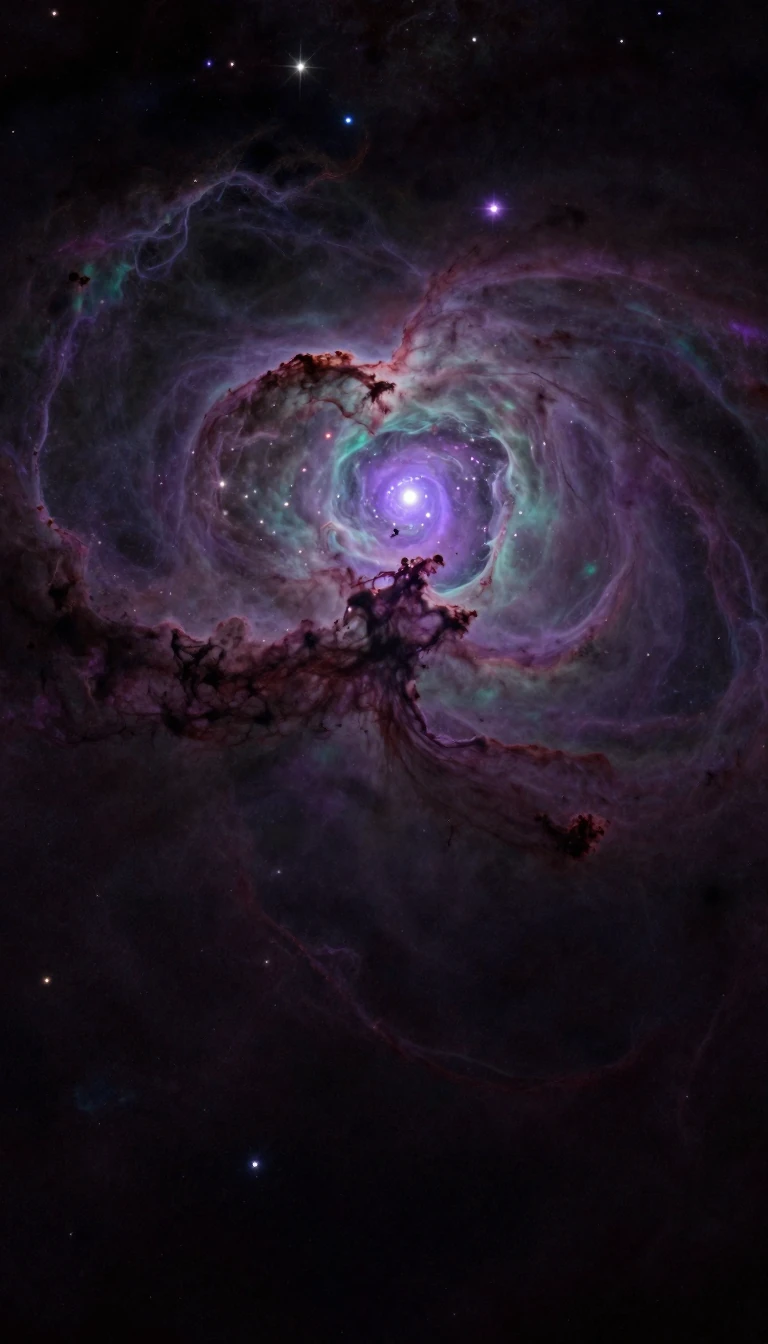
In short: In 1604, astronomers watched a new star ignite in the heavens. They believed they were witnessing a stellar birth, but they were actually watching a catastrophic end. This celestial explosion was so powerful it outshone planets and helped shift the very foundations of human cosmology.
In October 1604, German astronomer Johannes Kepler observed a 'new star' in the constellation Ophiuchus. It brightened to magnitude -2.5, making it brighter than Jupiter and visible in broad daylight for three weeks. While contemporary observers were puzzled by its sudden appearance and eventual disappearance in March 1606, the event served as a pivotal moment for European science. Italian astronomer Lodovico delle Colombo was the first to spot it on October 9. Kepler began his own tracking a week later in Prague. He was inspired by Tycho Brahe's earlier records of a similar event in 1572.
Because it challenged existing celestial models, it helped shape cosmology toward the heliocentric system proposed by Nicolaus Copernicus. Modern physics reveals that Kepler was not witnessing a birth, but a Type Ia supernova—the runaway thermonuclear explosion of a white dwarf star. This occurs in binary systems where a white dwarf pulls material from a nearby red giant companion. This specific explosion is believed to have occurred roughly 20,000 light years away from our world. It was situated near the edge of a dark nebula complex.
Once the white dwarf reaches a critical mass of about 1.4 times our Sun, it triggers a chain reaction that releases tremendous energy. Because these specific explosions occur at a consistent mass, they provide a 'standard candle' for astronomers to calculate cosmic distances. By measuring how dim these supernovae appear from Earth, scientists have determined that the expansion of the universe is accelerating, likely driven by dark energy. While Kepler relied on his naked eyes—Galileo wouldn't turn a telescope to the skies for another four years—his meticulous tracking of SN 1604 laid the groundwork for our modern understanding of stellar death and the scale of the cosmos. Today, researchers use X-ray and infrared instruments to study these lingering remnants. These observations help clarify how stars form and evolve over time.
Opens the Intellect+ feed with this card first. Swipe up for the next one.
Sources
- Summary by Intellect · source: 420 Years Ago: Astronomer Johannes Kepler Observes a Supernova - NASA
- Also: History of supernova observation
To cite this card, link to https://intellectplus.co.uk/app/space-history-of-supernova-observation.
How we source, check and correct cards: Editorial standards.
General information, not professional advice. Spotted an error? Flag the card or see corrections and complaints.
Intellect Plus is a visual educational discovery platform for exploring fascinating facts and ideas. Brain Food, Not Brain Rot. What is Intellect Plus?
Related
More in Supernovae · More in Space · Latest · A–Z · All topics
