Our home in the cosmos is not a permanent structure but a fleeting cosmic basin.
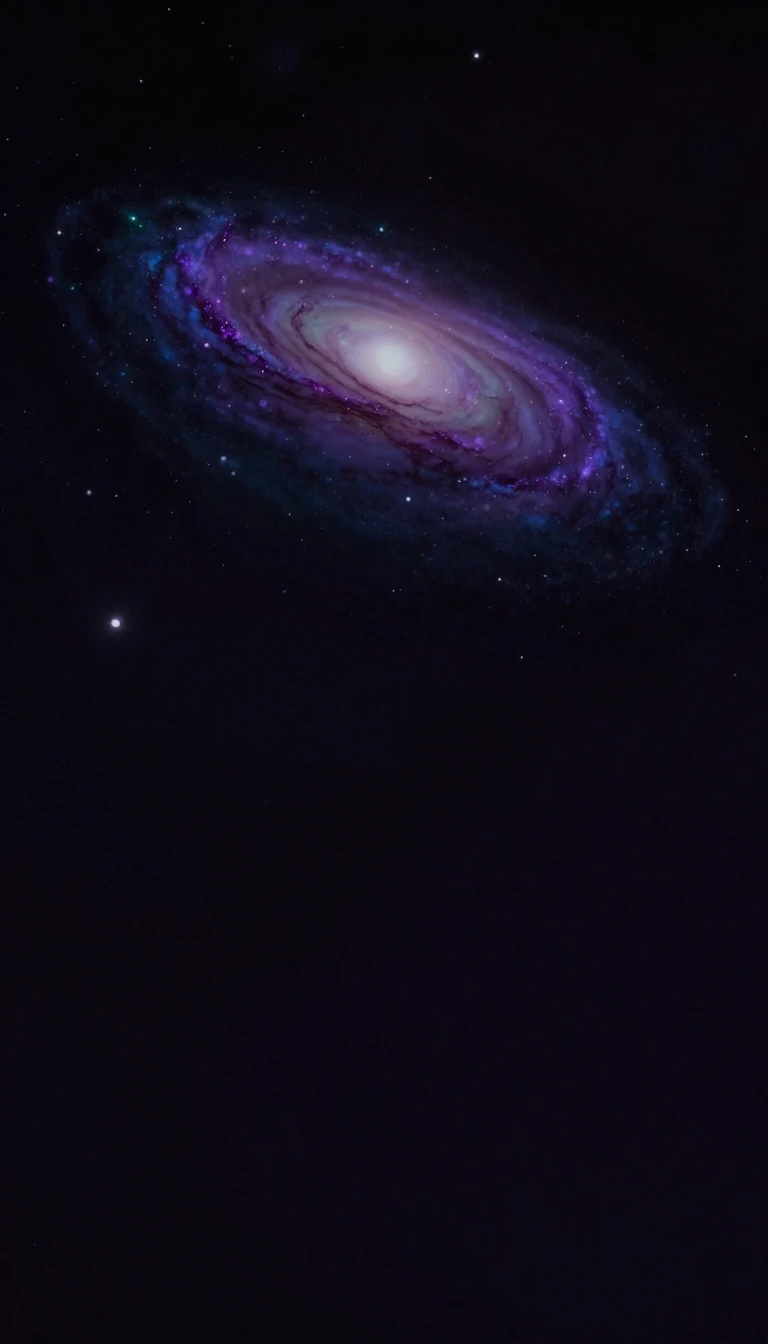
In short: Laniakea, the massive structure containing our Milky Way, was defined in 2014 by mapping the flow of galaxies. While it spans 400 million light-years and holds 100,000 galaxies, astronomers now believe it is not gravitationally bound. Instead of a permanent home, it is a temporary, dispersing cosmic watershed.
Defined in September 2014 by a team including R. Brent Tully and Hélène Courtois, Laniakea—Hawaiian for 'immense heaven'—was identified by analyzing the relative velocities of galaxies. Rather than using traditional high-density mapping, the researchers defined the structure as a 'basin of attraction,' a region where the gravitational pull of a central point dictates the movement of surrounding matter. For Laniakea, this focal point is the Great Attractor, a massive gravitational anchor situated near the Norma Cluster.
The structure is immense, encompassing roughly 100,000 galaxies and possessing a mass estimated at 10^17 solar masses. It subsumes smaller, historically recognized superclusters like the Virgo and Hydra-Centaurus. However, the classification remains contested. Because Laniakea is not gravitationally bound, it will not collapse over time; instead, projections suggest it will be torn apart by the influence of dark energy. Consequently, some researchers prefer the term 'supercluster cocoon' or 'watershed' to describe these basins, reserving the term 'supercluster' for denser, more stable regions of the cosmic web.
The boundaries of Laniakea are fluid and continue to be refined. Recent observations suggest it may be part of an even larger structure, potentially moving toward the massive Shapley Concentration alongside other superclusters like Coma and Apus. Furthermore, the 'Zone of Avoidance'—a region obscured by the Milky Way's own dust and gas—hides an unknown number of galaxy clusters, meaning our current census of 300 to 500 clusters within the Laniakea cocoon is likely an underestimate. As our mapping techniques improve, our understanding of this vast, transient neighborhood continues to evolve.
Opens the Intellect+ feed with this card first. Swipe up for the next one.
Sources
- Summary by Intellect · source: Laniakea Supercluster
To cite this card, link to https://intellectplus.co.uk/app/space-laniakea-supercluster.
How we source, check and correct cards: Editorial standards.
General information, not professional advice. Spotted an error? Flag the card or see corrections and complaints.
Intellect Plus is a visual educational discovery platform for exploring fascinating facts and ideas. Brain Food, Not Brain Rot. What is Intellect Plus?
Related
More in Astronomy · More in Space · Latest · A–Z · All topics
