The constellation Perseus holds a celestial secret that sounds like a deep bass note.
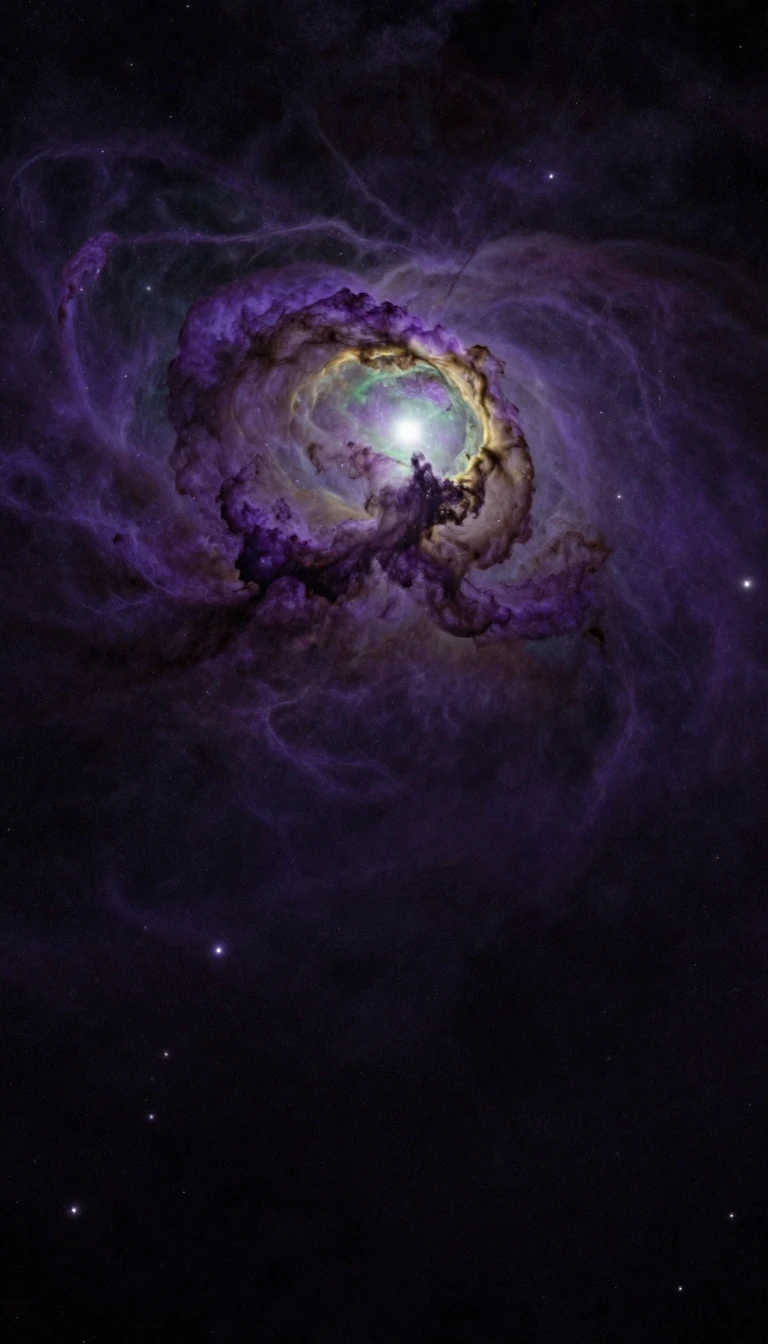
In short: Named for the Greek hero who defeated Medusa, Perseus is far more than a mythological figure in the night sky. It contains a triple-star system that mimics a demon's eye, a massive galaxy cluster emitting low-frequency sound, and remnants of ancient Chinese flood-prevention lore hidden among its stars.
Perseus is a prominent northern constellation covering 615 square degrees, ranking twenty-fourth in size among the 88 constellations defined by the International Astronomical Union. While Western tradition maps the hero Perseus here, ancient Chinese astronomers saw something entirely different. They identified four distinct constellations in this region, including the Celestial Boat, which reminded people to prepare for flood seasons, and the Great Trench, a site associated with mass burials. In Neo-Assyrian Babylonia, the area was known as the Old Man constellation, SU.GI.
The constellation is home to Algol, or Beta Persei, a famous triple-star system. Known historically as the Demon's Head, its apparent brightness fluctuates between magnitudes 2.3 and 3.5 every 2.867 days. This variability occurs because it is an eclipsing binary; a larger, fainter companion periodically passes in front of a hotter, brighter primary star. Another notable object is the Perseus Cluster, a massive galaxy group located 250 million light-years away. Within this cluster, the galaxy NGC 1275 hosts an active nucleus that generates jets of material, creating bubbles that produce sound waves. These waves resonate at a B flat note, specifically 57 octaves below middle C.
Beyond these features, Perseus hosts the annual Perseids meteor shower, which has been observed for roughly 2,000 years and peaks between August 9 and 14. The constellation also contains the Double Cluster, two dense open clusters visible through binoculars, and various nebulae like the California Nebula. From the yellow-white supergiant Mirfak to the mysterious X-ray binary GRO J0422+32, which may contain a black hole, Perseus remains a dense laboratory for stellar evolution and galactic dynamics. Its boundaries, established by Eugène Delporte in 1930, encompass a rich variety of celestial phenomena that continue to challenge our understanding of the cosmos.
Opens the Intellect+ feed with this card first. Swipe up for the next one.
Sources
- Summary by Intellect · source: Perseus (constellation)
- Also: www.britannica.com — Perseus | Mythology, Stars, Constellations | Britannica
To cite this card, link to https://intellectplus.co.uk/app/space-perseus-constellation.
How we source, check and correct cards: Editorial standards.
General information, not professional advice. Spotted an error? Flag the card or see corrections and complaints.
Intellect Plus is a visual educational discovery platform for exploring fascinating facts and ideas. Brain Food, Not Brain Rot. What is Intellect Plus?
Related
More in Celestial sphere · More in Space · Latest · A–Z · All topics
