 Intellect Plus
Celestial sphere
95 cards. Each one is a 40-second story with a five-minute read behind it.
 The invisible path that defines our view of the cosmosThis lecture introduces the ecliptic, a fundamental concept in astronomy that helps us map the movements of celestial bodies relative to our own planet.
 Mapping the heavens: an introduction to the celestial sphereThis lecture introduces the fundamental concept of the celestial sphere, serving as the starting point for a comprehensive series on astronomical structures. It provides the essen…
 Visualizing the Universe: Understanding the Concept of the Celestial SphereTo navigate the night sky, astronomers use a mental map called the celestial sphere. This video explains how we project the vast universe onto an imaginary globe to track the move…
 How to measure the universe using only your handYou can map the stars without a telescope or complex math. By using your own body as a geometric tool, you can measure the vast distances of the cosmos in degrees and arc minutes,…
 The sky is a giant dome that doesn't actually existFor millennia, humans believed the Earth sat motionless while the heavens revolved around us. While we now know the planet spins on its axis, astronomers still use the illusion of…
- The imaginary sphere that guides sailors across the open oceanTo navigate the vast seas, mariners rely on a conceptual map of the sky. This video explains the Celestial Sphere, an essential mental model for locating celestial bodies and mast…
 Why all parallel lines appear to meet on the celestial sphereTo navigate by the stars, sailors must master a geometric trick of perspective. This video explains how the celestial sphere functions as an infinite radius, allowing navigators t…
 Mapping the Infinite: How Astronomers Visualize the Night SkyTo study the universe, we must first understand our own perspective. This lecture introduces the celestial sphere, a conceptual tool used to map and navigate the vast reaches of s…
 A star that predates our understanding of the universe's ageFor years, the Methuselah star posed a crisis for cosmology. Its estimated age suggested it was older than the universe itself. By refining its distance and chemical makeup, astro…
- The Andromeda constellation is more than a myth; it is a gateway to deep space.Spanning 722 square degrees, Andromeda is one of the largest constellations in the night sky. While it bears the name of a chained princess from Greek mythology, its true fame lie…
 Antlia: The 18th-century air pump floating in the Southern Celestial HemisphereNamed for an air pump, the constellation Antlia is a faint collection of stars in the southern sky. Established during the Enlightenment, this celestial machine represents the sci…
 Why your zodiac sign no longer matches the constellation in the night skyIf you were born in late January, you might identify as an Aquarius. Yet, due to a 26,000-year wobble in Earth's axis, the Sun no longer aligns with the constellations as it did w…
 Aquila: The Celestial Eagle Carrying Ancient Myths and Massive Cosmic Structures Across Our SkyLocated along the Milky Way, the constellation Aquila is a treasure trove of stellar history and mythology. From the rapid rotation of its brightest star, Altair, to the massive H…
 Ara: The Ancient Altar That Once Bound the Greek Gods in Celestial AllegianceDeep in the southern sky lies Ara, a constellation representing the altar where Zeus and his allies swore their oaths before battling the Titans. Though it lacks brilliant stars, …
 The largest constellation in history was so massive it had to be dismantledArgo Navis was once a celestial titan, a sprawling ship of stars 28% larger than any modern constellation. It was so unwieldy that astronomers eventually carved it into three sepa…
 Aries was once a farmhand before it became the ram we know today.Long before it was the zodiac ram, the stars of Aries were known to Babylonians as the Agrarian Worker. This mid-sized constellation has been reimagined across cultures, from a po…
 Auriga is a celestial crossroads where charioteers, goats, and emperors collide in the sky.Spanning 657 square degrees, the constellation Auriga has been interpreted as everything from a Mesopotamian scimitar to a Roman charioteer. While modern astronomy defines it by p…
 Boötes is a vast celestial herdsman guarding one of the universe's emptiest voids.Known as the herdsman, Boötes is a massive constellation that dominates the northern spring sky. While it contains the brilliant star Arcturus, it is equally famous for what it la…
 Caelum is a faint, chisel-shaped constellation hiding in the southern sky's quietest corners.Introduced in the 1750s, Caelum is one of the smallest and most barren constellations in the night sky. Far from the Milky Way's glow, this celestial chisel contains few bright st…
- Camelopardalis: The massive, faint giraffe hiding in the northern skySpanning the northern heavens, Camelopardalis is the 18th largest constellation, yet it remains notoriously difficult to spot. Introduced in the early 17th century, this celestial…
- A constellation born from a medieval translation error, Canes Venatici hides cosmic giants.Canes Venatici, the hunting dogs, exists today because a medieval translator misread a Greek word for a staff as a word for dogs. Despite its accidental origins, this small northe…
- Canis Minor is a celestial 'Lesser Dog' with a history spanning ancient civilizations.Often overshadowed by its neighbor Canis Major, the constellation Canis Minor is a small but significant pattern in the northern sky. While modern astronomy identifies it by its t…
 Why the sea-goat constellation still dictates the geography of our planet todayCapricornus, the faint zodiac constellation, has been depicted as a hybrid goat-fish since the Middle Bronze Age. Though the winter solstice has long since drifted out of its boun…
- Once part of a legendary ship, Carina now holds the sky's most unstable star.Carina, the keel of the mythical Argo Navis, is a southern constellation defined by extreme stellar drama. From the massive, erratic outbursts of Eta Carinae to the distant, viole…
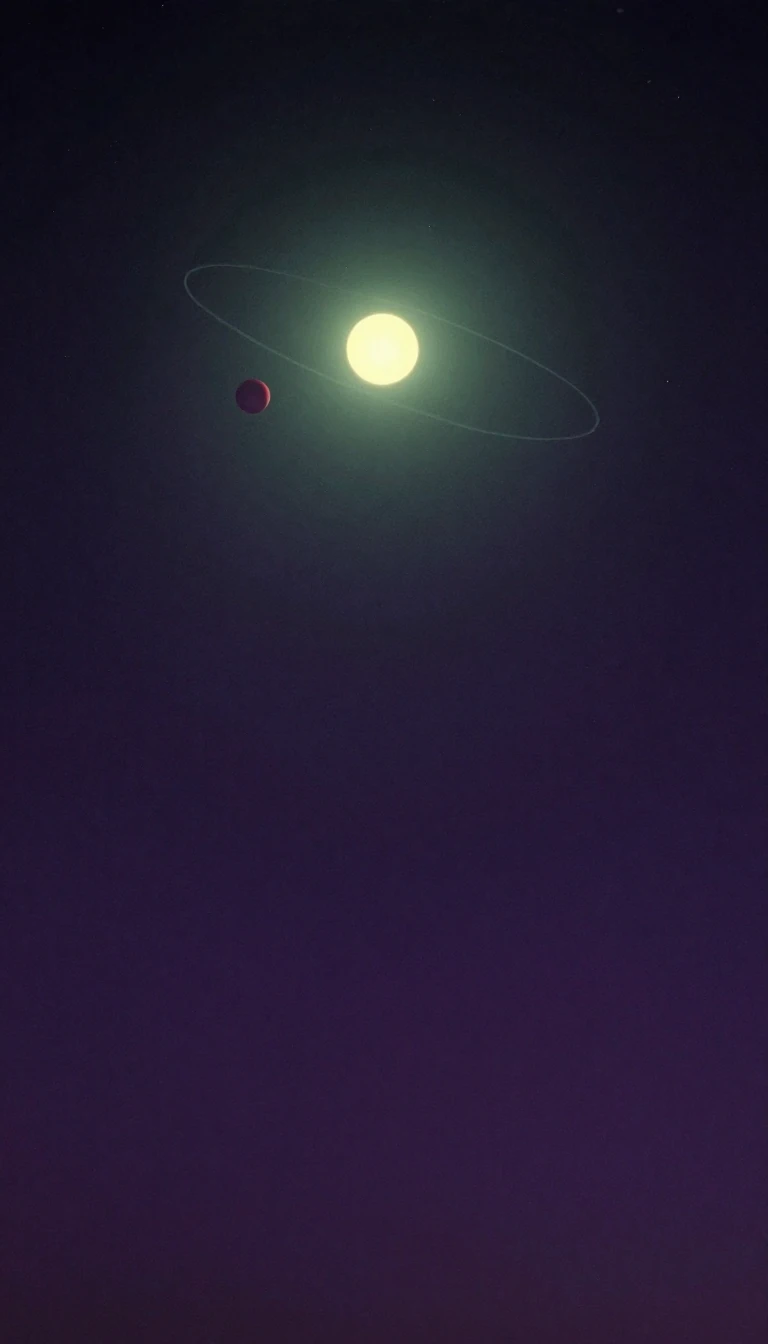 How humanity evolved from drawing myths in the stars to mapping the entire cosmosCelestial cartography, or uranography, is the science of mapping the heavens. From ancient Egyptian tomb ceilings to modern computer-automated space telescopes, our methods for tr…
 The celestial equator is an imaginary map line that anchors our view of space.If you projected Earth's equator into the infinite void, you would find the celestial equator. This great circle serves as the primary reference for mapping the stars, acting as a…
- Cepheus: The Northern King Who Guards a Universe of Giants and Supermassive Black HolesNamed for a mythological king of Aethiopia, the constellation Cepheus is a celestial powerhouse. It hosts the prototype for pulsating variable stars, massive red supergiants that …
- Why this ancient sea monster constellation is a treasure trove for deep space observersCetus, the celestial sea monster, hides far more than mythology in its depths. While ancient cultures saw a whale or a jaguar, modern astronomers find a gateway to the distant uni…
 New space telescope data reveals the true feeding habits of a massive black holeFor decades, astronomers believed that superheated outflows were the primary source of infrared light in the Circinus galaxy. However, high-resolution observations from the James …
 The celestial dove that was born from a mistranslated ancient textColumba, the constellation representing Noah's dove, was not recognized by ancient astronomers. Its existence is largely the result of a 17th-century mistranslation of a Christian…
 Coma Berenices is the only modern constellation named after a real historical person.While most constellations trace back to mythological beasts or ancient gods, this northern star cluster commemorates a queen's sacrifice. Named for Berenice II of Egypt, the const…
- The Southern Crown is a celestial wreath with a history spanning from turtles to boomerangs.Corona Australis, the Southern Crown, is a faint but distinctive horseshoe-shaped constellation bordering the Milky Way. While modern astronomy defines it by rigid boundaries, anc…
- The Northern Crown: A celestial arc steeped in ancient myth and violent cosmic historyCorona Borealis, the Northern Crown, is a small but iconic constellation in the Northern Celestial Hemisphere. While its semicircular arc of stars has inspired diverse cultural le…
 Why did the god Apollo cast a raven, a cup, and a snake into space?The constellation Corvus, Latin for raven, occupies a small patch of the Southern Celestial Hemisphere. While its four brightest stars form a distinct cross-shape, its true intrig…
- The Cup in the sky: why ancient myths cast a vessel among the starsCrater is a modest southern constellation, yet it carries the weight of ancient warnings. Representing a cup perched atop the water snake Hydra, it serves as a celestial monument …
- Cygnus, the celestial swan, holds the secrets of black holes and distant exoplanets.Spanning the Milky Way, the constellation Cygnus is far more than a mythological bird. It is a powerhouse of high-energy physics, home to the first identified black hole, the most…
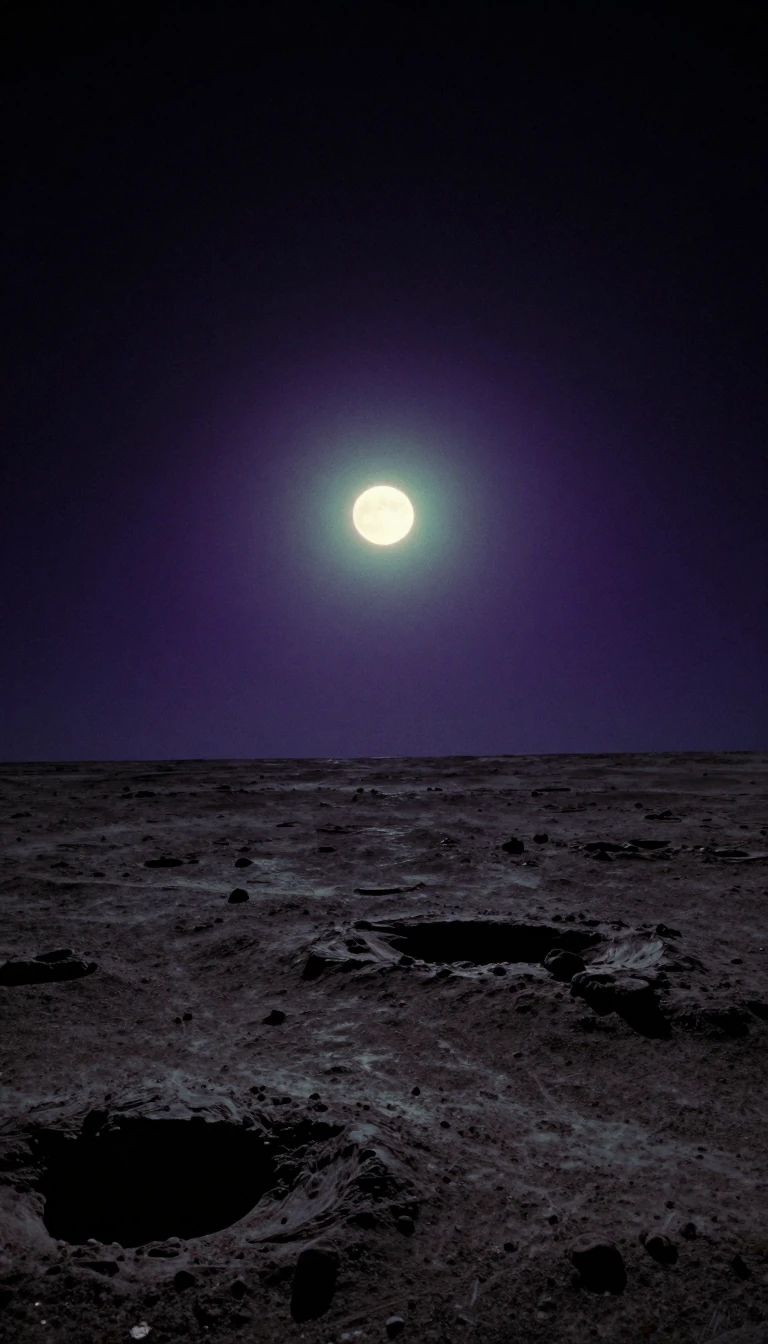 Declination is the celestial equivalent of latitude, mapping the stars above our heads.To navigate the night sky, astronomers use declination, an angular measurement that mirrors geographic latitude projected onto the heavens. By defining a star's position relative …
- Why two of the brightest stars in the dolphin constellation are named backwardsDelphinus is a small, faint constellation in the Northern Celestial Hemisphere, yet it hides a peculiar secret. Its two brightest stars, Sualocin and Rotanev, bear names that are …
- Dorado: The Southern constellation that holds a galaxy and the South Ecliptic poleNamed for the mahi-mahi, this Southern Sky constellation is far more than a celestial fish. It serves as a cosmic anchor, housing the South Ecliptic pole and the majority of the L…
- Why the celestial equinox is a moving target for modern astronomersIn astronomy, the equinox is not a moment in time but a specific direction in space. Because of Earth's complex wobbles, this reference point drifts across the stars over thousand…
- Equuleus is the celestial foal that rises just before the mighty winged Pegasus.Spanning only 72 square degrees, Equuleus is the second smallest of the 88 modern constellations. Often depicted as just a horse's head, this faint collection of stars near the ce…
- Eridanus is a celestial river that spans the sky and hides a cosmic void.Stretching across the southern celestial hemisphere, Eridanus is the sixth-largest modern constellation. Represented as a river in cultures from Greece to India, it contains every…
 Mapping the Milky Way requires a coordinate system that ignores Earth's own tilt.To navigate the galaxy, astronomers cannot rely on Earth-based maps. Instead, they use a specialized system that aligns with the Milky Way's own plane of symmetry. This framework,…
- Why the two brightest stars in Gemini are not actually relatedAnchored by the celestial twins Castor and Pollux, the Gemini constellation is a winter staple of the northern sky. While these two stars appear to be a matching pair, they are ph…
- Why this southern constellation was once mistaken for a fish and a flamingoGrus, the Crane, is a prominent fixture of the southern sky, yet its identity has shifted through centuries of cartography. Originally mapped as part of a southern fish, this coll…
- The constellation Hercules is a cosmic giant that holds the largest structure in existence.Spanning over 1,200 square degrees, Hercules is the fifth-largest constellation in the night sky. Beyond its mythological roots as the kneeling hero, it serves as a critical celes…
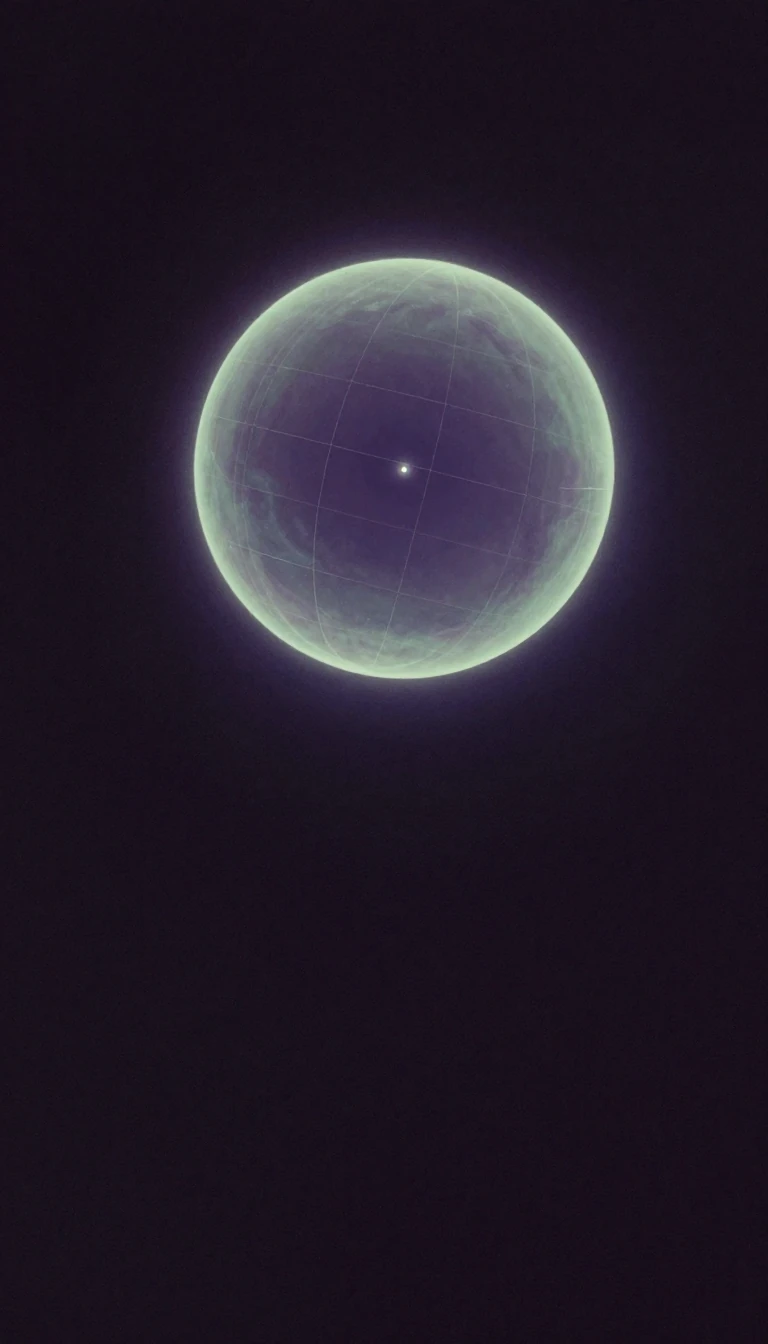 Horologium: The Southern Constellation That Immortalizes the Enlightenment's Obsession with Precision TimekeepingIn 1756, French astronomer Nicolas-Louis de Lacaille mapped the southern skies, populating them with symbols of scientific progress. Among his creations was Horologium, a faint co…
- How astronomers use the hour angle to track the movement of the heavensThe hour angle is a fundamental coordinate that measures how far an object has drifted from your local meridian. By tracking this angle, navigators and astronomers can pinpoint ex…
- Spanning over 100 degrees, Hydra is the largest and longest constellation in the sky.Stretching across the celestial equator, Hydra is a sprawling celestial serpent with a history that predates Greek mythology. While it covers 1303 square degrees, this massive con…
- Hydrus is a southern constellation that offers a glimpse into the Sun's distant future.Hidden in the deep southern sky, the constellation Hydrus is home to Beta Hydri, a subgiant star remarkably similar to our own. As one of the oldest stars in our solar neighborhoo…
- Lacerta is a faint northern constellation that ancient astronomers completely overlooked for centuries.Tucked between Cygnus and Andromeda, Lacerta is a small, subtle collection of stars defined only in 1687. While it lacks the grandeur of brighter constellations, it hides a bizarr…
- Leo is one of the few constellations that actually resembles its namesake celestial lion.While most constellations require a vivid imagination to identify, Leo is famously recognizable. Its stars form a distinct sickle-shaped head and a triangular haunch, mirroring a …
 Leo Minor: The faint, overlooked constellation that holds a cosmic clock and a ghost quasarTucked between the Great Bear and the Lion, Leo Minor is a small, dim collection of stars that classical astronomers ignored. Yet, this modest patch of sky hides a pulsating white…
- Why the hare constellation Lepus is forever fleeing the hunter OrionPositioned directly beneath the feet of Orion, the constellation Lepus is traditionally depicted as a hare in full flight. While it lacks a specific origin story in Greek mytholog…
- Libra is the only zodiac constellation named after an object rather than a creature.While most zodiac signs represent animals or mythological figures, Libra stands alone as the celestial scales. This faint constellation, tucked between Scorpius and Virgo, holds a…
 How Ancient Chinese Astronomers Mapped the Heavens into Imperial Palaces and Mythical BeastsAncient Chinese astronomy organized the night sky into a sophisticated system of enclosures, mansions, and asterisms. Far from just mapping stars, this framework mirrored the impe…
- Why the constellation Lupus was once a wineskin, a beast, and a mad dogLupus, the wolf of the southern sky, has worn many faces throughout history. Long before it became a lupine figure in European star charts, ancient observers saw it as a hybrid cr…
- Why this faint northern constellation requires the sharp eyesight of a lynx to spotIntroduced in 1687 by Johannes Hevelius, the Lynx constellation is notoriously difficult to discern. Composed of faint stars scattered between Ursa Major and Auriga, Hevelius name…
- Beyond the myth of Orpheus, Lyra is a cosmic laboratory of extreme stellar physics.While ancient legends cast Lyra as the lyre of Orpheus, modern astronomy reveals a far more dynamic reality. This small northern constellation serves as a premier celestial labora…
- Why the March equinox is a celestial anchor for human history and timekeepingThe March equinox is more than a seasonal marker; it is the zero point of our astronomical coordinate system. While it signals spring in the north, its true significance lies in h…