Beyond the Atmosphere: How NASA's Newest Observatories Are Unlocking the Universe's Deepest Secrets
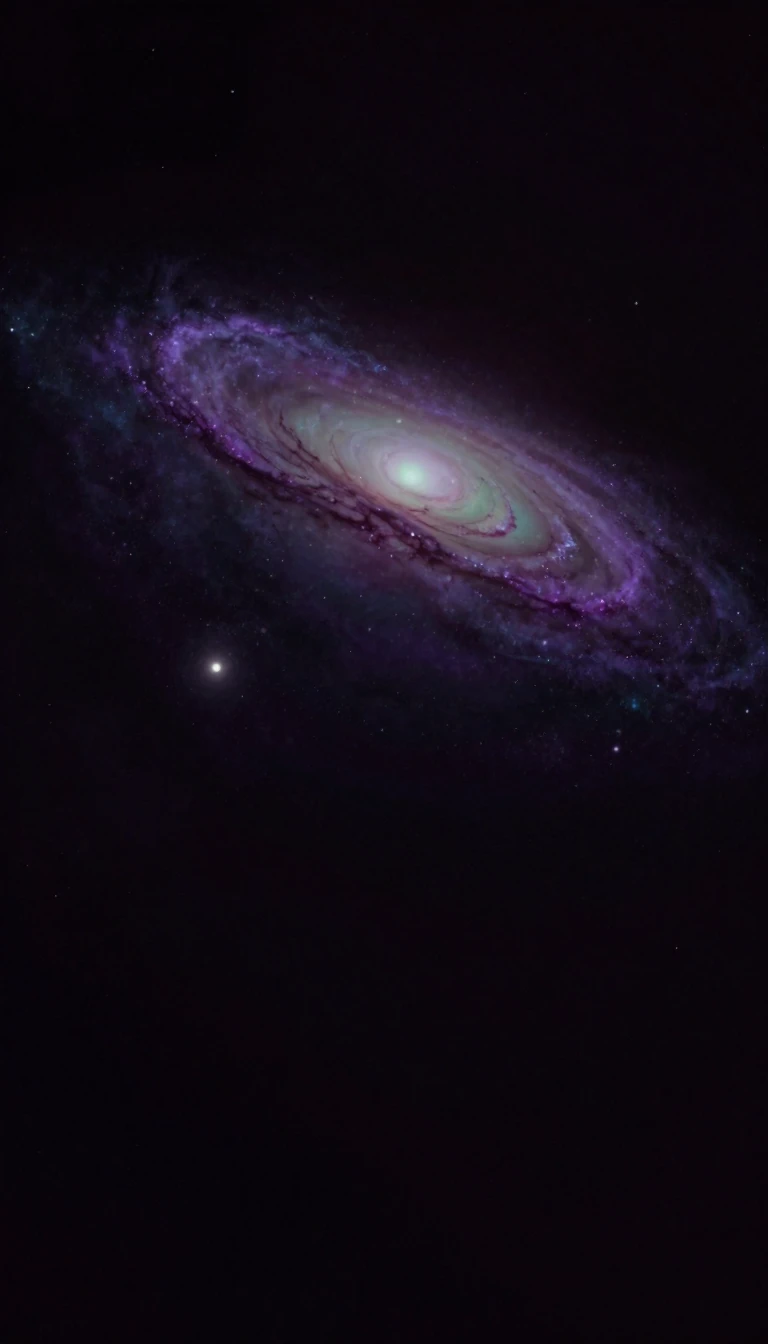
In short: Space telescopes bypass the distortion of Earth's atmosphere to capture light invisible to the human eye. From the James Webb Space Telescope's infrared gaze to the newly launched Nancy Grace Roman Space Telescope, these engineering marvels are mapping the evolution of galaxies and hunting for planets in the habitable zone.
Operating from the second Sun-Earth Lagrange point, or L2, the Nancy Grace Roman Space Telescope represents a leap in astrophysical observation. Launched on August 30, 2026, this observatory orbits 930,000 miles from Earth, a position that balances gravitational forces to minimize fuel consumption. Its primary mirror, measuring 7.9 feet across, feeds light into two sophisticated instruments: a 300-megapixel Wide Field Instrument and a high-precision Coronagraph. The latter is designed to block stellar glare, enabling astronomers to detect planets up to a billion times fainter than their host stars.
The mission focuses on three fundamental mysteries: dark energy, dark matter, and exoplanets. Dark energy, which constitutes about 68% of the universe, is believed to drive the accelerated expansion of space, though recent data suggests its pressure may shift over time. By observing how galaxies and clusters formed throughout cosmic history, the Roman telescope aims to distinguish between competing theories of dark matter—specifically, whether it consists of heavy, sluggish particles or lighter, faster-moving ones. This research is essential for narrowing down the candidates for direct detection in terrestrial experiments.
The telescope is named after Nancy Grace Roman, NASA’s first chief astronomer and a pivotal figure in the development of the Hubble Space Telescope. Known as the 'mother of the Hubble,' Roman oversaw the project from its inception, securing funding and guiding technical decisions. Her legacy continues through this new observatory, which complements the James Webb Space Telescope. While Webb excels at studying specific cosmic details—such as star-forming regions like IC 348 or the chemical signatures of interstellar comets—the Roman telescope is built to scan vast sections of the sky, providing a broader context for how the universe evolves.
Opens the Intellect+ feed with this card first. Swipe up for the next one.
Sources
- Summary by Intellect · source: NASA Science — James Webb Space Telescope - NASA Science
- Also: What Is the Nancy Grace Roman Space Telescope? (Grades 5-8) - NASA
- Also: Space telescope
To cite this card, link to https://intellectplus.co.uk/app/space-space-telescope.
How we source, check and correct cards: Editorial standards.
General information, not professional advice. Spotted an error? Flag the card or see corrections and complaints.
Intellect Plus is a visual educational discovery platform for exploring fascinating facts and ideas. Brain Food, Not Brain Rot. What is Intellect Plus?
Related
More in Astronomical technology · More in Space · Latest · A–Z · All topics
