Why a sub-orbital flight is a journey to space that never quite arrives
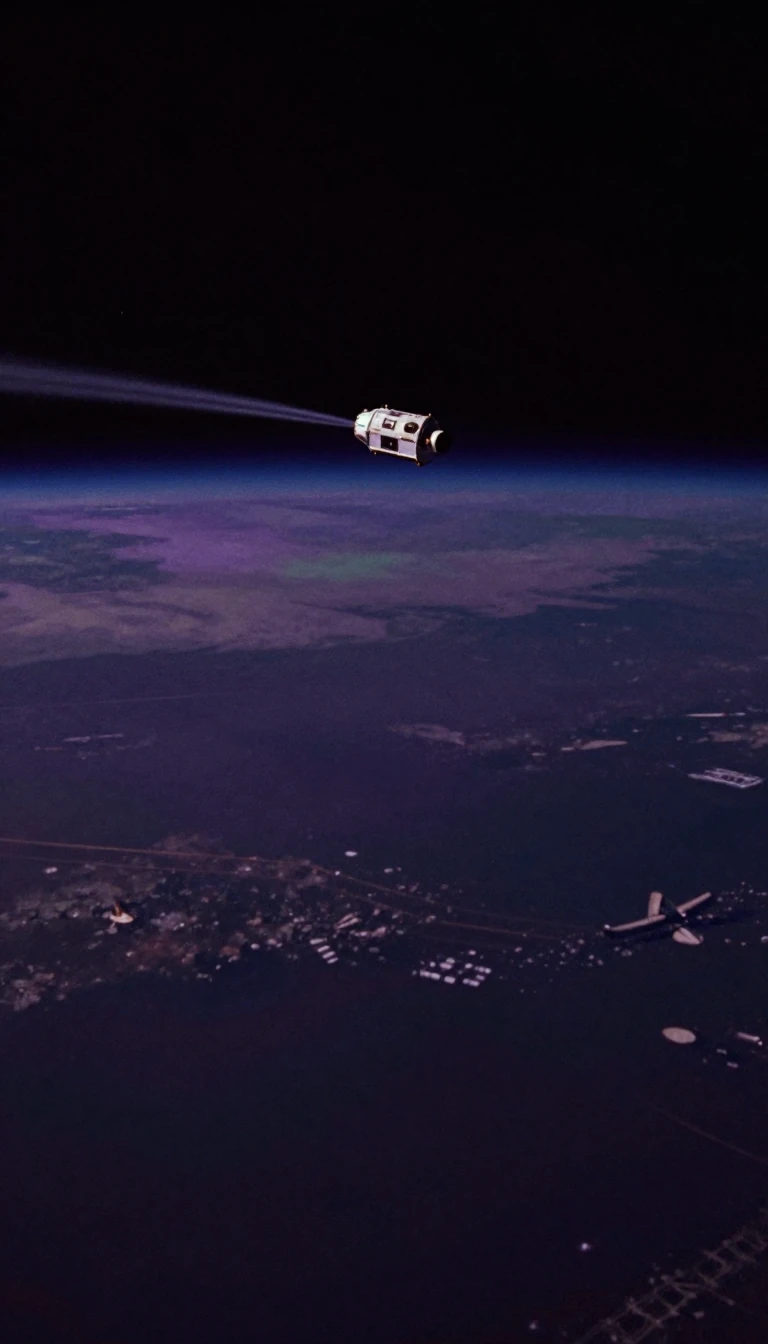
In short: A sub-orbital flight reaches the edge of space but lacks the speed to stay there. Unlike an orbital mission, these vehicles follow a trajectory that inevitably intersects the Earth. Whether testing rockets or carrying tourists, these flights offer a brief taste of space before gravity pulls the craft back home.
A sub-orbital spaceflight is defined by its inability to complete a full revolution around the Earth. To qualify as reaching space, a vehicle must cross the Kármán line, located 100 kilometers above sea level. Because these craft do not reach escape velocity or maintain the horizontal speed required for a stable orbit, their path is essentially a segment of an ellipse that terminates back on the planet's surface.
The physics of these flights is dictated by the need to balance altitude and range. For a simple vertical hop to 100 kilometers, a craft requires a delta-v of about 1.4 km/s. However, covering horizontal distances—such as the 5,500-kilometer range of an intercontinental ballistic missile—requires significantly higher speeds. An ICBM, for example, needs an initial speed of 6.1 km/s to reach its target. As the range increases, the trajectory's apogee can climb well beyond 1,300 kilometers.
The history of this technology is rooted in military development. The German V-2 rocket, launched on October 3, 1942, was the first ballistic missile to reach space, hitting an altitude of 85 kilometers. Today, sub-orbital flight profiles vary widely, from brief tourist hops that land at their launch site to long-range missile trajectories. Regardless of the mission, all sub-orbital craft eventually face atmospheric reentry, where the speed at the start of the descent determines the intensity of aerodynamic heating.
Opens the Intellect+ feed with this card first. Swipe up for the next one.
Sources
- Summary by Intellect · source: Sub-orbital spaceflight
To cite this card, link to https://intellectplus.co.uk/app/space-sub-orbital-spaceflight.
How we source, check and correct cards: Editorial standards.
General information, not professional advice. Spotted an error? Flag the card or see corrections and complaints.
Intellect Plus is a visual educational discovery platform for exploring fascinating facts and ideas. Brain Food, Not Brain Rot. What is Intellect Plus?
Related
More in Space · More in Space · Latest · A–Z · All topics
