Why a planet twice as massive isn't always twice as heavy
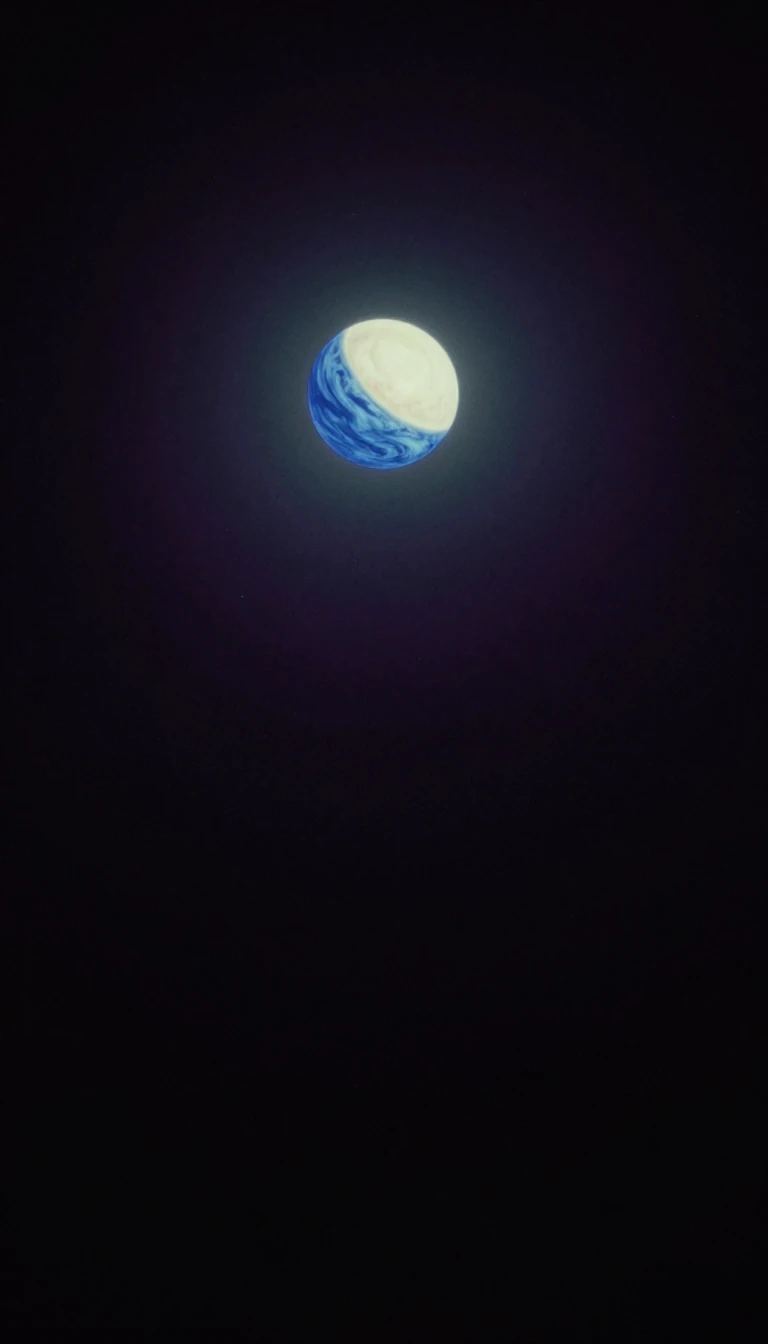
In short: Gravity follows an inverse square law, meaning distance matters just as much as mass. If you double a planet's size, its surface gravity doesn't simply double; it depends entirely on how that extra mass is distributed and whether the planet is made of rock or gas.
In Newtonian physics, surface gravity (g) is determined by an object's mass and its radius. Because gravity follows an inverse square law—where moving an object twice as far away divides the force by four—the surface gravity of a planet is approximately inversely proportional to the square of its radius. This means that for a planet with a fixed average density, surface gravity actually increases proportionally with its radius. For example, if a rocky planet has five times the mass of Earth but a radius 50% larger, its surface gravity would only be about 2.2 times stronger than Earth's.
The relationship between mass and gravity changes based on composition. For rocky planets, density grows with mass as $M^{1/3}$, leading to an experimental relationship where surface gravity grows as the square root of the mass ($M^{1/2}$). Conversely, for gas giants like Jupiter or Neptune, the internal structure is different; research shows that for giant planets up to 100 times the mass of Earth, surface gravity remains remarkably similar and close to 1 (relative to Earth).
Real-world celestial bodies are rarely perfect spheres. Rotation introduces centrifugal forces that cause 'equatorial bulge,' making stars and planets oblate. This results in lower surface gravity at the equator compared to the poles—a phenomenon exploited in science fiction but also used in real-world exploration. Since 1915, scientists have even used these subtle variations in surface gravity to prospect for oil, such as locating the Nash Dome fields in Texas by measuring how mass distribution affects local pull.
The concept reaches its limit with black holes. Because they lack a physical surface, traditional Newtonian surface gravity is undefined. In relativity, while acceleration at an event horizon technically becomes infinite, physicists use a 'renormalized' value. This involves multiplying the local proper acceleration by a gravitational time dilation factor to create a mathematically well-behaved value that mimics Newtonian behavior in non-relativistic limits.
Opens the Intellect+ feed with this card first. Swipe up for the next one.
Sources
- Summary by Intellect · source: Surface gravity
To cite this card, link to https://intellectplus.co.uk/app/space-surface-gravity.
How we source, check and correct cards: Editorial standards.
General information, not professional advice. Spotted an error? Flag the card or see corrections and complaints.
Intellect Plus is a visual educational discovery platform for exploring fascinating facts and ideas. Brain Food, Not Brain Rot. What is Intellect Plus?
Related
More in Gravity · More in Space · Latest · A–Z · All topics
