TON 618: The Colossal Quasar That Outshines Entire Galaxies With Its Massive Black Hole
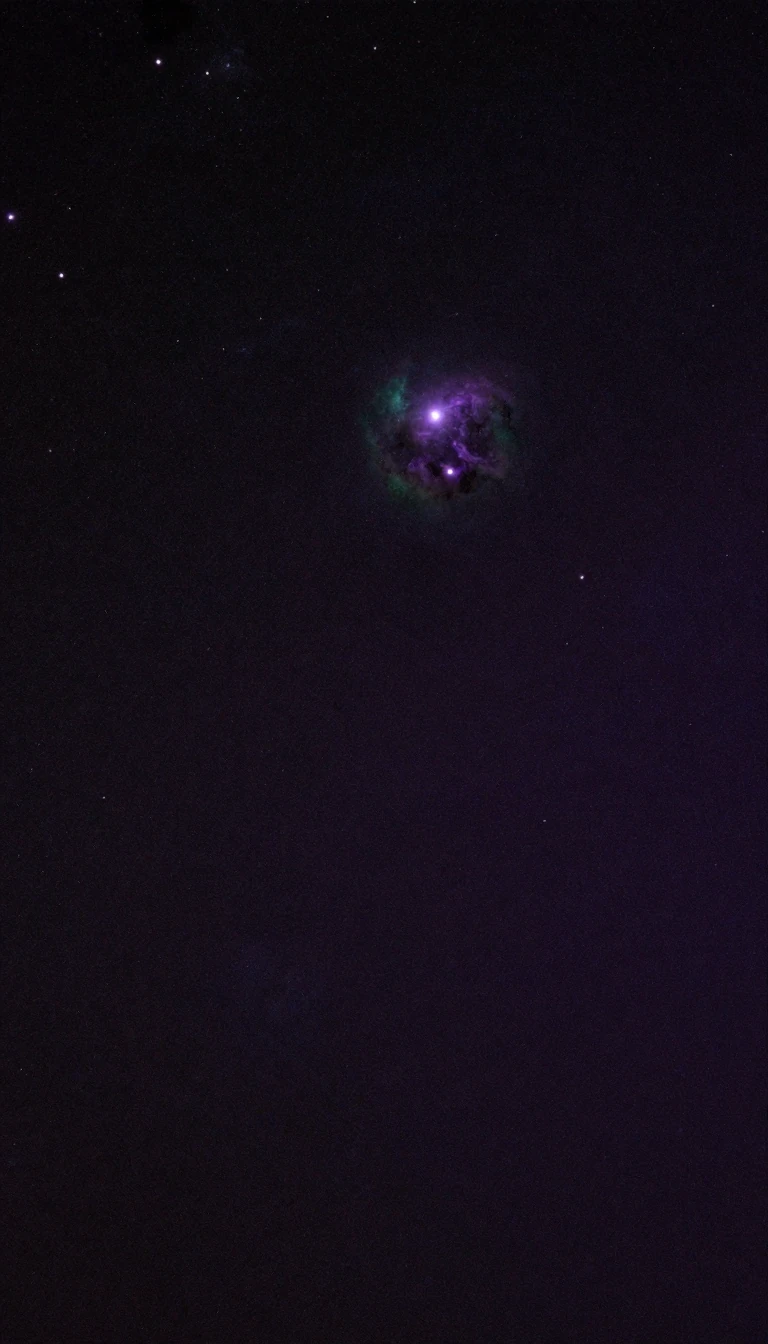
In short: Deep in the cosmos lies TON 618, a hyperluminous quasar powered by one of the largest black holes ever discovered. This celestial engine is so brilliant it masks its own host galaxy, while its surrounding gas cloud spans hundreds of thousands of light-years, offering a rare window into early galactic evolution.
First noted in 1957 as a faint blue star in a Mexican survey, TON 618 was only identified as a quasar in 1970. Located roughly 18.2 billion light-years away, this object is an active galactic nucleus, where a supermassive black hole consumes matter within an accretion disc. Its luminosity is staggering, shining with the intensity of 140 trillion Suns. This brilliance is so overwhelming that it completely outshines the galaxy it inhabits, rendering the host invisible to observers on Earth.
The central black hole of TON 618 is a record-breaker, though its exact mass remains a subject of scientific refinement. Early estimates, based on the extreme width of spectral emission lines, suggested a mass of 66 billion solar masses. However, a 2019 study using alternative spectral data revised this figure to 40.7 billion solar masses. Even at this lower estimate, the black hole is gargantuan, possessing an event horizon spanning 800 astronomical units—roughly 40 times the distance between Pluto and the Sun.
Beyond the quasar itself, TON 618 is surrounded by a massive Lyman-alpha blob, a nebula of gas stretching at least 330,000 light-years across. Observations from the Atacama Large Millimeter Array in 2021 revealed this structure consists of molecular outflows and cold gas, each weighing 50 billion solar masses. Because these nebulae are precursors to modern galaxies, studying TON 618 provides essential insights into how massive galaxies develop, ionize, and evolve over cosmic time.
The future of this titan is as extreme as its present. Evolution models suggest that due to its immense mass, the black hole will persist for roughly 1.3 quintillion years. It will eventually dissipate through Hawking radiation, marking its end long after the current era of the universe has passed.
Opens the Intellect+ feed with this card first. Swipe up for the next one.
Sources
- Summary by Intellect · source: TON 618
To cite this card, link to https://intellectplus.co.uk/app/space-ton-618.
How we source, check and correct cards: Editorial standards.
General information, not professional advice. Spotted an error? Flag the card or see corrections and complaints.
Intellect Plus is a visual educational discovery platform for exploring fascinating facts and ideas. Brain Food, Not Brain Rot. What is Intellect Plus?
Related
More in Astronomy · More in Space · Latest · A–Z · All topics
