Why your intuition often fails when solving a classic brain teaser
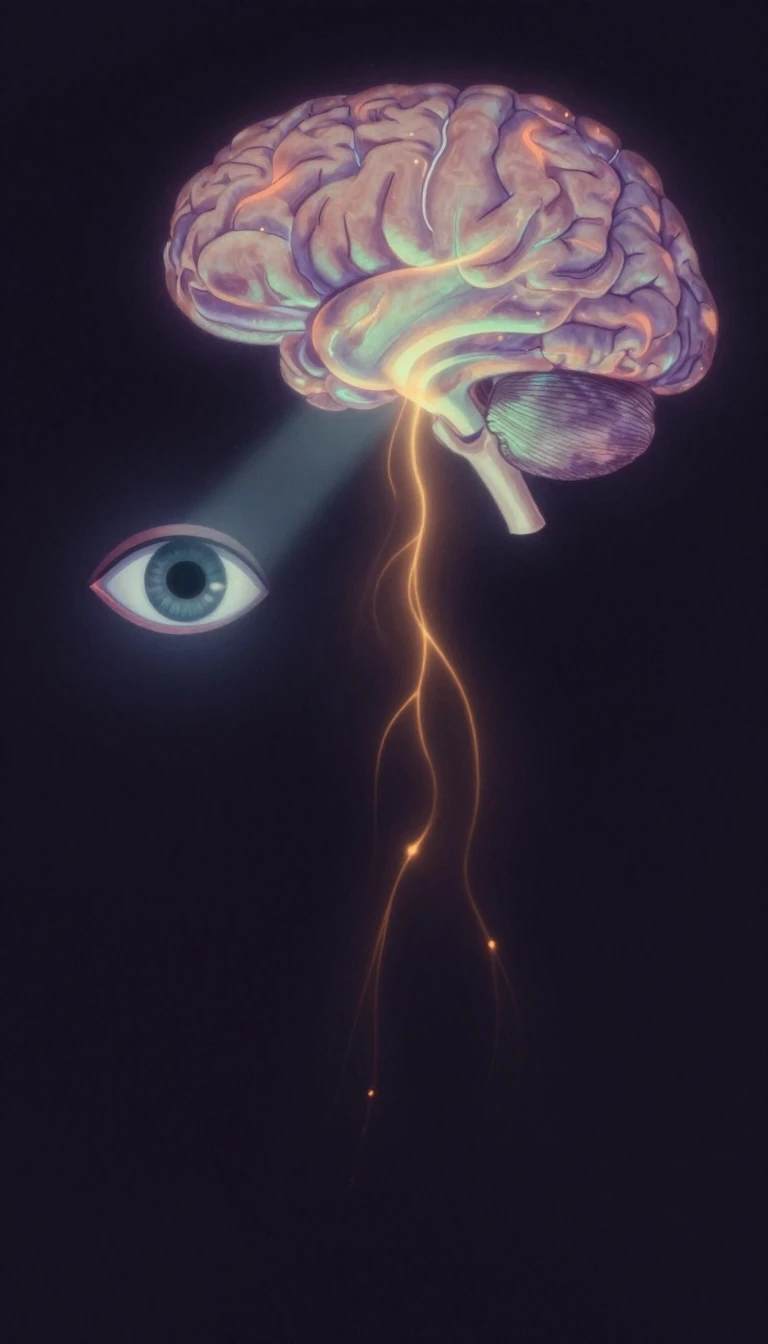
In short: Brain teasers are puzzles designed to challenge your standard way of thinking. They often demand lateral logic or unconventional approaches to overcome the fallacies inherent in human intuition. By forcing us to confront our cognitive biases, these riddles reveal how easily our minds misinterpret probability and simple patterns.
At their core, brain teasers are puzzles that require deliberate thought to solve. While they often manifest as simple riddles or logic problems, their true power lies in their ability to exploit the way our brains naturally process information. Archimedes, the ancient Greek mathematician, was among the first known enthusiasts of this craft, frequently challenging his contemporaries with complex mathematical problems to test their mental agility.
The difficulty of many modern brain teasers stems from a fundamental conflict between human intuition and mathematical reality. We are prone to relying on absolute probability when we should be considering conditional probability. This cognitive shortcut often leads us to incorrect conclusions, especially when a problem is framed to suggest a specific, intuitive pattern. For instance, in a riddle about naming a fifth daughter, the brain instinctively looks for a vowel-based sequence, ignoring the explicit information provided in the premise that Mary is the father's daughter.
This tension is most visible in famous paradoxes like the Monty Hall problem or the Boy or Girl paradox. Because these puzzles challenge our causal reasoning, they frequently spark intense, controversial debates. When we encounter a problem that seems to have an obvious answer, we often fail to account for the constraints or the underlying logic, leading to a classic trap. Whether it is a mathematical calculation—like determining how many holes one man can dig in one hour—or a lateral thinking exercise, these puzzles serve as a reminder that our first instinct is not always our most accurate tool.
Ultimately, brain teasers are more than just entertainment; they are a diagnostic for the mind. They force us to pause, re-evaluate our assumptions, and look past the surface-level information. By engaging with these puzzles, we learn to recognize the fallacies in our own thinking, moving beyond the immediate, intuitive response toward a more rigorous, logical analysis of the world around us.
Opens the Intellect+ feed with this card first. Swipe up for the next one.
Sources
- Summary by Intellect · source: Brain teaser
- Also: brain teaser
- Also: Wikidata — Brain Teaser · CC0
To cite this card, link to https://intellectplus.co.uk/app/sport-brain-teaser.
How we source, check and correct cards: Editorial standards.
General information, not professional advice. Spotted an error? Flag the card or see corrections and complaints.
Intellect Plus is a visual educational discovery platform for exploring fascinating facts and ideas. Brain Food, Not Brain Rot. What is Intellect Plus?
Related
More in Entertainment · More in Sport & Games · Latest · A–Z · All topics
