The invisible point that dictates how every object in the universe moves
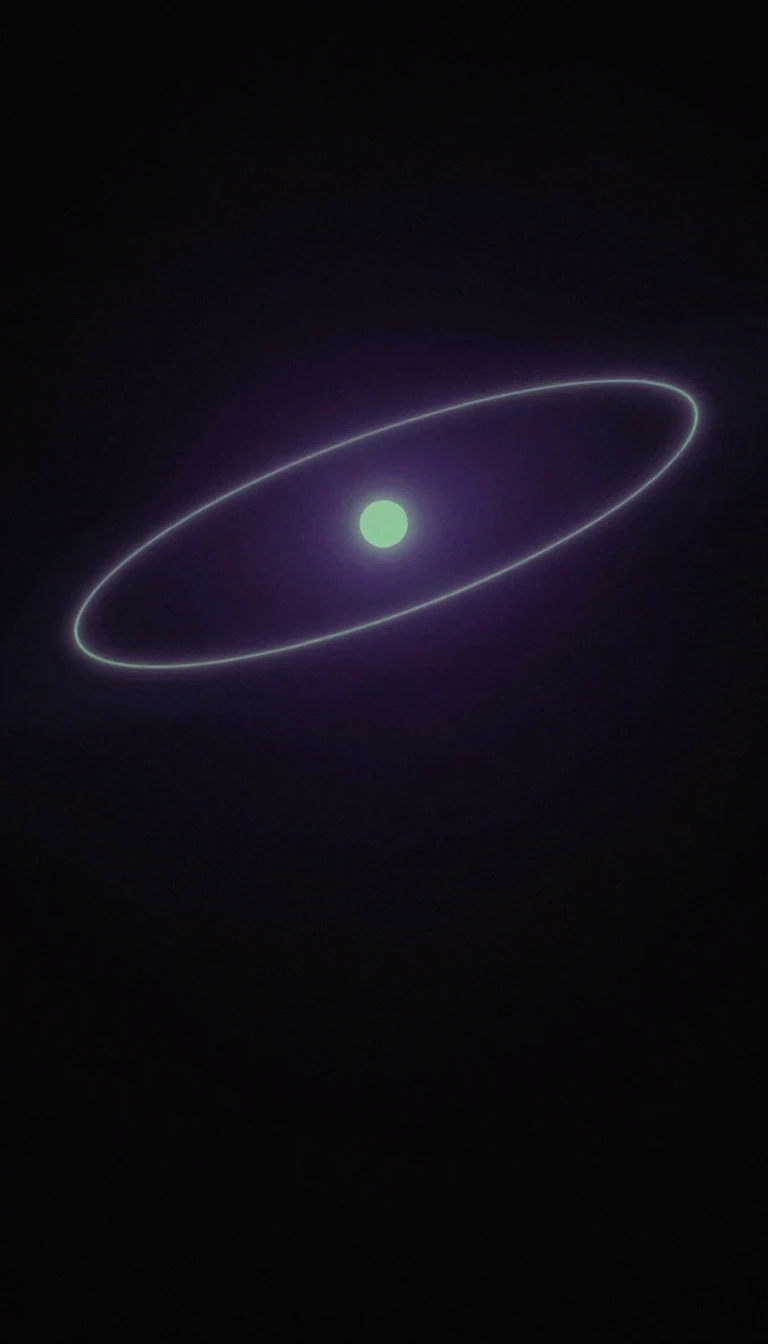
In short: Imagine an object as a single, tiny particle. While it may have complex dimensions and shifting parts, physics allows us to treat it as a solitary point where all its mass is concentrated. This unique balance point simplifies the chaos of motion, revealing the hidden mechanics behind how everything rotates.
The center of mass is the singular coordinate where the weighted positions of an object's total mass effectively cancel out. For any rigid body, this point acts as the anchor for motion; if you apply a force directly to it, the object will accelerate in a straight line without spinning. This mathematical abstraction turns complex systems into manageable problems, allowing scientists to model everything from the orbits of planets to the dynamics of aircraft as if they were simple particles.
While the concept is now a cornerstone of mechanics, its roots are ancient. Archimedes of Syracuse, writing in the 3rd century BCE, was the first to formalize the idea, using it to calculate the torque on levers and the orientation of floating bodies. He understood that an object naturally settles into a position that keeps its center of mass as low as possible. Centuries later, Leonhard Euler further refined these principles, reformulating Newton’s laws to center them on this vital reference point.
It is a common mistake to conflate the center of mass with the center of gravity. In a uniform gravitational field, they are identical, but in non-uniform fields—such as those experienced by satellites in orbit—they can diverge. Because gravity varies slightly across a large body, the center of gravity can shift based on orientation, whereas the center of mass remains a fixed property of the object's physical structure. Distinguishing between the two is essential for precision engineering and orbital mechanics, where even a slight horizontal offset can generate unwanted torque.
Opens the Intellect+ feed with this card first. Swipe up for the next one.
Sources
- Summary by Intellect · source: Center of mass
- Also: center of mass
- Also: Wikidata — center of mass · CC0
To cite this card, link to https://intellectplus.co.uk/app/sport-center-of-mass.
How we source, check and correct cards: Editorial standards.
General information, not professional advice. Spotted an error? Flag the card or see corrections and complaints.
Intellect Plus is a visual educational discovery platform for exploring fascinating facts and ideas. Brain Food, Not Brain Rot. What is Intellect Plus?
Related
More in Physics · More in Science · Latest · A–Z · All topics
