Classical mechanics was born from the need to explain why Earth moves unnoticed
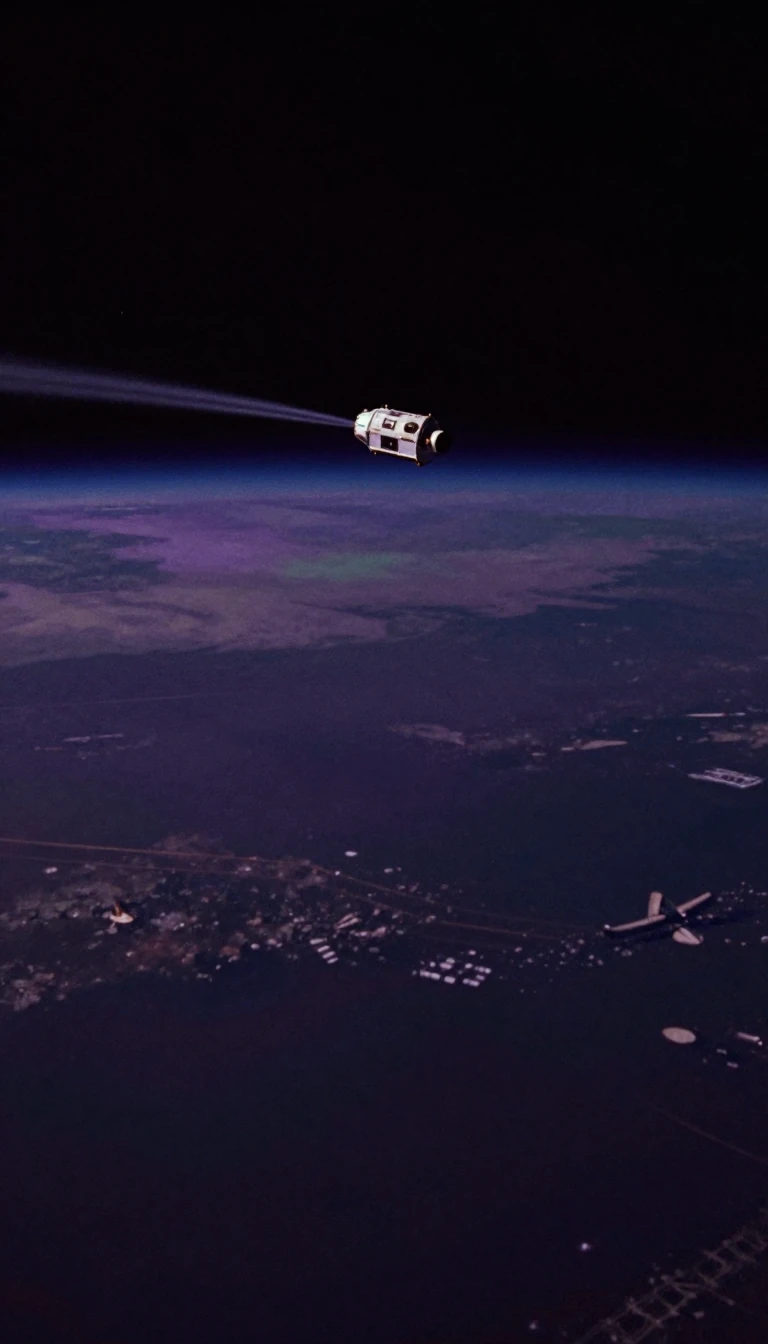
In short: For centuries, Aristotelian physics insisted Earth stood still at the center of the universe. When Copernicus proposed a moving Earth, he shattered this worldview but left a dangerous gap: why don't we feel the motion? The answer required a revolution in how we understand force, inertia, and falling bodies.
Before the scientific revolution, Aristotelian philosophy dominated, positing that Earth was the stationary center of the universe. In this view, objects moved only to reach their natural place, such as heavy items falling toward the center. Any other movement was considered violent and required a constant, proximate cause to persist. When Nicolaus Copernicus published De revolutionibus orbium coelestium libri VI in 1543, he placed the Sun at the center of the solar system, effectively tearing the heart out of Aristotelian mechanics without offering a replacement theory to explain why Earth’s motion remained imperceptible.
The solution emerged through the experimental work of Galileo Galilei. By observing balls rolling on inclined planes, Galileo deduced that objects do not require a constant force to stay in motion; rather, they tend to maintain their state unless interfered with. This insight, later refined by René Descartes to apply to straight-line motion, became the foundation for Newton’s first law of inertia. Galileo further transformed physics by proving that projectiles follow parabolic paths and that falling bodies accelerate at a rate independent of their mass, documenting these findings in his 1638 work, Dialogues Concerning the Two New Sciences.
While Galileo pioneered kinematics—the description of motion—he struggled to define its underlying causes, a field now known as dynamics. Meanwhile, Johannes Kepler sought to validate the Copernican system by abandoning the Platonic ideal of circular orbits. Through his investigations, Kepler discovered that planets move in ellipses with the Sun at one focus, finally sweeping away the complex system of epicycles that had persisted since Ptolemy in the 2nd century CE. These collective breakthroughs paved the way for Isaac Newton, whose Principia would eventually synthesize these disparate discoveries into the unified framework of classical mechanics.
Opens the Intellect+ feed with this card first. Swipe up for the next one.
Sources
- Summary by Intellect · source: Mechanics - Physics, Forces, Motion | Britannica
- Also: History of classical mechanics
To cite this card, link to https://intellectplus.co.uk/app/history-history-of-classical-mechanics.
How we source, check and correct cards: Editorial standards.
General information, not professional advice. Spotted an error? Flag the card or see corrections and complaints.
Intellect Plus is a visual educational discovery platform for exploring fascinating facts and ideas. Brain Food, Not Brain Rot. What is Intellect Plus?
Related
More in History by topic · More in History · Latest · A–Z · All topics
