Why your wall socket is a complex, localized, and potentially dangerous engineering puzzle
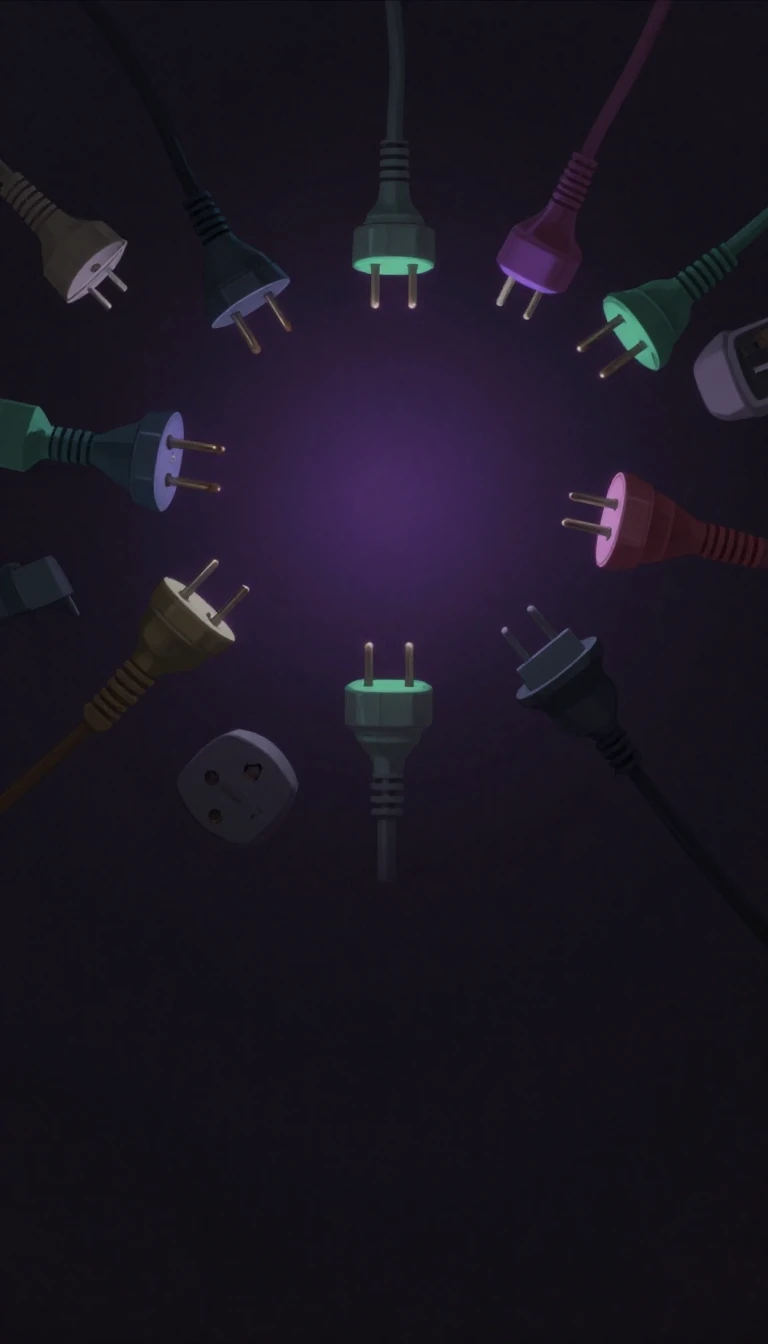
In short: Modern power sockets are far more than simple holes in the wall. They are the final, critical link in a global electrical infrastructure that has evolved over 140 years. From safety shutters to polarized pins, these connectors are designed to manage voltage, prevent fire, and protect you from electric shock.
The journey of the power plug began in the 1880s, when electricity was primarily used for lighting. Early appliances were often connected directly to light-bulb sockets, a practice that necessitated the development of dedicated wall-mounted plugs and receptacles. By 1915, the United Kingdom had enacted one of the first national standards for these systems, marking a shift toward organized safety. Today, the International Electrotechnical Commission provides a guide for plug types, though this remains a de facto naming convention rather than a universal guarantee of compatibility.
Safety remains the primary driver of plug evolution. Features like automatic shutters, recessed contacts, and insulated pin sleeves are designed to minimize the risk of accidental contact with live parts. Earthing pins provide a crucial safety path in the event of insulation failure, distinguishing Class I equipment from double-insulated Class II devices. Polarization, where the neutral pin is wider than the live pin, ensures that switches correctly interrupt the live side of a circuit, further reducing shock hazards.
The global landscape of plugs is fragmented, leading to the use of adaptors and multi-standard sockets. However, these solutions often introduce new risks. Universal sockets may fail to meet rigorous durability or temperature standards, and adaptors do not convert voltage or frequency, meaning a device designed for 120 V can still be damaged if plugged into a 230 V supply. Even within a single standard, such as the Type I system used in Australia and Argentina, subtle differences in wiring and pin dimensions can create dangerous incompatibilities.
Regional standards, such as the Australian AS/NZS 3112, demonstrate how these systems are carefully calibrated. In Australia, the system allows for a hierarchy of current ratings where sockets can accommodate plugs of their own rating or lower, but never higher. This precise engineering, combined with unique local regulations—like the requirement for licensed electricians to handle socket removal—highlights how deeply embedded these systems are in local infrastructure and safety law.
Opens the Intellect+ feed with this card first. Swipe up for the next one.
Sources
- Summary by Intellect · source: AC power plugs and sockets
To cite this card, link to https://intellectplus.co.uk/app/technology-ac-power-plugs-and-sockets.
How we source, check and correct cards: Editorial standards.
General information, not professional advice. Spotted an error? Flag the card or see corrections and complaints.
Intellect Plus is a visual educational discovery platform for exploring fascinating facts and ideas. Brain Food, Not Brain Rot. What is Intellect Plus?
Related
More in Energy · More in Technology · Latest · A–Z · All topics
