How a struggling playwright accidentally invented the future of mass printing
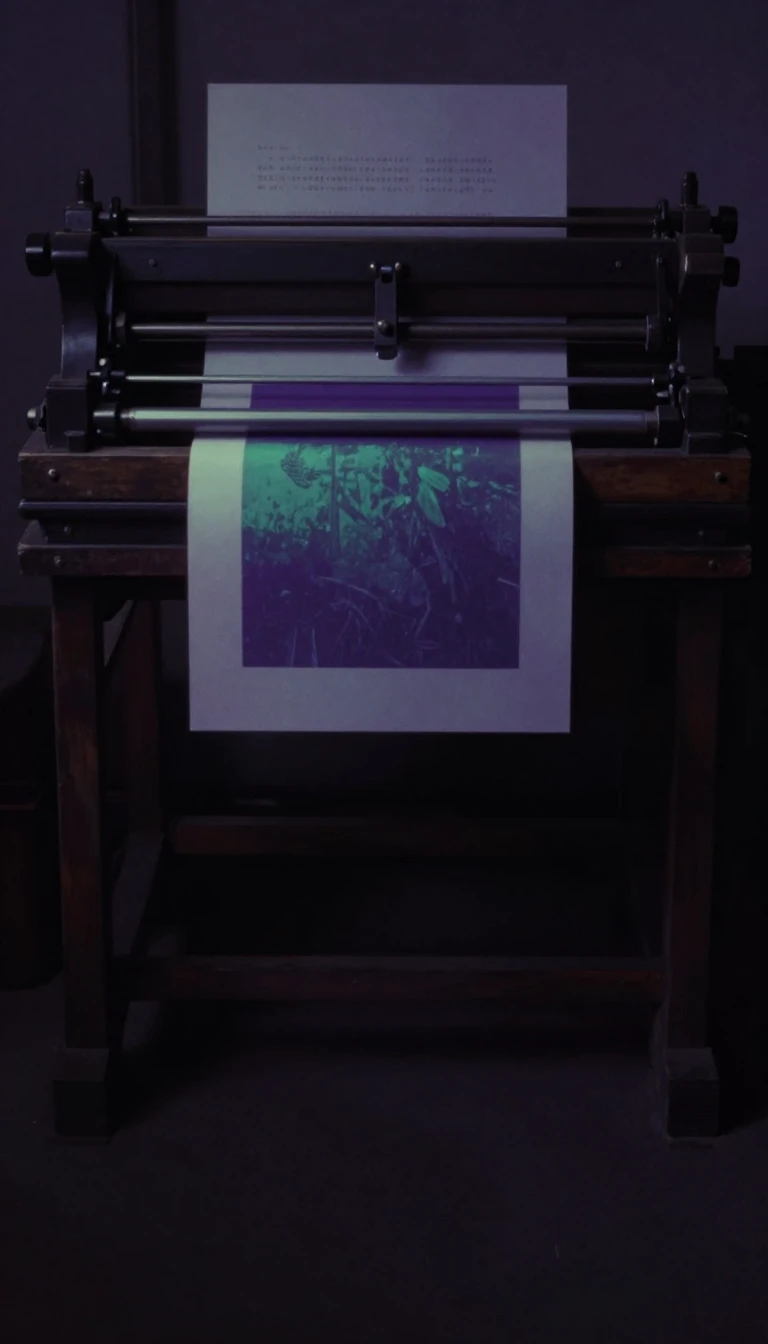
In short: When Alois Senefelder could not afford to publish his plays, he turned to experimentation. By using greasy ink on limestone, he discovered a revolutionary planographic printing process. This invention, known as lithography, democratized printing, transformed art reproduction, and eventually paved the way for the vibrant world of chromolithography.
Born in 1771, Alois Senefelder was an actor and playwright whose financial struggles became the catalyst for a printing revolution. After his father died in 1791, Senefelder left his legal studies to support his family. When the costs of publishing his own work led to mounting debt, he began experimenting with etching techniques. He discovered that by using a greasy, acid-resistant ink on Solnhofen limestone, he could print from a flat surface. This breakthrough, which he called chemical printing, bypassed the need for the complex, expensive engraving processes of the time.
The efficiency of lithography was quickly recognized for its ability to produce cheap, exact reproductions. By 1796, Senefelder had partnered with music publisher the André family to launch a firm. His influence grew rapidly; in 1809, he was appointed Inspector of the Lithographic Institute in Munich. His expertise was sought across Europe, leading to the establishment of similar institutions in major cities including London, Paris, Berlin, and Vienna. In 1818, he codified his methods in his comprehensive manual, Vollstandiges Lehrbuch der Steindruckerei, which remained a standard reference for over a century.
Lithography fundamentally changed the relationship between the artist and the printing press. Unlike traditional engraving, which required specialized craft skills, lithography allowed artists to draw directly onto the stone with familiar tools, enabling greater textural variety and accuracy. By 1803, the first portfolio of artist lithographs was published. The technique continued to evolve, and by 1837, it was adapted for full-colour printing. This innovation, known as chromolithography, became the dominant method for pictorial reproduction until the rise of modern process colour, cementing Senefelder's legacy as a pioneer of mass communication.
Opens the Intellect+ feed with this card first. Swipe up for the next one.
Sources
- Summary by Intellect · source: Alois Senefelder
To cite this card, link to https://intellectplus.co.uk/app/technology-alois-senefelder.
How we source, check and correct cards: Editorial standards.
General information, not professional advice. Spotted an error? Flag the card or see corrections and complaints.
Intellect Plus is a visual educational discovery platform for exploring fascinating facts and ideas. Brain Food, Not Brain Rot. What is Intellect Plus?
Related
More in Inventors · More in Technology · Latest · A–Z · All topics
