Before the digital age, a simple stencil and ink made everyone their own publisher.
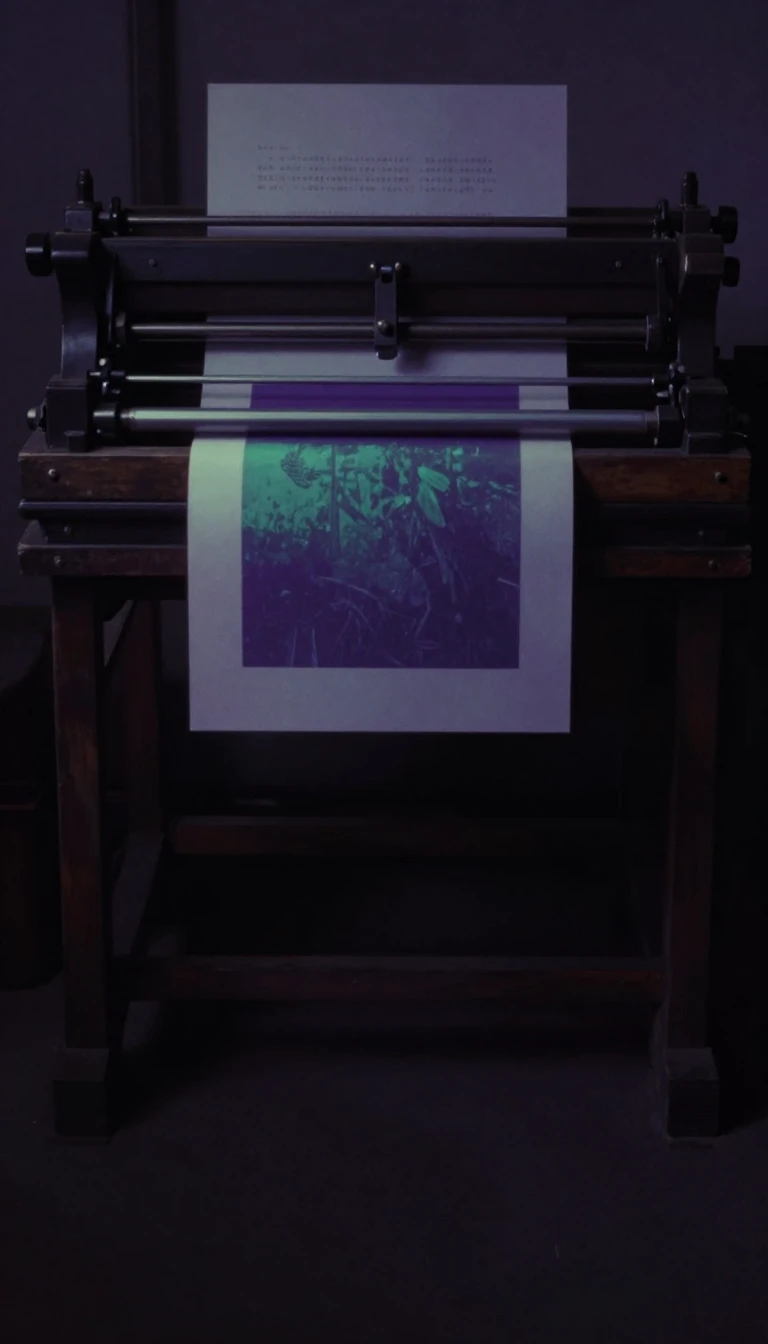
In short: The mimeograph transformed office work and activism by democratizing printing. By bypassing expensive typesetting and skilled labor, this mechanical marvel allowed individuals to become their own printing factories. It relied on a clever stencil process that forced ink through fiber sheets, leaving a distinct mark on history and paper.
At its core, the mimeograph is a duplicating machine that relies on a stencil—a coated fiber sheet—to transfer information. To prepare a document, a user types directly onto this stencil using a typewriter with the ribbon disengaged. This action cuts through the coating, creating permeable holes that correspond to the typed characters. When ink is pressed through these openings onto blank paper, a duplicate is born.
The stencil process itself is ancient, with roots in 8th-century China and early printmaking techniques used by Eskimo populations on Baffin Island. In the 20th century, the versatility of stenciling bridged the gap between functional office equipment and high art. Artists like Roy Lichtenstein utilized perforations to simulate the halftone dots of comic books, while Henri Matisse famously employed stencil prints for his illustrated book, Jazz, published in 1947.
While the mimeograph served as a vital tool for mass-producing commercial products and office documents, the underlying stencil method faced technical limitations. A design enclosing another, for instance, would cause the middle section to drop out. To solve this, creators often used overlapping half-designs or webs of threads to hold the stencil together. These challenges eventually led to the development of more sophisticated screen-based techniques, such as silk screening and serigraphy, which allowed for greater artistic freedom and complexity in reproduction.
Today, the legacy of these stencil processes persists in both commercial printing and fine art. From the experimental work of the Federal Art Project in 1938 to the iconic screenprints of Andy Warhol and Robert Rauschenberg, the ability to force ink through a prepared surface remains a cornerstone of printmaking. Whether used for a simple office bulletin or a limited-edition art print, the mimeograph and its descendants represent a triumph of accessible, mechanical reproduction.
Opens the Intellect+ feed with this card first. Swipe up for the next one.
Sources
- Summary by Intellect · source: Mimeograph | Mimeograph | Copying, Duplication, Reproduction | Britannica
- Also: Mimeograph
To cite this card, link to https://intellectplus.co.uk/app/places-mimeograph.
How we source, check and correct cards: Editorial standards.
General information, not professional advice. Spotted an error? Flag the card or see corrections and complaints.
Intellect Plus is a visual educational discovery platform for exploring fascinating facts and ideas. Brain Food, Not Brain Rot. What is Intellect Plus?
Related
More in Major world cities · More in Countries & Cities · Latest · A–Z · All topics
