How light travels through glass to power the modern world
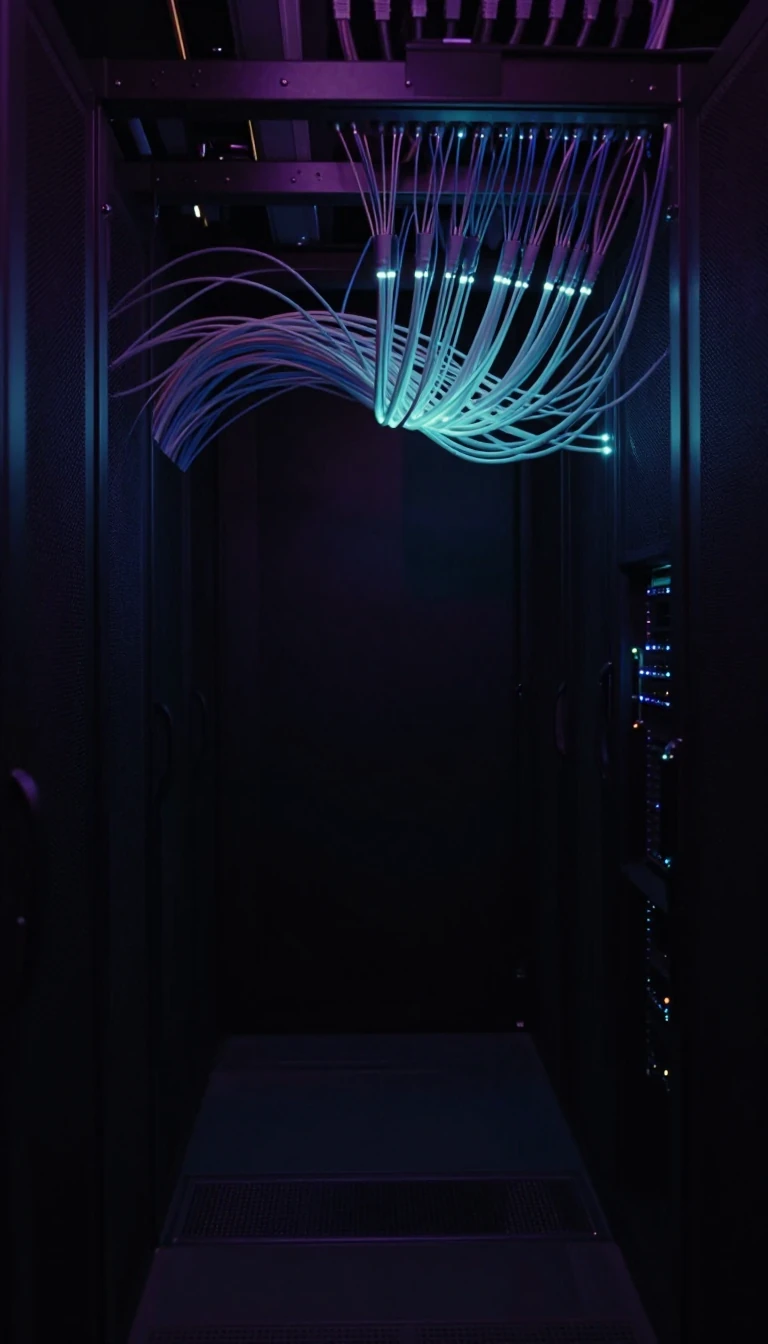
In short: Fiber-optic cables carry data at the speed of light, revolutionizing global communication. By transmitting information as pulses of infrared light through thin strands of glass or plastic, these cables provide massive bandwidth and efficiency. Beyond the core technology, they are engineered to survive everything from shark bites to extreme weather.
At its core, an optical fiber relies on total internal reflection to guide light. A central core is surrounded by a cladding layer with a different refractive index, trapping light inside. While glass is the standard for long-distance telecommunications, plastic fibers serve short-range consumer needs. Modern innovations like hollow-core fibers, which allow light to travel through air, are pushing boundaries; in 2025, a specific type of hollow-core fiber achieved a transmission loss of 0.091 dB/km, outperforming traditional silica glass.
The physical construction of these cables is a feat of engineering. For indoor use, fibers are often bundled with flexible strength members like aramid. Outdoor cables face harsher realities, requiring robust protection against moisture, temperature fluctuations, and physical threats. Armored cables, for instance, are essential for undersea installations to withstand fishing gear and marine life. These cables are designed to meet strict reliability criteria, such as those outlined in Telcordia standards, ensuring they remain functional despite environmental stressors.
Signal attenuation remains the primary constraint. As light travels, its intensity fades, measured in decibels. Once the signal drops below a certain threshold, it becomes unrecoverable. Engineers combat this by using infrared wavelengths, which experience less loss in glass than visible light. Furthermore, the industry manages capacity through high-count cables, with some single-mode designs containing 864 strands. This infrastructure is not just about speed; it is also more energy-efficient than copper, reducing the cooling demands of data centers and supporting a more sustainable digital future.
Opens the Intellect+ feed with this card first. Swipe up for the next one.
Sources
- Summary by Intellect · source: Fiber-optic cable
To cite this card, link to https://intellectplus.co.uk/app/technology-fiber-optic-cable.
How we source, check and correct cards: Editorial standards.
General information, not professional advice. Spotted an error? Flag the card or see corrections and complaints.
Intellect Plus is a visual educational discovery platform for exploring fascinating facts and ideas. Brain Food, Not Brain Rot. What is Intellect Plus?
Related
More in Optical technology · More in Technology · Latest · A–Z · All topics
