Earth's future is a slow-motion collision course with solar expansion and geological decay
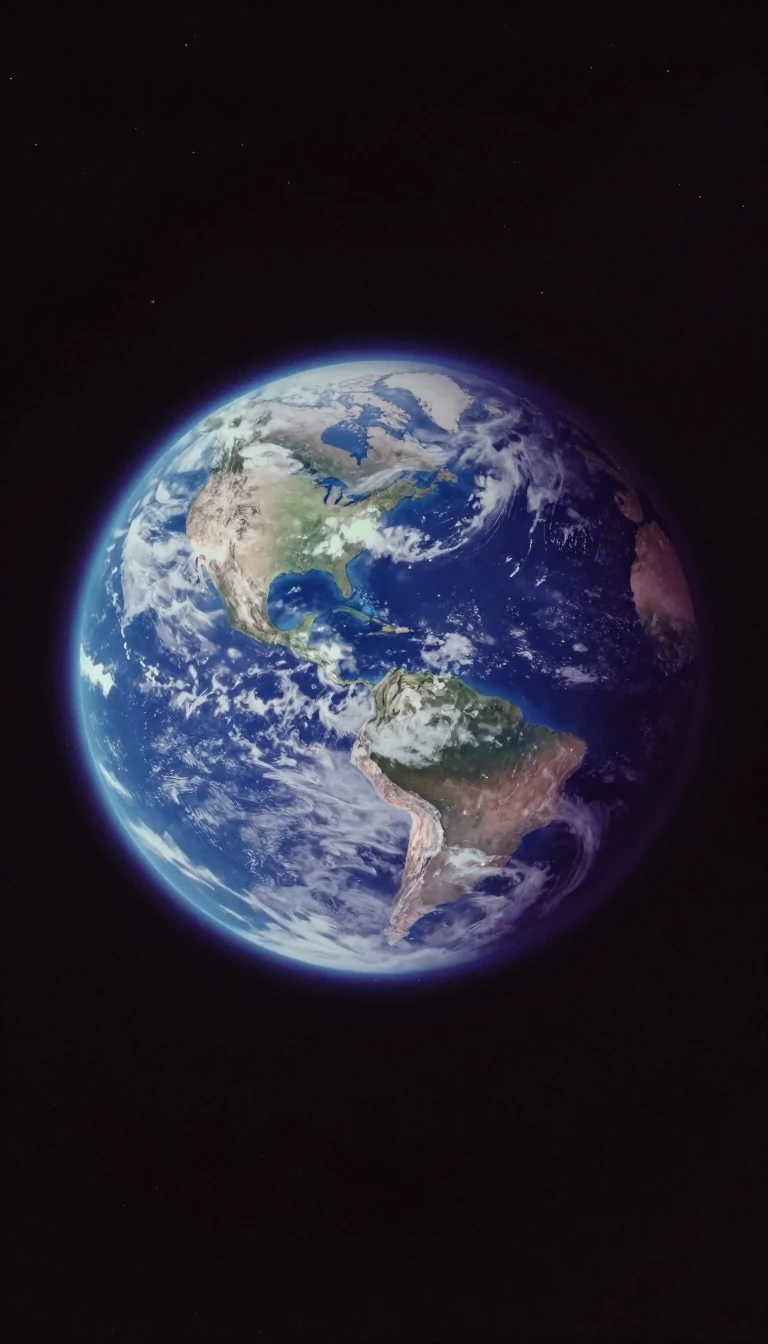
In short: Our planet faces a predictable but dramatic timeline. While human activity currently reshapes the surface, long-term natural processes—from the inevitable drift of continents to the Sun's increasing luminosity—will eventually render the Earth uninhabitable. Understanding these deep-time shifts reveals a planet that is dynamic, fragile, and ultimately finite.
The Earth's future is governed by a complex interplay of geological and solar forces. Over the next 250 to 350 million years, plate tectonics will likely drive the continents together to form a new supercontinent, continuing a cycle that has repeated for hundreds of millions of years. This process is powered by internal heat, which remains sufficient to drive mantle convection for at least another 1.1 billion years. However, as the Sun's luminosity steadily increases, the resulting rise in solar radiation will accelerate the weathering of silicate minerals, eventually stripping the atmosphere of the carbon dioxide necessary for plant life. Without plants, the base of the food chain will collapse, leading to the extinction of most animal life.
Beyond biological decline, the planet faces severe geophysical transitions. In approximately one billion years, the solar-driven runaway evaporation of the oceans will likely terminate plate tectonics and the carbon cycle. Further into the future, between two and three billion years from now, the Earth's magnetic dynamo—the liquid iron core that generates our protective magnetosphere—is expected to cease as the core solidifies. This loss will leave the atmosphere vulnerable to erosion by solar winds. By four billion years, the surface will experience a runaway greenhouse effect, creating conditions more extreme than those on present-day Venus, effectively melting the surface and ending all life.
While these long-term fates are driven by predictable physics, the path is punctuated by stochastic risks. Asteroid impacts, near-Earth supernovae, and gravitational perturbations from passing stars all pose threats to the biosphere. Even the Moon, which currently stabilizes Earth's axial tilt, will eventually drift far enough away that its influence wanes, potentially leading to chaotic variations in the planet's tilt of up to 90 degrees. While a 2026 study suggests Earth might survive being engulfed by the Sun in 7.6 billion years, the planet's long-term habitability is destined to fade long before that final solar expansion.
Opens the Intellect+ feed with this card first. Swipe up for the next one.
Sources
- Summary by Intellect · source: Future of Earth
To cite this card, link to https://intellectplus.co.uk/app/technology-future-of-earth.
How we source, check and correct cards: Editorial standards.
General information, not professional advice. Spotted an error? Flag the card or see corrections and complaints.
Intellect Plus is a visual educational discovery platform for exploring fascinating facts and ideas. Brain Food, Not Brain Rot. What is Intellect Plus?
Related
More in Geology · More in Science · Latest · A–Z · All topics
