Are Earth's orbital wobbles the true architects of our planet's long-term climate history?
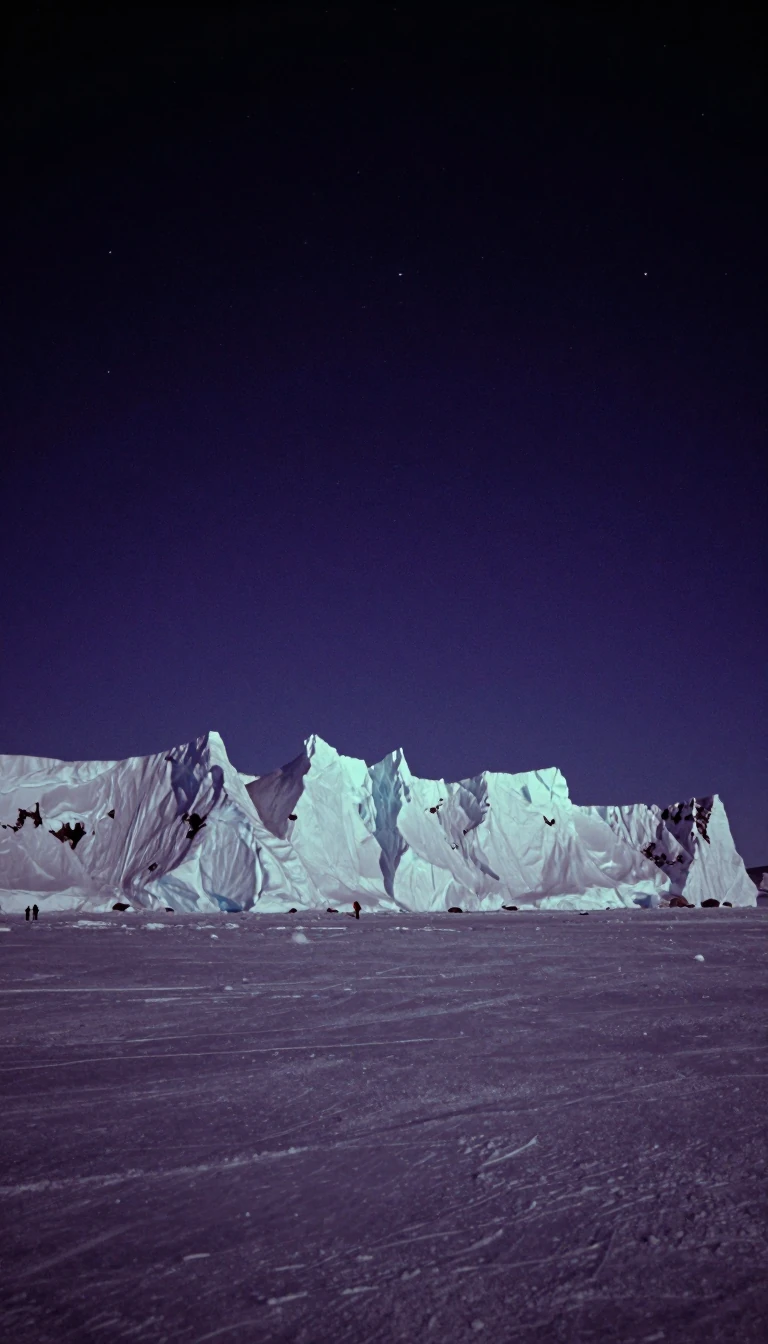
In short: For decades, scientists have debated whether subtle shifts in Earth's orbit—eccentricity, axial tilt, and precession—dictate our glacial cycles. While these Milankovitch cycles explain much of our past, the transition to 100,000-year ice age patterns remains a complex puzzle involving carbon dioxide, ice sheets, and the limits of our climate records.
In the 1920s, Serbian geophysicist Milutin Milanković formalized the theory that Earth's climate is driven by periodic variations in its orbital geometry. These cycles involve eccentricity, which measures the departure of Earth's orbit from a perfect circle; obliquity, the tilt of the planet's axis; and precession, the change in the orientation of the axis relative to fixed stars. Together, these factors alter the distribution and intensity of solar radiation reaching the surface, particularly at 65° north, where land masses respond more rapidly to thermal forcing than the vast, heat-absorbing oceans.
The primary challenge to the Milankovitch hypothesis is the '100,000-year problem.' While Milanković originally emphasized the 41,000-year obliquity cycle, geological evidence from the last million years—specifically the Quaternary glaciation—shows a dominant 100,000-year rhythm that aligns with eccentricity. Researchers have proposed various mechanisms to explain this discrepancy, including non-linear feedback loops involving greenhouse gases and ice sheet dynamics. Some models suggest 'stochastic resonance,' where small orbital changes trigger internal climate oscillations, while others point to the Mid-Pleistocene Transition (MPT) one million years ago as a pivotal shift in how the planet responds to solar forcing.
Beyond Earth, these orbital mechanics provide a universal framework for understanding planetary climate. Mars, lacking a large moon to stabilize its axis, experiences extreme obliquity swings between 10 and 70 degrees, which have historically dictated the growth and retreat of its polar caps. Similarly, moons like Titan and Triton exhibit long-term cycles that may shift their surface deposits. On Earth, while orbital variations are predictable, their future impact remains nuanced. Current models suggest that because Earth's orbit is becoming less eccentric, we are unlikely to enter a new glacial period within the next 50,000 years, even as human-driven greenhouse gas emissions continue to alter the climate trajectory independently of these ancient, celestial rhythms.
Opens the Intellect+ feed with this card first. Swipe up for the next one.
Sources
- Summary by Intellect · source: Milankovitch cycles
To cite this card, link to https://intellectplus.co.uk/app/technology-milankovitch-cycles.
How we source, check and correct cards: Editorial standards.
General information, not professional advice. Spotted an error? Flag the card or see corrections and complaints.
Intellect Plus is a visual educational discovery platform for exploring fascinating facts and ideas. Brain Food, Not Brain Rot. What is Intellect Plus?
Related
More in Geology · More in Science · Latest · A–Z · All topics
