Why your graphics card is actually a supercomputer in disguise
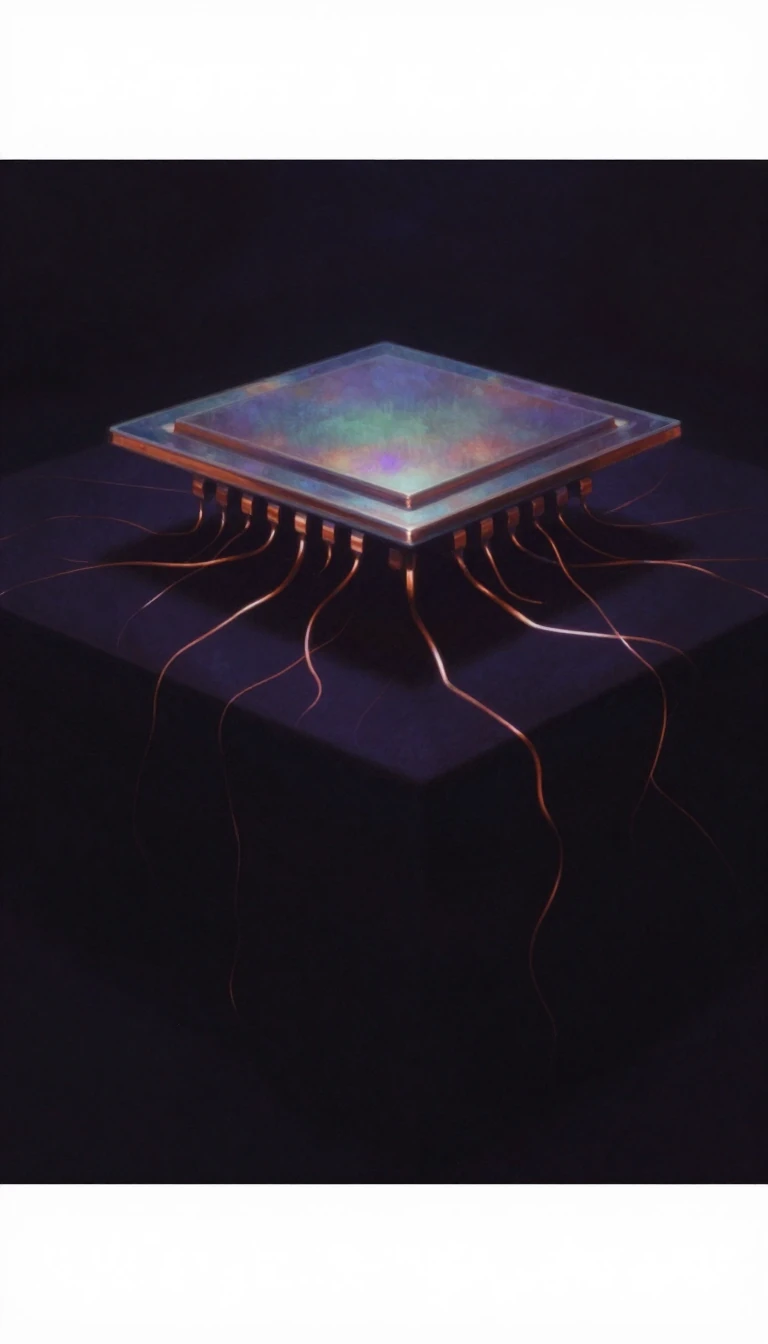
In short: Graphics processing units were once strictly for rendering pixels. Today, they power the world's most demanding scientific simulations and artificial intelligence. By shifting massive, parallelizable workloads from the CPU to the GPU, developers achieve speed increases of several hundred times, fundamentally changing how we process data in the modern age.
General-purpose computing on graphics processing units (GPGPU) represents a shift in computational architecture. While a CPU is optimized for complex, sequential tasks, a GPU contains a vast number of processing elements designed for parallel operations. By migrating data into parallel forms, systems can leverage the GPU's ability to handle massive datasets—such as 2D or 3D imagery, genome mapping, or protein analysis—far more efficiently than a traditional processor.
The evolution of GPGPU began in the early 2000s, when researchers discovered they could solve linear algebra problems faster on graphics hardware than on CPUs. Initially, this required a cumbersome process of reformulating mathematical problems into graphics primitives like textures and pixel shaders. This changed in 2007 with the launch of Nvidia's CUDA, which allowed developers to write code using high-performance computing concepts rather than graphical ones. Today, vendor-independent standards like OpenCL and higher-level models like SYCL allow for cross-platform development across Intel, AMD, Nvidia, and ARM hardware.
Modern GPU design has evolved to support this general-purpose role. Unlike early models, state-of-the-art GPUs now feature hardware-managed multi-level caches and massive register files to reduce latency. For instance, the Pascal series GPU increased its last-level cache to 4 MiB, while register file sizes have grown significantly across generations—from 6 MiB in the Maxwell architecture to 20 MiB in Volta. These hardware advancements, combined with specialized units like tensor cores for matrix multiplication, allow GPUs to deliver superior performance-per-watt for specific, heavily optimized workloads.
Despite these gains, GPGPU is not a universal solution. It requires a well-written program and a workload that fits the GPU's parallel nature to avoid the 'memory wall' problem, where time and power are wasted on data movement. Because GPUs consume significant power—sometimes matching the rest of the PC system combined—they remain most effective when handling the massive, parallelized tasks that define the world's largest supercomputing clusters.
Opens the Intellect+ feed with this card first. Swipe up for the next one.
Sources
- Summary by Intellect · source: General-purpose computing on graphics processing units
To cite this card, link to https://intellectplus.co.uk/app/technology-general-purpose-computing-on-graphics-processing-units.
How we source, check and correct cards: Editorial standards.
General information, not professional advice. Spotted an error? Flag the card or see corrections and complaints.
Intellect Plus is a visual educational discovery platform for exploring fascinating facts and ideas. Brain Food, Not Brain Rot. What is Intellect Plus?
Related
More in Computing and information technology · More in Technology · Latest · A–Z · All topics
