Can we grow our food in water instead of dirt to save the planet?
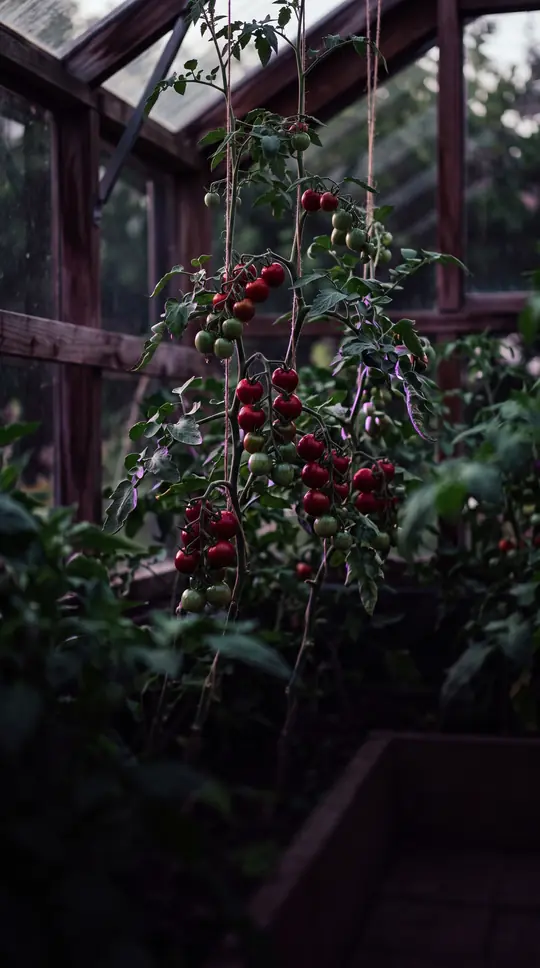
In short: Hydroponics replaces soil with mineral-rich water, allowing plants to thrive in controlled environments. By optimizing nutrient and oxygen delivery directly to roots, this method slashes water consumption and boosts growth rates. From space stations to commercial greenhouses, it is transforming agriculture into a precise, high-yield, and sustainable technological process.
Hydroponics is the practice of growing plants without soil by using mineral nutrient solutions. While early experiments date back to Francis Bacon’s 1627 book, the modern foundation was laid by German botanists Julius von Sachs and Wilhelm Knop between 1859 and 1875. In 1929, William Frederick Gericke began promoting these methods for commercial crop production, famously growing tomato vines twenty-five feet high in his backyard. Though initially met with academic skepticism, his work eventually proved that plants could flourish by absorbing nutrients directly from water, provided they had adequate light and aeration.
The core advantage of hydroponics lies in its efficiency. Traditional farming requires 214 liters of water to produce one kilogram of tomatoes, whereas hydroponics uses only 70 liters. This precision allows growers to avoid common soil-based issues like overwatering or nutrient deficiency. Systems vary widely, from static containers to the nutrient film technique, where a shallow stream of water flows past roots to ensure constant access to oxygen. Advanced variations like aeroponics—which mists roots with nutrients—can reduce water usage even further, requiring only 20 liters for the same kilogram of tomatoes.
Beyond Earth, hydroponics is essential for space exploration. NASA has extensively researched these systems for life support, as plants can recycle water, produce oxygen, and remove carbon dioxide in closed environments. On Earth, the technology has scaled significantly; the global market is projected to reach US$724.87 million by 2023. Whether through passive sub-irrigation or complex, computer-automated run-to-waste systems, hydroponics represents a shift toward controlled environment agriculture. By decoupling food production from the limitations of arable land, it offers a scalable solution for feeding a growing population while minimizing environmental impact.
Despite its benefits, the field remains nuanced. Critics, such as Dennis Hoagland in the 1930s, argued that hydroponic yields were not inherently superior to high-quality soil. However, proponents like Gericke countered that such studies often failed to optimize the hydroponic medium correctly. Today, the focus has moved toward refining these systems to maximize biomass and protein production, proving that when the rhizosphere is perfectly managed, plants can achieve growth rates that soil-based agriculture struggles to match.
Opens the Intellect+ feed with this card first. Swipe up for the next one.
Sources
- Summary by Intellect · source: Hydroponics
To cite this card, link to https://intellectplus.co.uk/app/technology-hydroponics.
How we source, check and correct cards: Editorial standards.
General information, not professional advice. Spotted an error? Flag the card or see corrections and complaints.
Intellect Plus is a visual educational discovery platform for exploring fascinating facts and ideas. Brain Food, Not Brain Rot. What is Intellect Plus?
Related
More in Inventions · More in Technology · Latest · A–Z · All topics
