The Retina Nebula: Why a Dying Star Looks Like a Perfect Geometric Donut
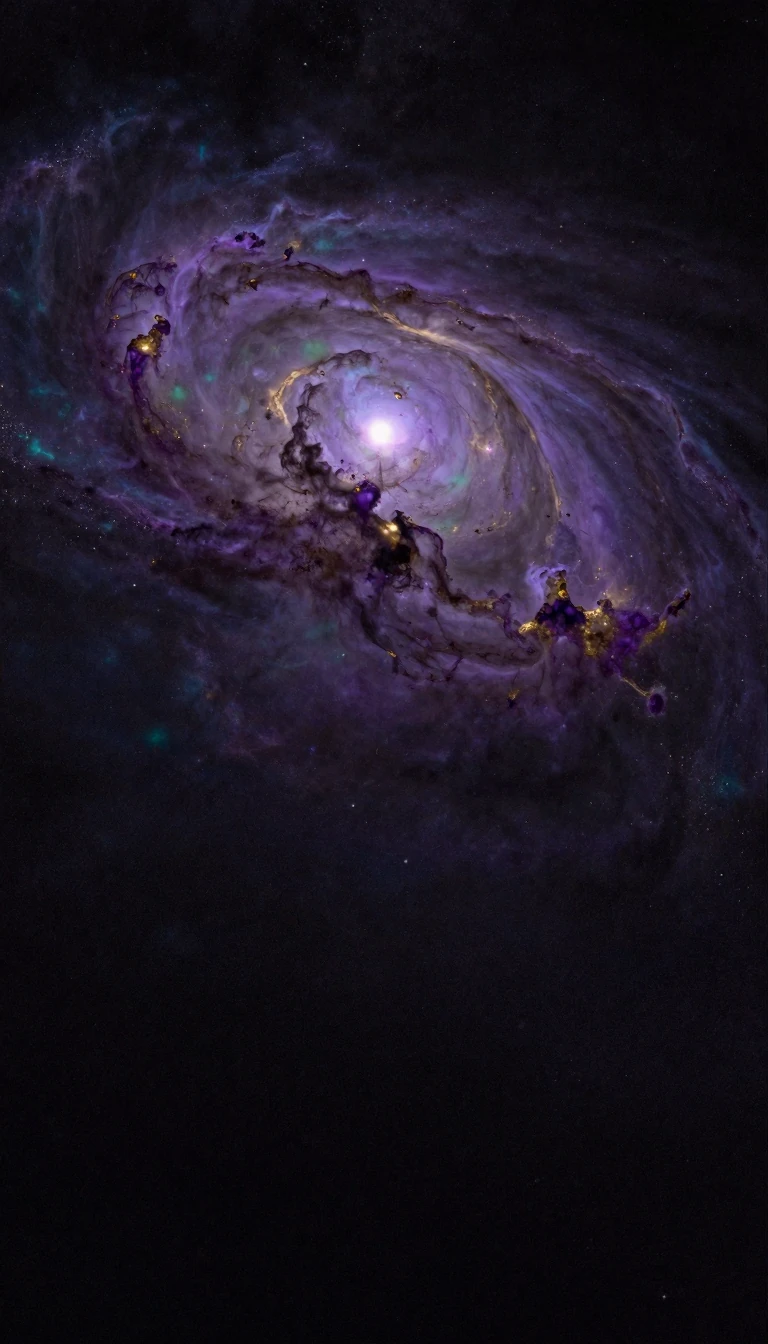
In short: IC 4406, known as the Retina Nebula, is a dying star that reveals a stunning, symmetrical structure. From our vantage point on Earth, we see this celestial object edge-on, transforming a vast, donut-shaped cloud of gas and dust into a complex, eye-like pattern of intricate, glowing tendrils.
Located about 1,900 light-years away in the constellation Lupus, IC 4406 is a classic example of a planetary nebula. While these objects are often named for their resemblance to planets, they are actually the final stages of stars like our Sun. The nebula exhibits a high degree of symmetry, with its left and right halves appearing almost as mirror images. This structure is essentially a massive torus, or donut, of material streaming outward from the central, dying star.
The visual appearance of the nebula is dictated by our perspective. Because we view the donut from the side, the intense radiation from the central star is confined, ionizing the inner gas and causing it to glow in distinct colors: blue for oxygen, green for hydrogen, and red for nitrogen. Criss-crossing the center of this display is an irregular lattice of dark lanes. These lanes are approximately 160 astronomical units wide and represent regions where the density of dust and gas is a thousand times higher than in the surrounding nebula.
These dense, dark knots sit at the boundary between the hot, visible gas and a larger, outer zone of neutral gas that remains invisible to optical telescopes but can be detected via radio waves. Astronomers are currently uncertain about the ultimate fate of these dense filaments. It remains an open question whether these structures will persist as the nebula continues to expand, eventually becoming dark, isolated denizens of interstellar space, or if they will simply dissipate into the void.
The iconic images of IC 4406, released in 2002, were compiled from data captured by the Hubble Space Telescope’s Wide Field Planetary Camera 2 during observations in June 2001 and January 2002. By analyzing the light emitted by different gases, researchers have been able to map the nebula's composition, providing a rare, detailed look at the complex, final death throes of a star.
Opens the Intellect+ feed with this card first. Swipe up for the next one.
Sources
- Summary by Intellect · source: The Retina Nebula: Dying Star IC 4406 - NASA Science
- Also: IC 4406
To cite this card, link to https://intellectplus.co.uk/app/technology-ic-4406.
How we source, check and correct cards: Editorial standards.
General information, not professional advice. Spotted an error? Flag the card or see corrections and complaints.
Intellect Plus is a visual educational discovery platform for exploring fascinating facts and ideas. Brain Food, Not Brain Rot. What is Intellect Plus?
Related
More in Inventions · More in Technology · Latest · A–Z · All topics
