How an apothecary’s shop became the epicenter of 18th-century chemical discovery
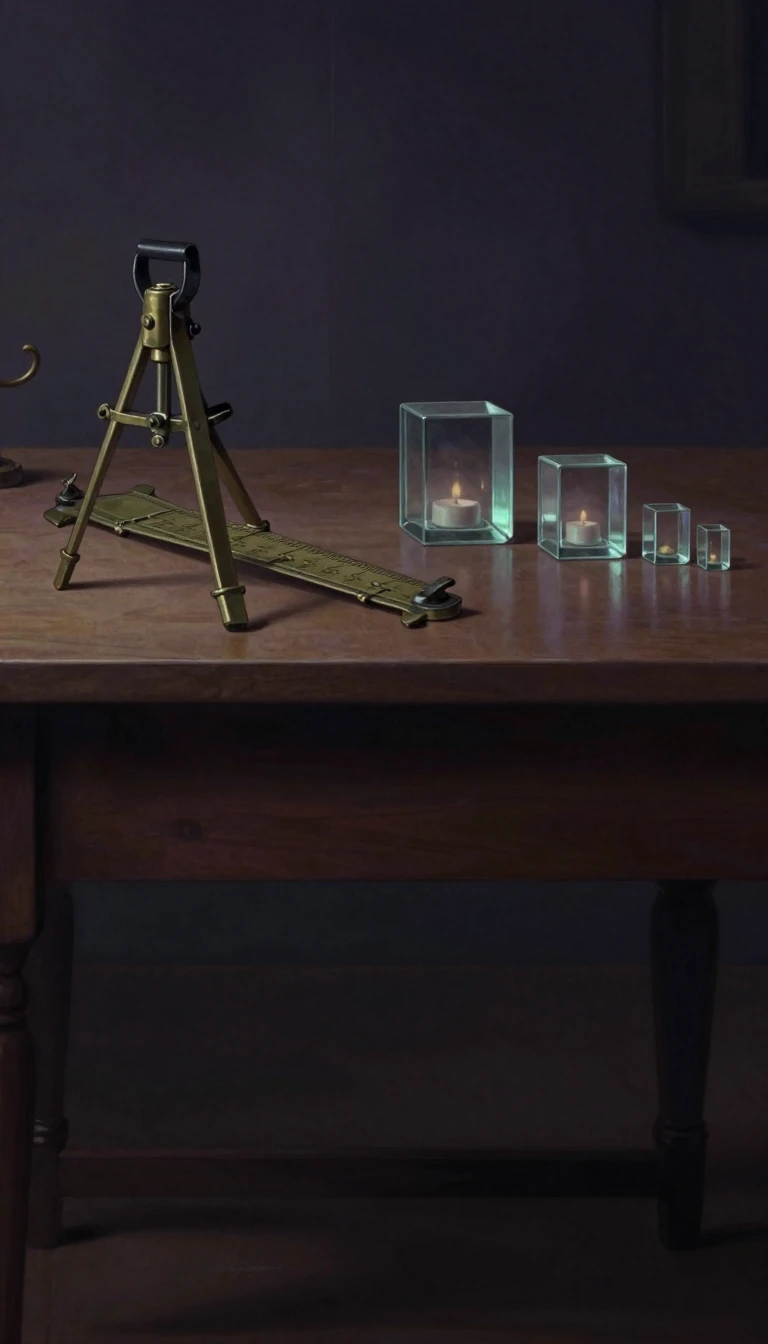
In short: Martin Heinrich Klaproth transformed a Berlin pharmacy into Europe’s most productive research laboratory. By applying rigorous quantitative methods to mineral analysis, he identified elements like uranium and zirconium. His meticulous approach to chemistry redefined how scientists understood the composition of the natural world, leaving a legacy that persists today.
Born in 1743, Martin Heinrich Klaproth spent much of his career as an apothecary, eventually owning the Apotheke zum Baren in Berlin. While his profession was rooted in pharmacy, his laboratory became the most significant site for artisanal chemical research in Europe. Between 1782 and 1800, he published 84 papers based on his work there, establishing himself as a central figure in the systematization of analytical chemistry and mineralogy.
Klaproth was a pioneer of gravimetric analysis, characterized by an obsessive attention to detail and a refusal to ignore discrepancies in experimental results. This precision made him an early adopter of Lavoisierian doctrines outside of France. His work was foundational in identifying elements such as uranium, which he announced in 1789, and zirconium, which he named after the Persian word for gold-colored. Although he could not isolate these elements in their pure form, his ability to characterize them as distinct substances was revolutionary.
His influence extended far beyond his own discoveries. He verified the existence of titanium, confirming the work of William Gregor, and successfully isolated tellurium in 1798 after receiving samples from Franz-Joseph Mueller von Reichenstein. Klaproth’s career culminated in his appointment as the first professor of chemistry at the University of Berlin in 1810. Upon his death in 1817, his extensive mineral collection of 4,828 pieces was acquired by the university, ensuring his impact on science continued long after his passing.
Klaproth’s legacy is cemented in both the scientific record and the physical world. He was a member of prestigious institutions including the Royal Society and the Berlin Academy of Sciences. Today, his name is preserved on the Moon, where a crater bears his name, and in the botanical genus Klaprothia. His life remains a testament to how meticulous, systematic inquiry can turn a local shop into a global hub of intellectual advancement.
Opens the Intellect+ feed with this card first. Swipe up for the next one.
Sources
- Summary by Intellect · source: Martin Heinrich Klaproth
To cite this card, link to https://intellectplus.co.uk/app/technology-martin-heinrich-klaproth.
How we source, check and correct cards: Editorial standards.
General information, not professional advice. Spotted an error? Flag the card or see corrections and complaints.
Intellect Plus is a visual educational discovery platform for exploring fascinating facts and ideas. Brain Food, Not Brain Rot. What is Intellect Plus?
Related
More in Inventors · More in Technology · Latest · A–Z · All topics
