India's first bullet train will traverse a 508-kilometre path between Mumbai and Ahmedabad
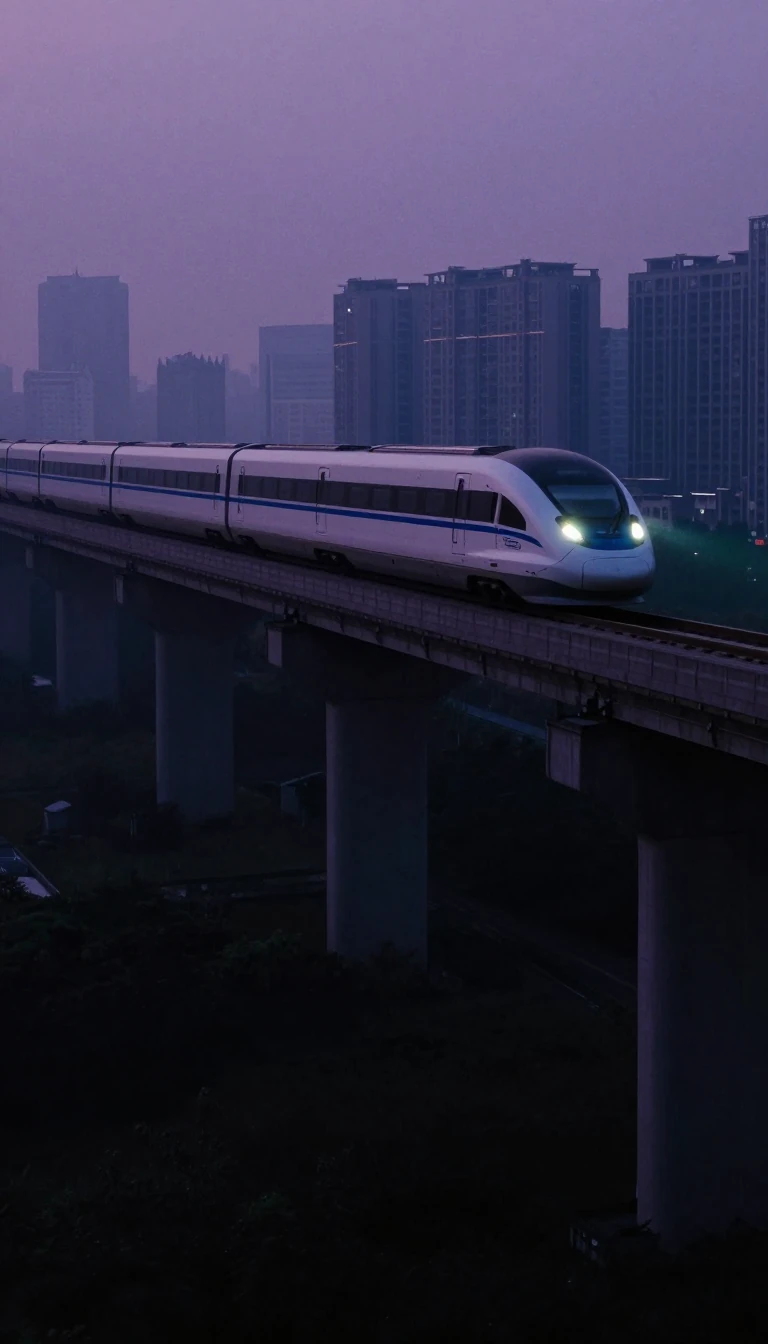
In short: Connecting India's financial hub with Gujarat's largest city, this massive infrastructure project utilizes Japanese Shinkansen technology to reach speeds of 320 km/h. By elevating most of the route and incorporating an undersea tunnel, the line aims to slash travel times significantly, marking a transformative shift in the nation's transit landscape.
The Mumbai–Ahmedabad High-Speed Rail Corridor is a landmark engineering undertaking designed to bridge the 508.09 km gap between two of India's most significant economic centers. Spearheaded by the National High-Speed Rail Corporation Limited, the project relies on Japanese Shinkansen standards, including specialized rolling stock and signaling systems. To ensure safety and efficiency, approximately 90.6% of the route is constructed on elevated viaducts, a design choice that avoids the complexities of land acquisition and level crossings while adding roughly ₹10,000 crore to the total budget.
The project's complexity is highlighted by its unique geographical challenges, including a 21 km tunnel between Thane and Virar, of which 7 km will run undersea to protect local vegetation. Construction, which officially began in February 2021, has faced significant hurdles, including land acquisition disputes and the COVID-19 pandemic. Despite these delays, progress is steady; as of October 2024, nearly half of the civil works were complete. The project is heavily supported by the Japan International Cooperation Agency, which provided a massive loan of 1.5 trillion Japanese yen to cover the majority of the costs.
Beyond mere speed, the corridor is envisioned as a catalyst for regional economic growth and improved quality of life. Researchers have modeled how the line might influence local economies and personal well-being, suggesting that middle-tier cities along the route may see more pronounced benefits than the metropolitan hubs themselves. Furthermore, the project explores sustainability, with proposals to utilize the space along the ballast-less tracks for solar energy generation. This integration of high-speed transit and renewable energy could potentially save millions in annual electricity costs, setting a precedent for future rail developments in emerging economies.
Opens the Intellect+ feed with this card first. Swipe up for the next one.
Sources
- Summary by Intellect · source: Mumbai–Ahmedabad high-speed rail corridor
- Also: Future Transportation — Modeling the Mutual Enhancement of Regional Economy and Personal Quality of Life (QOL): A Case Study on the Mumbai–Ahmedabad High-Speed Rail Corridor in India · cc-by
- Also: Civil Engineering Journal — Solar Energy for Traction of High Speed Rail Transportation: A Techno-economic Analysis · cc-by
To cite this card, link to https://intellectplus.co.uk/app/technology-mumbai-ahmedabad-high-speed-rail-corridor.
How we source, check and correct cards: Editorial standards.
General information, not professional advice. Spotted an error? Flag the card or see corrections and complaints.
Intellect Plus is a visual educational discovery platform for exploring fascinating facts and ideas. Brain Food, Not Brain Rot. What is Intellect Plus?
Related
More in Transportation · More in Technology · Latest · A–Z · All topics
