Why your cells must build DNA in tiny, fragmented, and discontinuous pieces
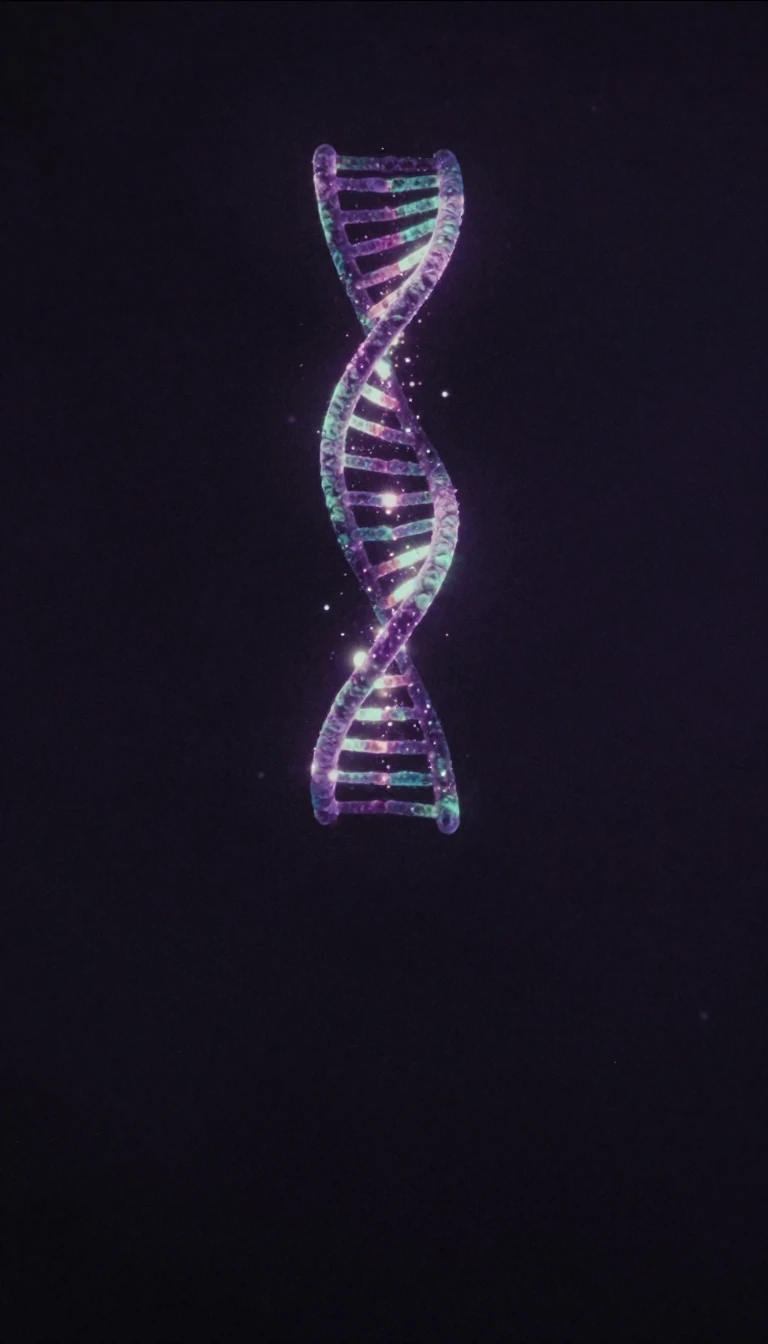
In short: DNA replication is a high-speed feat, but it hits a structural wall. Because enzymes only work in one direction, one strand of your DNA is built continuously, while the other is forced to assemble in short, stop-and-start bursts called Okazaki fragments. These fragments are the essential building blocks of life.
In the 1960s, Reiji and Tsuneko Okazaki revolutionized our understanding of genetics by proving that DNA replication is not a continuous process for both strands. While the leading strand follows the replication fork smoothly, the lagging strand's template runs in the opposite direction. To cope, the cell synthesizes short segments—Okazaki fragments—that are later stitched together by the enzyme DNA ligase. This semi-discontinuous process is fundamental to how cells copy their genetic material.
The maturation of these fragments is a complex, multi-step operation. In eukaryotes, enzymes like FEN1 and DNA2 work to remove RNA primers and process DNA flaps, ensuring the fragments can be seamlessly joined. This process is remarkably frequent; during a single round of DNA replication, Okazaki maturation occurs about a million times. The precision required is immense, as the failure to properly ligate these segments can lead to double-strand breaks, which are often lethal to the cell or can trigger severe chromosomal abnormalities and cancers.
While the core mechanism is universal, the scale varies significantly between organisms. Eukaryotic Okazaki fragments are typically 100 to 200 nucleotides long, whereas those in the bacterium Escherichia coli can reach 2,000 nucleotides. Eukaryotes also employ sophisticated protein complexes like the proliferating cell nuclear antigen (PCNA) to coordinate this rapid assembly. When these proteins are mutated—such as in FEN1-deficient mice—the resulting accumulation of nicks and breaks can cause developmental failure or long-term genetic instability, highlighting how vital these tiny fragments are to the integrity of the entire genome.
Opens the Intellect+ feed with this card first. Swipe up for the next one.
Sources
- Summary by Intellect · source: Okazaki fragments
To cite this card, link to https://intellectplus.co.uk/app/technology-okazaki-fragments.
How we source, check and correct cards: Editorial standards.
General information, not professional advice. Spotted an error? Flag the card or see corrections and complaints.
Intellect Plus is a visual educational discovery platform for exploring fascinating facts and ideas. Brain Food, Not Brain Rot. What is Intellect Plus?
Related
More in Inventions · More in Technology · Latest · A–Z · All topics
