Why your personal space bubble is a complex, invisible language of power and culture.
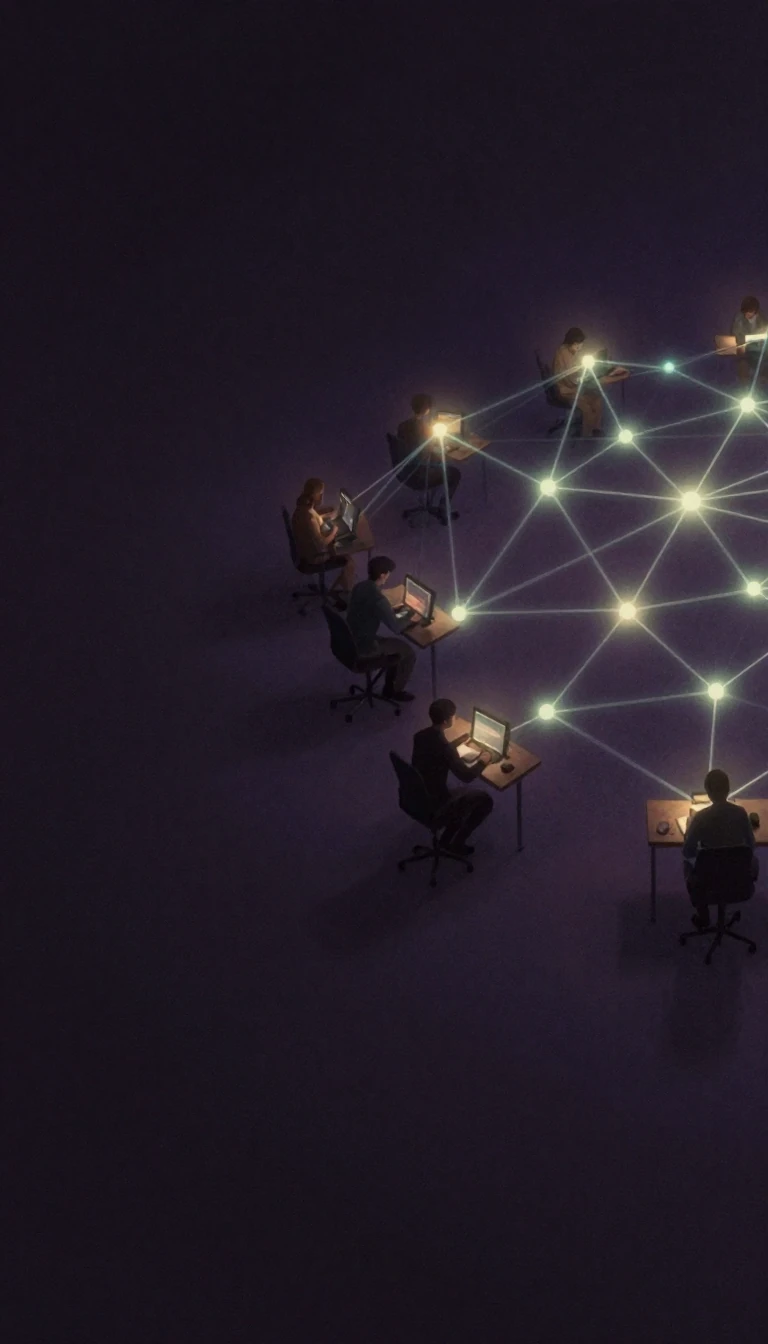
In short: Proxemics is the study of how we use physical space to navigate social interactions. From the intimate bubble of a close friend to the public distance of a stranger, our positioning reveals hidden attitudes, power dynamics, and cultural norms. Even robots are now being designed to master this silent language.
Coined by anthropologist Edward C. Hall in 1966, the term proxemics describes how humans use space as a specialized elaboration of culture. Hall identified four distinct zones of interaction: intimate distance for touching, personal distance for friends and family, social distance for acquaintances, and public distance for group speaking. These zones are not merely physical measurements but psychological boundaries. When a stranger encroaches on these inner zones, it often triggers immediate feelings of discomfort or anger, as the personal space bubble is considered an inviolate form of territory.
Proxemic behavior is a multivariate construct where distance, bodily orientation, and gaze are deeply interdependent. Equilibrium theory, proposed by Argyle and Dean in 1965, suggests that these variables work together to maintain a desired level of intimacy. If individuals are forced into close proximity—such as in a crowded elevator—they often compensate by avoiding eye contact or turning their bodies away. This balancing act reveals that nonverbal communication is a dynamic system, constantly adjusting to maintain comfort and social order.
Beyond simple comfort, proxemics acts as an implicit indicator of our attitudes toward others. Research indicates that negative biases regarding ethnicity, disability, or obesity are often manifested through physical avoidance, even when individuals are unaware of their own prejudices. While early studies sought to identify universal cultural differences, modern research has shifted toward individual differences, including clinical phenomena like autism. Findings suggest that while some autistic individuals show rigid spatial preferences, these behaviors vary widely and may be better explained by social anxiety.
Today, the study of proxemics has moved into the realm of interactive robotics. Engineers are modeling human spatial behavior to ensure that autonomous systems can interact with people safely and predictably. By understanding how humans navigate space, researchers hope to build robots that can earn our trust and respond appropriately to the subtle, unspoken cues that define our daily social lives.
Opens the Intellect+ feed with this card first. Swipe up for the next one.
Sources
- Summary by Intellect · source: Proxemics — OECS
- Also: Proxemics
To cite this card, link to https://intellectplus.co.uk/app/technology-proxemics.
How we source, check and correct cards: Editorial standards.
General information, not professional advice. Spotted an error? Flag the card or see corrections and complaints.
Intellect Plus is a visual educational discovery platform for exploring fascinating facts and ideas. Brain Food, Not Brain Rot. What is Intellect Plus?
Related
More in Inventions · More in Technology · Latest · A–Z · All topics
