The humble screwdriver evolved from medieval armor repair to a global industrial necessity
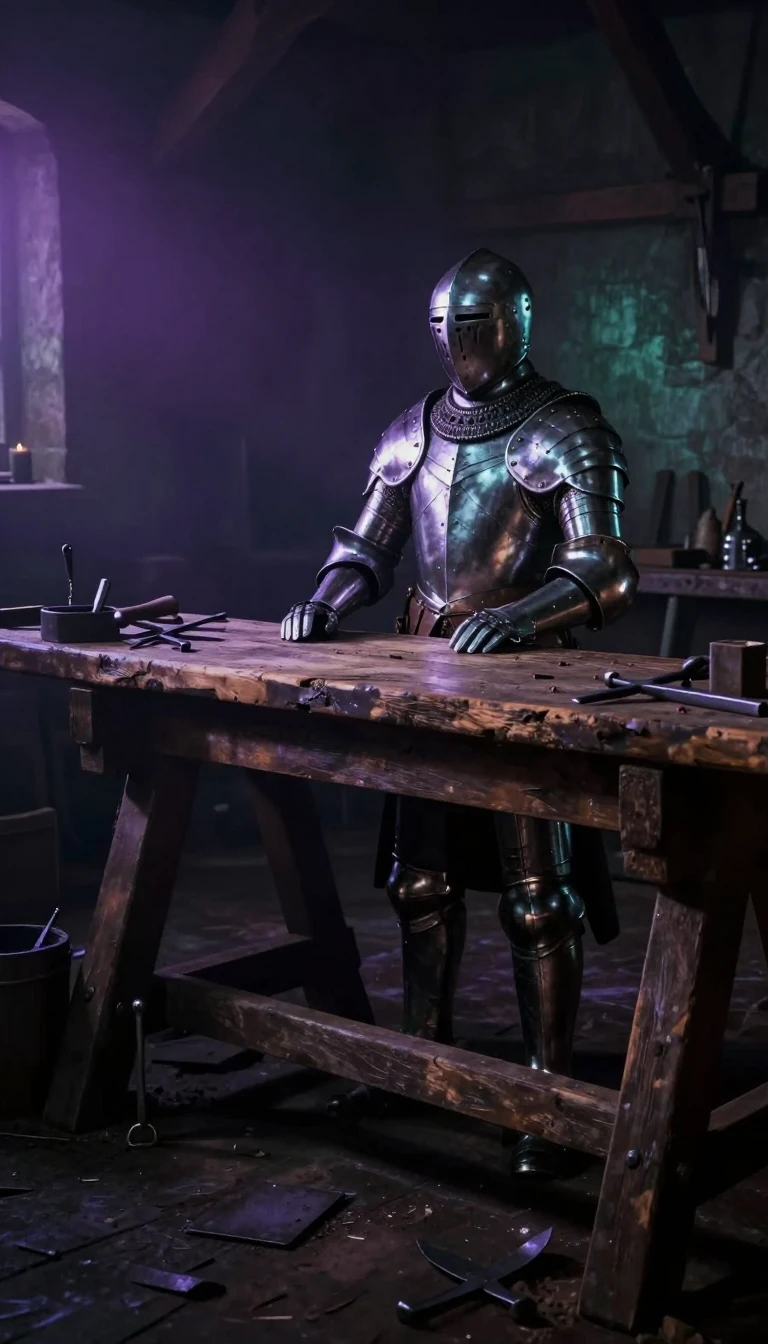
In short: Before it was a household staple, the screwdriver was a specialized tool for securing 15th-century jousting armor and early firearms. While we now take for granted the variety of Phillips, Robertson, and Torx drivers, this essential tool’s history is a story of industrial refinement, patent battles, and persistent mechanical innovation.
The earliest documented screwdrivers appeared in the late 15th century, likely in Germany or France. The first known reference exists in the Housebook of Wolfegg Castle, written between 1475 and 1490. These original tools featured pear-shaped handles and were designed exclusively for slotted screws. During this era, screws were not used in full combat armor to ensure wearer mobility, but they were vital for securing breastplates, helmets, and the internal mechanisms of matchlock firearms. The need to frequently replace pyrites in wheellock guns further drove the refinement of the tool’s shape and size.
The screwdriver’s evolution was tethered to the production of the screw itself. Before the First Industrial Revolution, creating a conical helix was difficult and expensive. The brothers Job and William Wyatt pioneered a machine to cut slotted heads and helices, which, despite their business failure, paved the way for mass production. As screws became standardized and affordable, the screwdriver diversified. By the 20th century, new drive systems emerged to solve the limitations of the simple slotted screw, such as the Robertson square-drive, commercialized in 1908, and the Phillips cross-recess screw, patented in 1932 by Henry F. Phillips.
Modern screwdrivers reflect centuries of ergonomic and mechanical progress. Handles have shifted from simple wood or metal to complex, grip-enhancing shapes made of thermoplastic elastomers. Specialized mechanisms like the spiral ratchet—popularized by the North Brothers Manufacturing Company as the 'Yankee' screwdriver—convert linear pushing force into rotation. Today, the tool has largely been superseded in professional settings by power drills and impact drivers, yet the fundamental requirement remains: the tip must precisely match the screw head to prevent damage. From the simple blade to the security-focused Pentalobe, the screwdriver remains a testament to how small, incremental engineering changes can define global manufacturing standards.
Opens the Intellect+ feed with this card first. Swipe up for the next one.
Sources
- Summary by Intellect · source: Screwdriver
To cite this card, link to https://intellectplus.co.uk/app/technology-screwdriver.
How we source, check and correct cards: Editorial standards.
General information, not professional advice. Spotted an error? Flag the card or see corrections and complaints.
Intellect Plus is a visual educational discovery platform for exploring fascinating facts and ideas. Brain Food, Not Brain Rot. What is Intellect Plus?
Related
More in Machinery and tools · More in Technology · Latest · A–Z · All topics
