The heavy, noisy Soviet submarines that defined the Cuban Missile Crisis
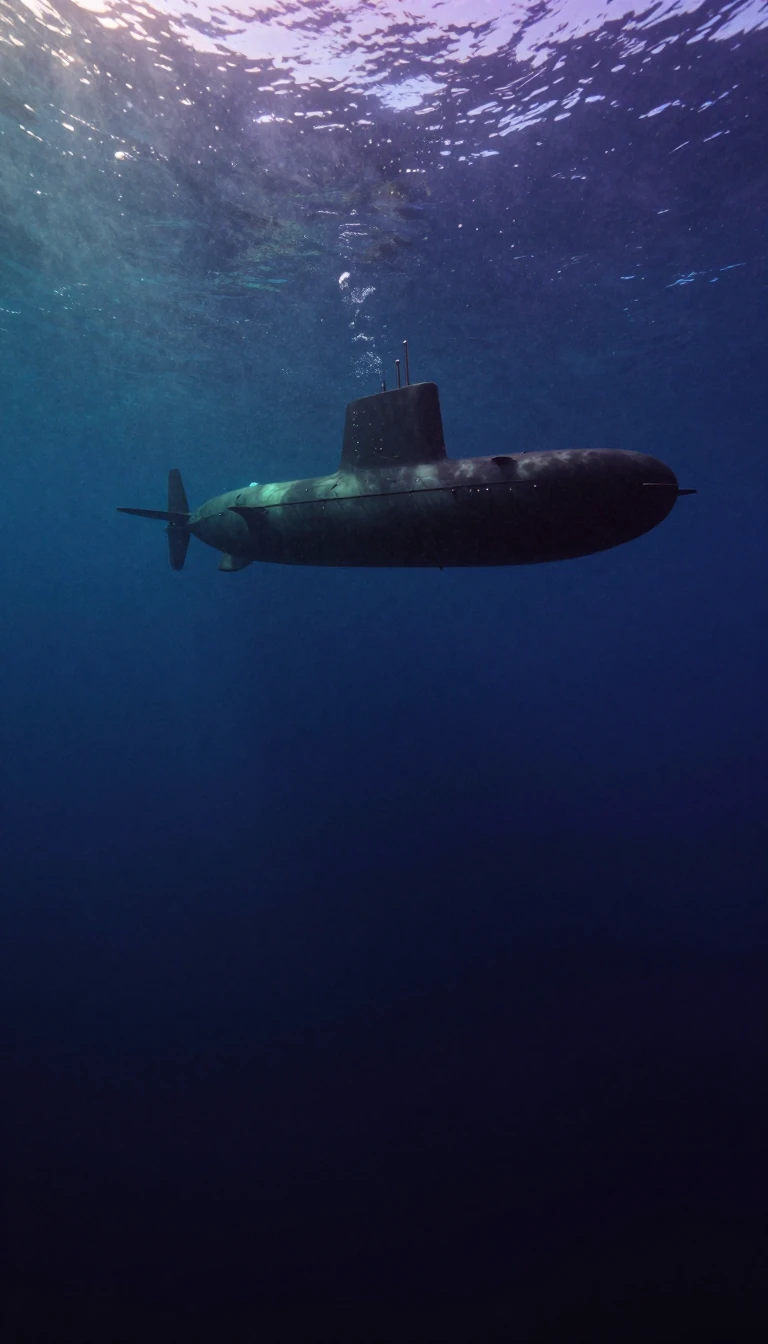
In short: They were the workhorses of the Soviet underwater fleet, but they were far from silent. Despite their massive battery capacity, these diesel-electric submarines were hampered by their own weight and noise, creating a high-stakes environment of cramped quarters and slow speeds during the Cold War's most tense standoff.
The Foxtrot-class submarines, known by the Soviet designation Project 641, were designed to replace the structurally weak Zulu class. While they were comparable to contemporary designs in armament, they possessed distinct engineering trade-offs. To achieve an underwater endurance of 10 days, two of their three decks were dedicated entirely to batteries. However, this massive weight significantly penalized their mobility, resulting in a maximum submerged speed of only 2 knots (3.7 km/h) at full endurance. Furthermore, their three-screw configuration made them notably noisier than Western counterparts.
A key part of the Cuban Missile Crisis involved these ships. Four Project 641 submarines, specifically B-4, B-36, B-59, and B-130, were sent to Cuba by the Soviet Navy. During the crisis, US Navy destroyers dropped practice depth charges near these boats to force them to surface for identification. While three were forced up, one successfully eluded detection. The class was also notable for its internal conditions; even when compared to the much older American Balao-class, the Foxtrot's interior remained relatively small and crowded.
Before the teardrop hull's arrival transformed underwater capabilities, the Foxtrot class stood as one of the final Soviet models. Production began in 1957, with the first keel laid down that year and the first unit commissioned in 1958. The Admiralty Shipyard's Sudomekh division in Saint Petersburg produced 58 units for the Soviet Navy, finishing the last hull in 1983. While the Russian Navy retired its last units between 1995 and 2000, the class saw global service in the navies of India, Libya, Cuba, and Poland.
The legacy of the Foxtrot is now largely historical. Many units have been preserved as museums globally, including the B-427 in California and the INS Kursura in India. One notable unit, the Zaporizhzhia, was passed to Ukraine in 1997 but was eventually captured by Russia during the 2014 annexation of Crimea, where it was deemed operationally unsuitable due to its age.
Opens the Intellect+ feed with this card first. Swipe up for the next one.
Sources
- Summary by Intellect · source: Foxtrot-class submarine
To cite this card, link to https://intellectplus.co.uk/app/wars-foxtrot-class-submarine.
How we source, check and correct cards: Editorial standards.
General information, not professional advice. Spotted an error? Flag the card or see corrections and complaints.
Intellect Plus is a visual educational discovery platform for exploring fascinating facts and ideas. Brain Food, Not Brain Rot. What is Intellect Plus?
Related
More in Other wars & battles · More in Wars & Conflicts · Latest · A–Z · All topics
