The needle-gun that allowed Prussians to sweep the battlefield
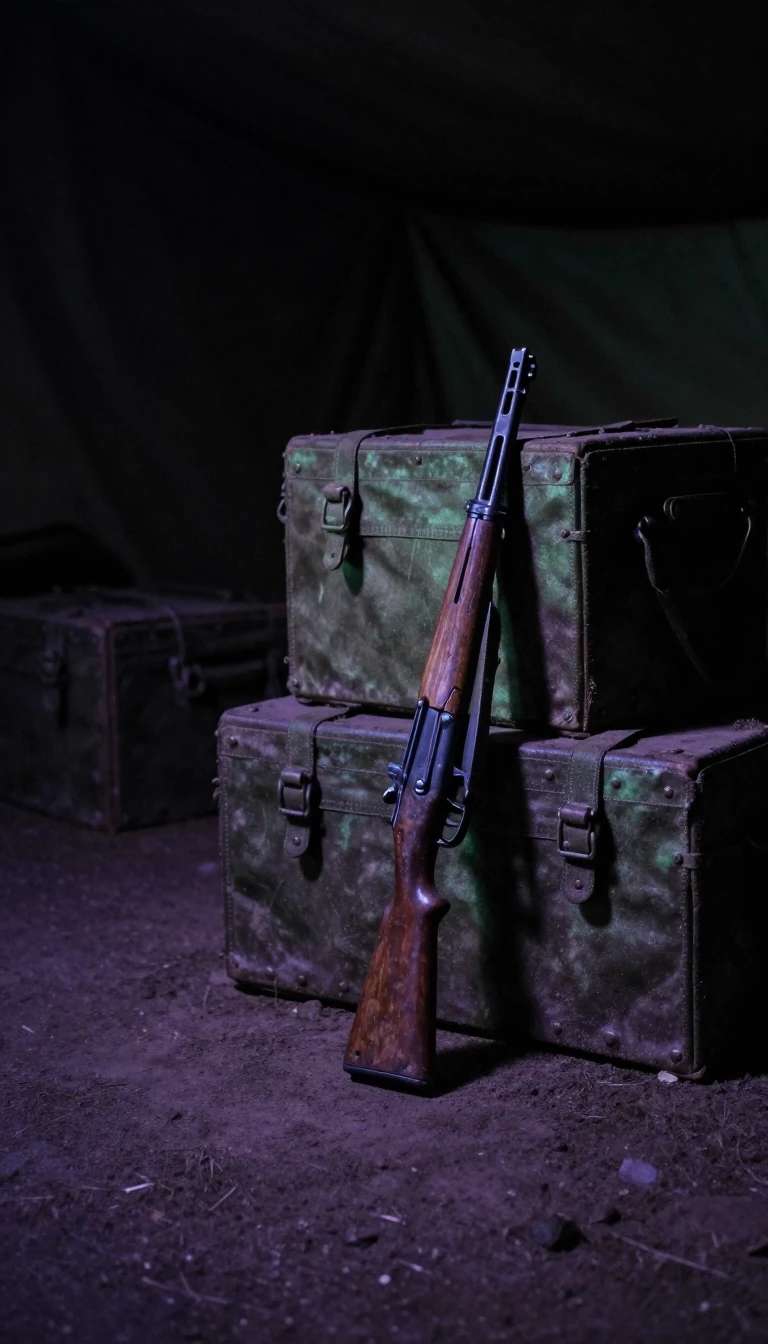
In short: In 1866, a Prussian soldier could fire five shots while lying on the ground in the time it took his Austrian counterpart to fire just one. This tactical revolution wasn't just about speed; it was powered by a radical new breech-loading technology that fundamentally altered 19th-century warfare.
The Dreyse needle-gun (Nadelgewehr) represented a seismic shift in military doctrine. Developed by gunsmith Johann Nikolaus von Dreyse, the weapon became the standard Prussian arm in 1848. A sharp, needle-shaped firing pin served as its primary feature, puncturing a paper cartridge shell to trigger a percussion cap located beneath the projectile. This breech-loading mechanism allowed for rapid fire and enabled soldiers to remain prone during combat—a significant advantage over muzzle-loading muskets which required the soldier to stand upright to reload.
The rifle's design was complex: it utilized an acorn-shaped 15.4 mm (0.61 in) bullet glued into a paper 'Sabot.' The powder charge of 4.8 g (74 grains) sat between this inner lining and the outer case. This specific arrangement aimed to ensure more complete combustion of the black powder. While it proved revolutionary during the Danish–German War of 1864 and the Franco-Prussian War of 1870–71, the needle-gun was not without flaws. It suffered from significant gas leakage at the breech and inconsistent effective ranges.
The transition toward modern firearms continued as Germany unified. By 1871, the German Empire adopted the Mauser Model 1871 (Gewehr 71), a single-shot bolt-action rifle. This was eventually superseded by the Gewehr 88 in 1889, which moved toward smokeless powder and smaller 7.9mm cartridges. These rapid technological iterations—from specialized Jäger hunting rifles to high-velocity breechloaders—reflect a century of intense competition to balance mobility, rate of fire, and mechanical reliability.
The evolution was also shaped by regional autonomy. For example, Bavaria maintained its own unique weapons like the Podewils gun until 1870, often due to budgetary constraints. Even after unification, different states had distinct preferences, illustrating how German military history is a tapestry of diverse paths eventually forged into a singular national standard.
Opens the Intellect+ feed with this card first. Swipe up for the next one.
Sources
- Summary by Intellect · source: German military rifles
To cite this card, link to https://intellectplus.co.uk/app/wars-german-military-rifles.
How we source, check and correct cards: Editorial standards.
General information, not professional advice. Spotted an error? Flag the card or see corrections and complaints.
Intellect Plus is a visual educational discovery platform for exploring fascinating facts and ideas. Brain Food, Not Brain Rot. What is Intellect Plus?
Related
More in World War I · More in Wars & Conflicts · Latest · A–Z · All topics
