The submachine gun that was too smart for its own good
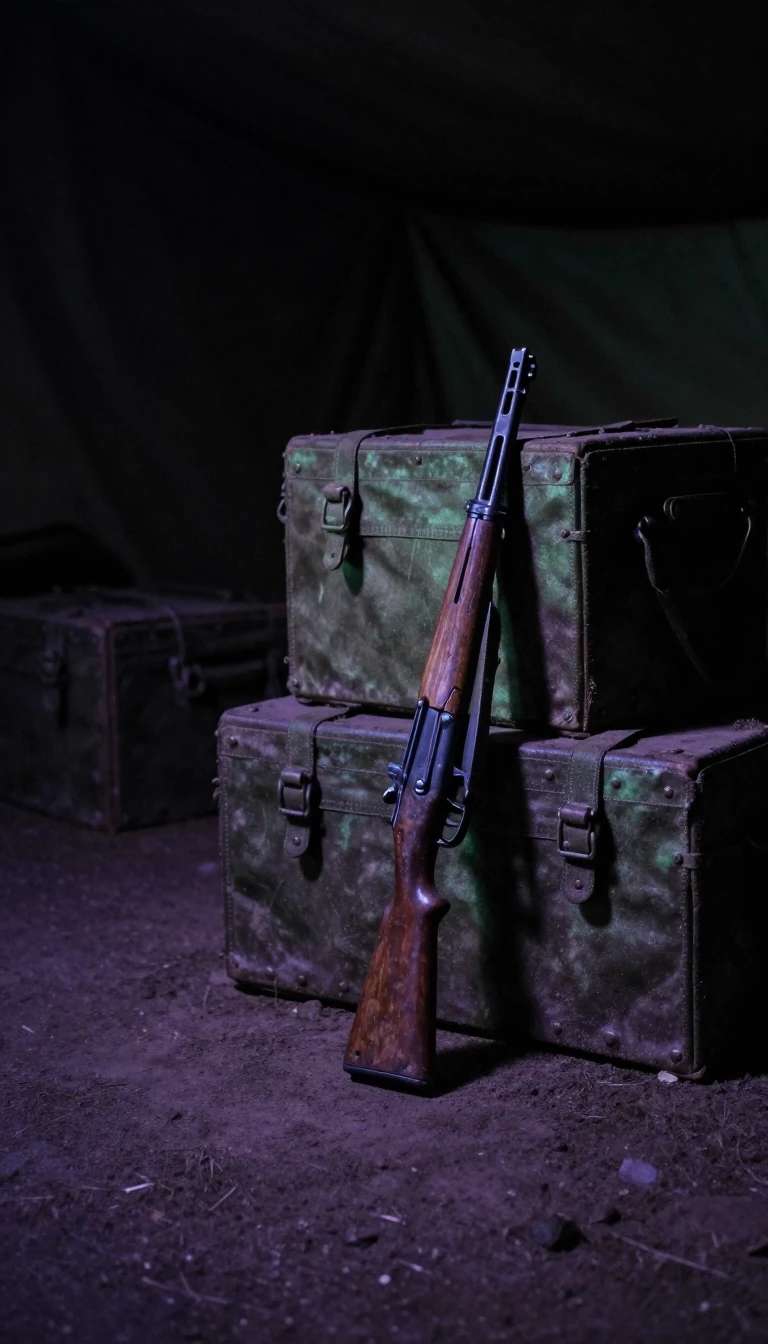
In short: In 1941, the U.S. military faced a desperate shortage of automatic weapons. They turned to the Reising—a lightweight, accurate, and affordable alternative to the heavy Thompson. But while it outperformed its rival on paper, its sophisticated engineering became a liability in the brutal reality of jungle warfare.
Designed by Eugene Reising, an assistant to John M. Browning, the M50 was a marvel of mechanical efficiency. Unlike the heavy Thompson, which relied on a massive bolt to control its rate of fire, the Reising used a 'delayed blowback' (or hesitation lock) mechanism. This allowed the weapon to be significantly lighter—weighing just seven pounds compared to the Thompson's eleven—while maintaining a manageable cyclic rate. It also fired from a closed bolt, meaning only a linear hammer and firing pin moved when the trigger was squeezed, offering superior accuracy at the start of a burst.
However, this sophistication came at a cost. Because the Reising was originally intended for civilian police and security use, it was not built for the rigors of the Pacific Theater. The weapon's commercial blued finish rusted easily in saltwater, and its intricate design made it notoriously difficult to maintain in the field. Testing at Fort Benning and Aberdeen Proving Ground had already flagged issues with blindfold reassembly, but these problems were magnified in combat. Furthermore, the lack of parts interchangeability—a byproduct of H&R's early mass-production struggles—meant that mixing up components during communal cleaning could render a weapon inoperable.
The Reising ultimately became a victim of its own complexity. Its delayed blowback system relied on a specific recess in the bolt; if dirt or fouling accumulated there, the gun would fail to fire. Combined with a sensitive staggered-column magazine that easily jammed with debris, the weapon struggled in the sand and mud of the Solomon Islands. While it was a triumph of American engineering and a necessary stopgap during the supply crisis of 1941, the Reising proved that a weapon designed for a police officer's holster might not survive a Marine's jungle patrol.
Opens the Intellect+ feed with this card first. Swipe up for the next one.
Sources
- Summary by Intellect · source: M50 Reising
To cite this card, link to https://intellectplus.co.uk/app/wars-m50-reising.
How we source, check and correct cards: Editorial standards.
General information, not professional advice. Spotted an error? Flag the card or see corrections and complaints.
Intellect Plus is a visual educational discovery platform for exploring fascinating facts and ideas. Brain Food, Not Brain Rot. What is Intellect Plus?
Related
More in World wars era · More in Wars & Conflicts · Latest · A–Z · All topics
