 Intellect Plus
Film and television
709 cards. Each one is a 40-second story with a five-minute read behind it. Page 12 of 12.
 Hollywood's Big Five ruled until antitrust broke theater chainsFrom talkies around 1927 until a 1948 Supreme Court case, a handful of studios owned production, distribution, and theatres. MGM, Paramount, Warner Bros., Fox, and RKO formed the …
 The Tonight Show still holds the longest talk-show recordConversation-as-format grew on U.S. television in the early 1950s. Joe Franklin began in 1951; NBC's Tonight Show, launched in 1954 with Steve Allen, remains the world's longest-r…
 TV shifted from live experiments to color, arcs, and streaming1930s broadcasts of the Berlin Olympics, George VI's coronation, and Sarnoff's 1939 World's Fair teased a new medium before war froze progress. Afterward, the 1947 World Series so…
 Ray filmed Apu's life on a shoestring and rewrote world cinemaSatyajit Ray's Bengali trilogy—Pather Panchali (1955), Aparajito (1956), The World of Apu (1959)—follows one boy's path from village poverty to adult grief. Shot with amateurs on …
 Disney's first feature cartoon briefly topped all sound filmsHollywood scoffed that an hour-plus cartoon would empty theatres. Walt Disney spent about $1.5 million on Snow White anyway. After a December 1937 Los Angeles premiere and a Febru…
 Soap manufacturers named a genre built for endless weekday storiesDaytime serials earned their nickname from detergent sponsors, not sudsy plots alone. Scholars usually start the form with Irna Phillips's Painted Dreams on Chicago radio in 1930.…
 Miyazaki's bathhouse epic was Japan's top film for nineteen yearsChihiro wanders into a spirit spa, loses her name to the witch Yubaba, and works to free parents turned into pigs. Hayao Miyazaki's 2001 Studio Ghibli film cost about US$19 millio…
 NBC nearly killed Trek before Trekkies saved it with lettersGene Roddenberry pitched a Wagon Train to the stars in 1964; Lucille Ball's Desilu backed him. After NBC rejected the first pilot starring Jeffrey Hunter, fans later flooded the n…
 Most American silent features likely no longer existSilent cinema matured between the mid-1890s and 1929, inventing Classical Hollywood grammar alongside German Expressionism and Soviet montage. Unstable nitrate stock and studios’ …
 MGM treated Singin’ in the Rain as a routine musicalGene Kelly and Stanley Donen’s 1952 comedy about Hollywood’s scramble into talkies used Arthur Freed and Nacio Herb Brown’s old song catalog. It opened only modestly. Later it top…
 Sitcom was a 1950s word for a much older comic shapeSituation comedy keeps one cast and one setting looping through trouble—home, office, or neighborhood—unlike sketch shows that reset every bit. The label itself only caught on in …
 Metropolis cost a fortune, then nearly vanishedFritz Lang’s 1927 Weimar science-fiction epic burned through more than five million Reichsmarks over seventeen months of shooting. Critics called the images dazzling and the plot …
 Tarkovsky’s Mirror shows a life without showing the faceAndrei Tarkovsky’s 1975 film Mirror follows a dying Soviet poet through childhood, war, and uneasy adulthood—yet adult Aleksei’s face almost never appears. Color, black-and-white,…
 Hitchcock financed Psycho himself when Paramount balkedAfter Paramount refused a normal budget for a motel thriller adapted from Robert Bloch, Alfred Hitchcock offered to shoot cheaply in black-and-white with his TV crew—and finally b…
 Reality TV grew from pranks, then denied it was stagedAllen Funt’s Candid Camera began catching strangers on film in 1948. By the early 2000s, Survivor, Idol, and Big Brother turned ordinary people into global franchises. Critics sti…
 Sesame Street treated preschool TV like a research labJoan Ganz Cooney and Lloyd Morrisett launched Sesame Street on 10 November 1969 after about eight million dollars in foundation and public grants. It was the first children’s seri…
 Seven Samurai taught Hollywood how to assemble a teamAkira Kurosawa’s 1954 epic runs 207 minutes and follows villagers who hire seven fighters to stop harvest-time bandits. It topped Japanese ticket sales that year yet barely cleare…
 Sholay flopped first, then ran five years in MumbaiRamesh Sippy’s 1975 Hindi adventure paired Dharmendra and Amitabh Bachchan as hired guns chasing Amjad Khan’s Gabbar Singh. Critics shrugged and audiences hesitated—until word of …
 Movies are still frames that trick your eyes into motionA film is visual art that tells stories with moving images, usually synced to sound since the 1930s. The motion is an illusion: frames race past while flicker fusion hides the gap…
 Venice started film festivals in 1932; the Big Five still ruleOnce a year, whole cities become screening rooms. Festivals can be competitive launchpads or quiet showcases, outdoor or online, short-film or horror-only. Venice is the oldest st…
 Every movie is five stages of organized chaosFilmmaking is not one craft but a relay. Development lands the idea and the money; pre-production hires people and builds worlds; production captures raw footage; post-production …
 Game shows began on radio and TV in 1938A host explains rules while contestants chase cash, trips or gadgets by answering trivia or solving puzzles—usually inside a single episode, without fan votes. Spelling Bee and In…
 Inflation-adjusted, Gone with the Wind still tops the box officeDavid O. Selznick’s 1939 epic, directed by Victor Fleming from Margaret Mitchell’s 1936 novel, swept ten Academy Awards and held the all-time earnings crown for more than twenty-f…
 Broken shark robots invented the summer blockbusterSteven Spielberg’s 1975 thriller, adapted from Peter Benchley’s 1974 novel, was the first major Hollywood feature shot mostly on the open ocean. Mechanical sharks kept failing off…
 Fellini’s Paparazzo gave the world the word paparazziIn Federico Fellini’s 1960 satire, Marcello Mastroianni’s tabloid writer drifts through seven Roman days and nights chasing a sweet life that never arrives. A photographer named P…
 Lawrence of Arabia won seven Oscars and redefined the desert epicDavid Lean’s 1962 biography, produced by Sam Spiegel and drawn from T. E. Lawrence’s Seven Pillars of Wisdom, put Peter O’Toole on the map. Ten Oscar nominations yielded seven win…
 Looney Tunes began as ads for Warner’s music catalogBefore Bugs Bunny ruled theaters, Warner Bros. wanted cartoons that sold sheet music. In 1929, after buying Brunswick Records and publishers for twenty-eight million dollars, the …
 Hollywood fled west to escape Edison's patent policeAmerica's movie capital did not begin in California. Early studios clustered in Fort Lee, New Jersey, until inventors' patents made filming near New York risky. Mild winters, vari…
- Movies began as spinning drums, not Hollywood camerasLong before celluloid stars, scientists chased motion with stroboscopes, phenakistoscopes, and zoetropes. A meteorological camera logged instrument needles for decades. Then tripw…
- A sled named Rosebud outlived Hearst's news blackoutOrson Welles's first feature arrived with rare final-cut power, a composite tycoon, and a dying whisper. William Randolph Hearst barred the film from his papers. It lost money, ne…
- Chaplin defied talkies with a silent masterpiece in 1931Four years after The Jazz Singer made dialogue fashionable, Charlie Chaplin released City Lights with music and effects but no spoken lines. Audiences still lined up. Critics now …
 Toy Story proved a full feature could be pure CGIComputer animation grew from lab demos and wire-frame hands into Saturday-morning series and blockbuster features. Below about twelve frames a second, motion looks jerky; theaters…
- A broken chameleon circuit made the TARDIS a police boxSince 1963 the Doctor has regenerated through fourteen lead actors, kept memories while swapping personalities, and flown a bigger-inside time ship stuck looking like a British po…
 The word documentary was coined reviewing a 1926 filmBefore "documentary" had a name, cameras chased trains, factory gates, and prize fights as "actualities." In 1926 Scottish filmmaker John Grierson, reviewing Robert Flaherty's Moa…
 Eurovision began as television glue for postwar EuropeInspired by Italy's Sanremo Festival, the European Broadcasting Union launched an annual song contest in 1956. Seven countries sent two songs each that first night—Switzerland's L…
 Godard shot Breathless like a newspaper, then cut it like a feverIn twenty-three chaotic days in 1959, Jean-Luc Godard turned a real car-theft killing into a jump-cut crime romance. Jean-Paul Belmondo and Jean Seberg wandered Paris with almost …
- Cannes began as a Riviera answer to fascist Venice prizesIn 1938 Mussolini and Hitler overrode a Venice jury, handing cups to propaganda pictures. French, British, and American jurors walked out. France picked Cannes over Biarritz, plan…
- Casablanca was a rushed wartime A-picture nobody expected to lastWarner Bros. bought an unproduced play in January 1942, shot entirely on the Burbank lot from May to August, and hurried the premiere to ride news of the North Africa landings. No…
 China's screens began with a Peking opera reel in 1905 BeijingLouis Lumière's cameraman reached Shanghai a year after inventing cinematography; a variety bill there showed movies on 11 August 1896. China's own first film, Dingjun Mountain, a…
 French cinema invented the movie house—and later the New WaveOn 28 December 1895 the Lumière brothers projected moving pictures in Paris; their train arriving at La Ciotat still marks cinema's birth for many historians. Pathé and Gaumont so…
- Bollywood is only one language inside India's film empireIndia has no single national cinema—Hindi, Telugu, Tamil, Malayalam, Kannada, Bengali and more each run their own industries. For years the country led the world in annual film co…
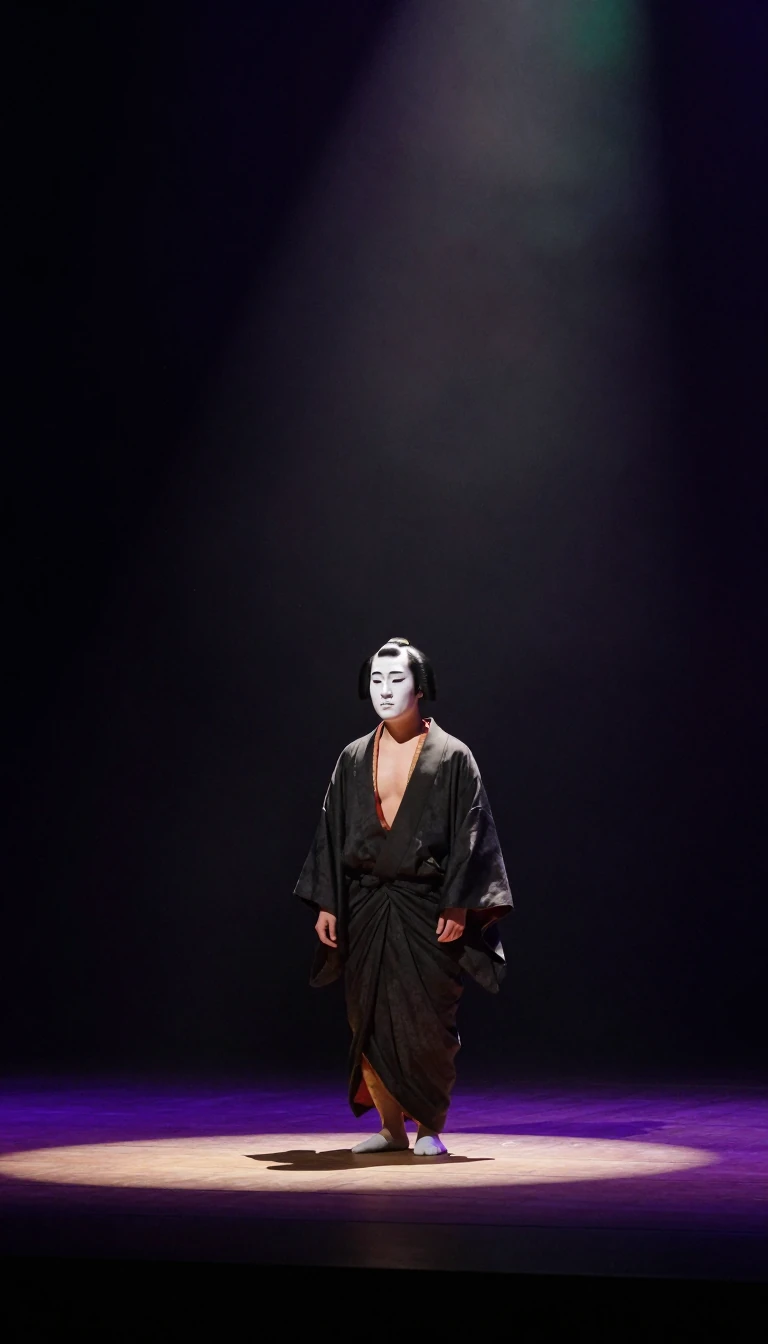 Japan's golden age put samurai and kaiju on the world mapAs of 2022 Japan ranked fourth in feature output (634 films) and third in box office ($1.5 billion). The 1950s "Golden Age" sent Kurosawa's Seven Samurai and Honda's Godzilla abro…
 Lenin nationalised film, then Eisenstein reinvented montageOn 17 January 1922 Lenin ordered the Commissariat for Education to register, tax, and censor every screening in Soviet Russia—calling cinema the key school for the masses. War had…
- The first Oscars lasted fifteen minutes and cost five dollarsIn May 1929 about two hundred seventy guests gathered at the Hollywood Roosevelt Hotel for a private dinner that handed out fifteen statuettes. Tickets ran five dollars. Winners h…
 Action cinema was named late but argued over for decadesChases, fights, shootouts, explosions, and stunts feel like an obvious genre, yet scholars have debated what an action film really is since the 1980s. The label appeared in the 19…
 Animation means giving images the illusion of lifeFrom hand-painted cels to CGI composites, animation is filmmaking that creates or manipulates pictures and plays them in sequence until motion appears. The English word once simpl…
 In Japan anime means all animation, not one styleEnglish speakers treat anime as Japanese animation with a recognizable look. In Japanese the same word covers every animated work, whatever its origin. Commercial Japanese animati…
- Eisenstein's Potemkin turned a mutiny into montage legendThe 1925 Soviet silent Battleship Potemkin retells the 1905 revolt aboard a Black Sea warship. Directed by Sergei Eisenstein for Mosfilm, it became a textbook of montage—especiall…
 A stolen bicycle made neorealism's most famous heartbreakIn ruined postwar Rome, a father's job depends on a bike he can barely afford. When it is stolen, Vittorio De Sica's 1948 Bicycle Thieves follows him and his son through markets a…