 Intellect Plus
Literature
698 cards. Each one is a 40-second story with a five-minute read behind it. Page 12 of 12.
 Why a stick-figure webcomic became an unlikely engine for serious scientific and technical researchCreated by Randall Munroe in 2005, xkcd transcends typical webcomics. By blending complex mathematics, technical humor, and social commentary, it has evolved into a cultural pheno…
 A family of eccentric misfits proves that happiness matters more than conventional success.In the 1936 comedy You Can't Take It with You, the Sycamore family lives by a simple rule: do nothing you do not enjoy. While the world demands productivity and normalcy, this New…
 Why are so many adults reading books written for teenagers?Young Adult literature is no longer just for adolescents. While these stories focus on the intensity of growing up, identity, and first love, they have become a massive commercial…
 How a teenage delinquent became a global icon of Japanese martial arts mangaYoshihiro Togashi’s YuYu Hakusho began as a supernatural detective story but evolved into a genre-defining martial arts epic. Following the afterlife journey of a young street fig…
 How a single novel shaped the Western perception of ChinaIn 1931, Pearl S. Buck released a masterpiece that captured the American imagination. By dramatizing the struggles of a Chinese farmer, the book became a massive bestseller and a …
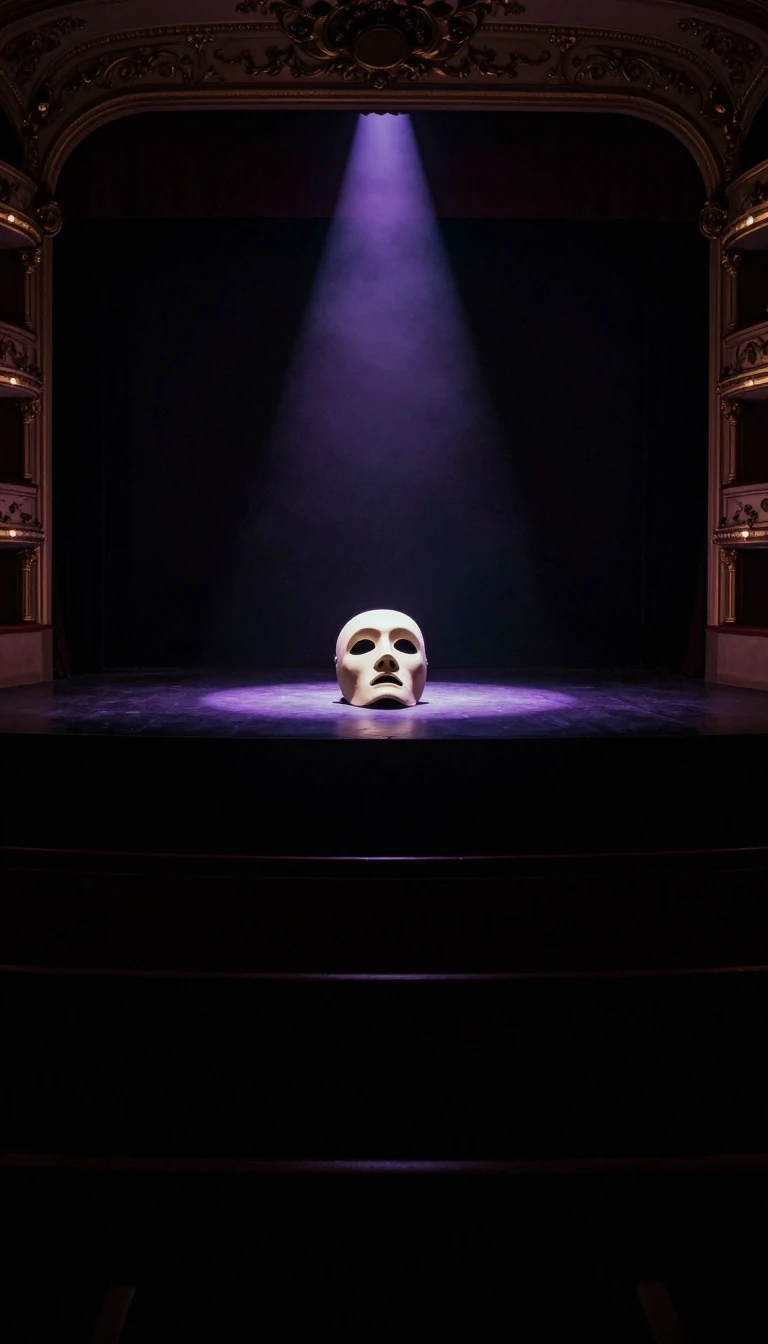 The day six unfinished characters walked onto a real stageIn 1921, an acting company's rehearsal was interrupted by strangers claiming to be characters without an author. This metatheatric experiment by Luigi Pirandello blurred the line …
 A single childhood mistake can rewrite the entire course of a lifeIn Ian McEwan's celebrated 2001 novel, a thirteen-year-old's misunderstanding triggers a devastating chain of events. What begins as a confused observation by a young girl transfo…
 How a Memory of Flowers Can Rewrite Your Emotional LandscapeA simple walk in the Lake District inspired a poem that captured more than just pretty sights. Wordsworth showed how nature’s beauty, even when distant, can profoundly influence o…
 Robert Eggers' Nosferatu is a meticulously crafted, $182 million gothic horror success story.Robert Eggers spent years obsessing over vampire lore to reimagine the 1922 classic. The resulting 2024 film, a commercial and critical triumph, eschews modern digital tropes for …
 The true heart of Dracula is a 400-year wait for loveWhile most people associate the vampire myth with horror, director Luc Besson argues that Bram Stoker's original work is actually a tragic romance. His 2025 adaptation strips away…
 How a 2024 horror film reimagines the classic vampire through a balletic lensThe 2024 film Abigail transforms the traditional vampire trope into a high-stakes, blood-soaked heist. Directed by Matt Bettinelli-Olpin and Tyler Gillett, the movie follows crimi…
 How a gothic horror franchise became a cornerstone of modern video game designSpanning nearly four decades, the Castlevania series evolved from a linear platformer into a genre-defining blueprint for exploration. By blending cinematic horror with complex, n…
 Why the perfect society is literally a place that cannot existThe term utopia, coined by Sir Thomas More in 1516, is a linguistic trap. Derived from Greek, it means both good place and no place. This inherent contradiction defines the concep…
 William Makepeace Thackeray’s Vanity Fair is a satirical masterpiece without a single traditional hero.Published as a serial between 1847 and 1848, this Victorian classic follows the cunning Becky Sharp and the naive Amelia Sedley. Framed as a puppet show, the novel explores the so…
 The world's oldest magazine began as a radical reformer and became a political launchpad.Launched in 1828, The Spectator has evolved from a liberal-radical voice into a conservative institution. It holds the record for the longest-running current affairs magazine, sur…
 How a 19th-century librarian’s decimal system changed the way we find knowledge forever.Before Melvil Dewey, libraries organized books by the order they arrived, making browsing nearly impossible. Dewey’s 1876 innovation introduced relative location, grouping similar…
 Henry Fielding was a master of satire who founded London's first professional police force.Before he became a titan of the English novel, Henry Fielding was a playwright whose biting political satires were so effective they triggered the Theatrical Licensing Act of 1737…
- Chaucer planned roughly 120 pilgrim stories and stopped at twenty-fourGeoffrey Chaucer sent some 30 fictional pilgrims from London toward Becket's shrine, each supposed to tell four stories. Most scholars think he died with the project unfinished at…
 The Grimms softened wicked mothers into stepmothers but made the punishments bloodierJacob and Wilhelm Grimm set out as law students hoping to rescue old German stories, not to entertain children. Their first volume of 1812 was attacked as unfit for young readers,…
 Some of humanity's oldest literature may describe volcanoes erupting 34,000 years agoLiterature comes from the Latin for letter, yet much of it was never written down. Aboriginal Gunditjmara stories from south-western Victoria tell of volcanic eruptions, and a 202…
 A runaway boy and an enslaved man share a raft, and American fiction changesMark Twain let a barely schooled Missouri boy tell his own story in his own dialect, and the result became one of the Great American Novels. Huck Finn drifts down the Mississippi …
 Voltaire answered an earthquake with a comic novel that got bannedAfter the 1755 Lisbon earthquake, Voltaire could no longer stomach the claim that everything happens for the best. His reply was Candide, a breakneck satire in which a naive young…
 Utopia means nowhere, and Thomas More chained its criminals in goldThomas More's 1516 island has no private property, no locks, a six-hour working day and religious tolerance. It also keeps two slaves in every household and uses gold for fetters …
 Tolstoy insisted War and Peace was not a novel at allIts author refused to call it a novel, a poem or a chronicle. War and Peace mixes five aristocratic families with long essays on history, packs in roughly 160 real people, and was…
 Is the housekeeper the real villain of Wuthering Heights?Almost everything we learn about Heathcliff and Catherine comes from Nelly Dean, a servant who talks to a sick tenant. In 1958 the critic James Hafley argued she steers the whole …
- The Prince waited nineteen years for print, yet scandal reached readers firstMachiavelli was drafting a handbook for new rulers in 1513, but it only appeared in print in 1532, five years after he died. By then the manuscript had already stirred controversy…
 Hobbes named his theory of government after a biblical sea monsterWriting as England tore itself apart in civil war, Thomas Hobbes argued that only a single, undivided sovereign could save people from a life he called nasty, brutish and short. H…
 Middlemarch began life as two separate unfinished stories stitched togetherGeorge Eliot was working on one tale about an ambitious young doctor and another about an idealistic young woman when she merged them. The result, issued in eight instalments acro…
 Moby-Dick hides an encyclopedia of whales inside a revenge storyHerman Melville's 1851 novel is famous for Captain Ahab's hunt for the white whale that took his leg. Less famous is how much of it is not narrative at all: sermons, stage directi…
- Aristotle's ethics survived a century and a half hidden in a cellarAfter Aristotle died, his writings passed from student to student until heirs, fearing a king's book collectors, hid them underground for about 150 years. Among the survivors was …
- John Milton dictated all of Paradise Lost after going blindMilton lost his sight in 1652, yet he produced an epic of more than ten thousand lines by speaking it aloud to helpers and friends. Published in 1667, Paradise Lost retells the fa…
 Descartes wrote his most famous line in French, not Latin, in 1637"I think, therefore I am" first appeared in a short French treatise that was meant as a mere preface. René Descartes published it in Leiden in 1637 to introduce three scientific e…
 The first modern novel was about a man ruined by reading novelsAlonso Quijano, a minor nobleman nearing fifty, read so many tales of chivalry that he put on old armour and rode out as a knight. Miguel de Cervantes published his story in 1605,…
 A copyright mistake helped make Dracula the most portrayed character in fictionBram Stoker filed the United States copyright for Dracula incorrectly, so the Count slipped into the public domain there. Film-makers noticed in the mid-twentieth century, and the…
 Hamlet's story is far older than Shakespeare, perhaps older than Europe itselfShakespeare wrote his longest play between 1599 and 1601, but the prince who pretends to be mad in order to avenge his father was already ancient. Versions of that clever-fool her…
- Charlotte Brontë published Jane Eyre as Currer Bell and changed the novelIn October 1847 a London firm released a novel billed as an autobiography by an unknown Currer Bell. The real author was Charlotte Brontë, and her orphaned governess narrated her …
 Walt Whitman spent 37 years rewriting one book of poemsWalt Whitman self-published Leaves of Grass on July 4, 1855: twelve untitled poems in 95 pages, with no author named on the cover. He then revised and expanded it until his death …
 Is a thousand-year-old Japanese tale the world's first novel? It's complicated.Around the year 1000, a lady-in-waiting at the Japanese court known as Murasaki Shikibu wrote a vast story of the 'Shining Prince' Genji, with some four hundred characters who age…