 Intellect Plus
Ages & eras
25 cards. Each one is a 40-second story with a five-minute read behind it.
 Why the Dark Ages Were Historically the Worst Period to ExistWhile often romanticized in fiction, the Middle Ages presented a brutal reality of survival. This video explores why historical life during this era was defined by extreme hardshi…
 How the 14th Century BC Transformed the Ancient World into an Imperial PowerhouseThe 14th century BC was a pivotal era of imperial expansion and technological shifts. From the rise of the Hittite Empire under Suppiluliumas I to the construction of grand palace…
 Why did ancient Egypt try to erase an entire era from its own history?The Amarna Period was a radical departure from Egyptian tradition, defined by a shift to monotheism and stylized art. When it ended, successors attempted to systematically delete …
 How Roman soldiers turned the imperial throne into a revolving door for decadesDuring the Crisis of the Third Century, the Roman Empire suffered under a chaotic succession of military strongmen known as barracks emperors. Rising from the ranks through brute …
 The Cinquecento: A Century of Artistic Revolution and the Birth of Modern StyleThe Cinquecento, or the 1500s in Italy, was a transformative era that bridged the High Renaissance and the dawn of the Baroque. From the technical mastery of Leonardo and Michelan…
 Why Ancient Rome Built Its Cultural Identity Through the Lens of Its Defeated EnemiesRome conquered the Greek world, yet it was Greek culture that ultimately conquered Rome. From literature and philosophy to the very language of its elite, Roman identity was forge…
 Did the Eastern Zhou dynasty begin with a secret king and a nine-year vacancy?Traditional history claims the Eastern Zhou began in 770 BC when King Ping moved the capital to Luoyang. However, a recently discovered manuscript suggests a more chaotic origin, …
 How a small rural population transformed into an independent European nation by 1918The Estonian national awakening was a decades-long evolution from a peasant culture into a self-governing republic. Driven by rising literacy, intellectual leadership, and a rejec…
 The Five Barbarians were not five, nor were they necessarily barbarians in any singular sense.In Chinese history, the Five Barbarians—or Wu Hu—are credited with toppling the Western Jin dynasty. Yet, the term is a historical misnomer. It obscures a complex reality of shift…
 The Golden Age of comics was a fleeting, mass-produced experiment in American pulp culture.Between 1938 and 1956, comic books transformed from cheap, disposable newsstand fillers into a national obsession. Driven by technological printing innovations and the urgent nati…
 Were the biblical judges actually legal arbiters or just regional military chieftains?The Hebrew Bible describes the judges as spiritual and military leaders who rose during crises before the monarchy. Yet, modern scholars argue the term shophetim likely refers to …
 How archaeologists use broken pottery to date the rise and fall of ancient Greece.Without written records for the third millennium BC, historians rely on a relative dating system called Helladic chronology. By tracking subtle stylistic shifts in pottery shards …
 Is the Age of Ignorance a historical reality or a powerful political myth?Jahiliyyah is often translated as the Age of Ignorance, a term describing pre-Islamic Arabia. While traditional accounts paint this era as a barbaric, godless wasteland, modern sc…
 Japan's Kofun period was defined by massive keyhole-shaped tombs and continental cultural exchange.Between 300 and 538, Japan underwent a transformation marked by the rise of the Yamato Kingship and the construction of thousands of distinctive keyhole-shaped tumuli. This era, n…
 The Machine Age: When Humanity Replaced Craftsmanship With The Power Of The Assembly LineSpanning roughly 1880 to 1945, the Machine Age transformed the world through mass production, electrification, and the rise of the internal combustion engine. It was an era of unp…
 Protohistory: The shadowy bridge between silent prehistory and the dawn of written recordsProtohistory describes the elusive era when a society lacks its own writing system but appears in the records of literate neighbors. It is a transitional space where archaeology m…
 How a century of Russian rule transformed the Armenian national identity and landscapeWhen Eastern Armenia fell under Russian control in 1828, it ended centuries of Iranian dominance. This shift did more than redraw borders; it sparked a complex era of cultural rev…
 The 169-day collapse of the Second Czechoslovak Republic: A state dismantled from within and without.Following the 1938 Munich Agreement, Czechoslovakia was transformed into a fragile, truncated rump state. Over just five months, internal ethnic tensions and relentless pressure f…
 The Space Age began not with exploration, but with the shadow of global war.While we associate the Space Age with lunar landings and satellites, its roots lie in military technology. The era was ignited by the launch of Sputnik in 1957, a feat that transf…
 How a mutiny of soldiers in Spain triggered a brief, radical experiment in democracyIn 1820, a disgruntled military expedition destined for South America turned its sights on Madrid. Their rebellion forced King Ferdinand VII to accept a liberal constitution, spar…
 Why the Ottoman Empire briefly traded its martial focus for a floral obsessionBetween 1717 and 1730, the Ottoman Empire entered a rare, peaceful interlude known as the Tulip Period. Under Sultan Ahmed III and Grand Vizier İbrahim Paşa, the elite turned towa…
 The Western Zhou Dynasty: How Bronze Vessels Recorded a Lost Feudal AgeSpanning from 1046 to 771 BCE, the Western Zhou dynasty established a feudal order that shaped Chinese history. While the era ended in a violent collapse, its legacy survives thro…
 How Did a Post-War State Fall to a Coup in 1948?The Third Czechoslovak Republic was established amid the wreckage of war, yet its trajectory was dictated by foreign spheres of influence. Despite initial democratic promise, inte…
 The era of two emperors and a fractured throneFrom 1336 to 1392, Japan was split by a bitter struggle for legitimacy. While one court held the political reins in Kyoto, the other guarded the sacred Imperial Treasures. This wa…
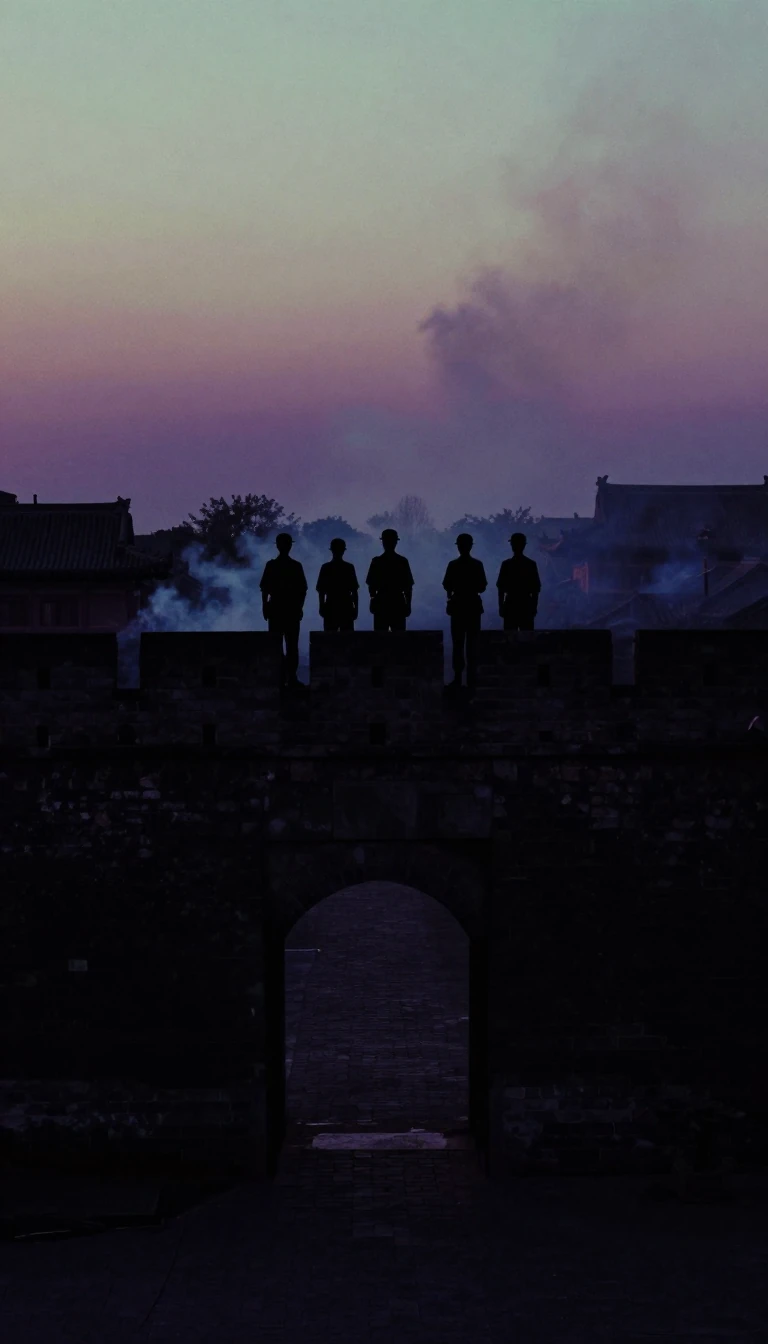 How the fall of the Han sparked centuries of fragmented ruleWhen the Han empire collapsed at the end of the 2nd century ce, the dream of a centralized state vanished. Instead of a unified realm, China entered a turbulent era of warlords, a…