 Intellect Plus
Planets
13 cards. Each one is a 40-second story with a five-minute read behind it.
 From Wanderers to Giants: The Evolution of Planetary IdentityThe word planet originates from the ancient Greek term for wanderer. While we now categorize our neighbors by size and orbit, the true complexity of these worlds lies in their atm…
 A complete tour of our solar system's diverse planetary bodiesFrom the scorched surface of Mercury to the frigid reaches of Neptune, this overview provides a concise breakdown of every planet in our neighborhood. It is an essential primer fo…
 Visualizing the impossible: mapping the true scale of our cosmosHow do you measure something that defies human comprehension? This video uses visual aids to contextualize the staggering differences in size between planets, stars, and entire ga…
 The celestial wanderers that define our cosmic neighborhoodFrom the battered surface of Mercury to the frozen reaches of Neptune, our solar system is a diverse gallery of worlds. While we often focus on Earth, these eight planets—ranging …
 Red dwarfs might be our best bet for finding lifeWe used to have zero proof of planets outside our solar system. Now, we have identified over 5,300 exoplanets. While finding an Earth twin is difficult, new discoveries suggest th…
 Why our solar system might contain dozens of hidden planetsWhile we are taught there are only eight planets, a physics-based approach suggests the count could be much higher. This video explores the forgotten bodies in our neighborhood an…
 The diverse ways the cosmos would claim your lifeThis video explores the specific physical mechanisms that would lead to death on various planets. It serves as a scientific visualization of how different environments—from extrem…
- The universe hosts planets where it rains molten glass and ironSpace isn't just empty; it is populated by worlds that defy every rule of terrestrial physics. From planets being physically shredded by their own stars to others featuring supers…
 The mathematical pattern that predicted planets before we could see themIn 1766, an astronomer noticed a strange numerical rhythm in our solar system: each planet seemed to sit roughly twice as far from the Sun as its neighbor. This empirical rule all…
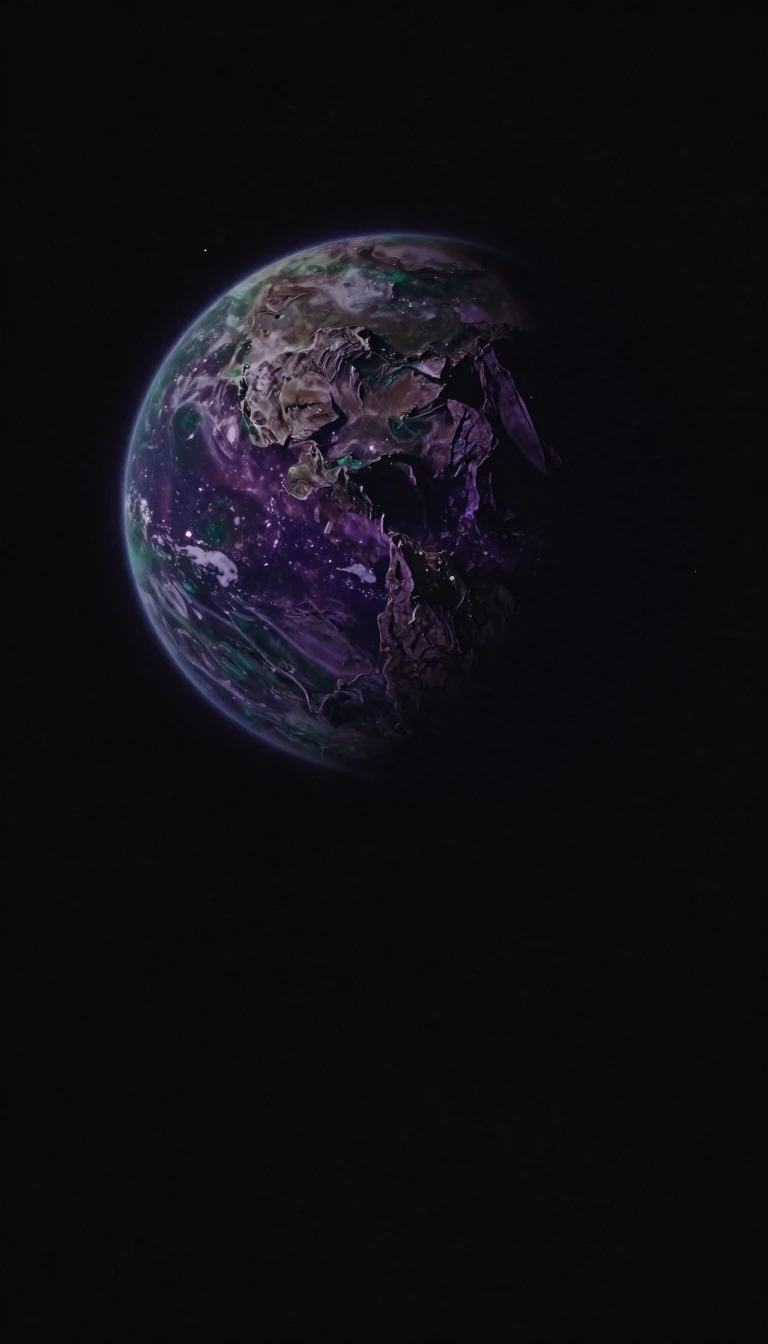 The universe is full of worlds that don't fit our mapsWe often define planets by where they sit in a solar system, but the universe works differently. From rogue wanderers ejected into the void to shrunken stars turned into heavy sph…
 Are some moons actually planets just orbiting the wrong center?The line between a moon and a planet is often a matter of perspective rather than physics. Some of our largest moons are larger than the planet Mercury, leading scientists to deba…
 Pluto was demoted by the votes of 424 astronomers in Prague.In August 2006 the International Astronomical Union defined 'planet' for the first time, and Pluto no longer qualified. The decision was taken on the last day of a conference, by …
 On Venus, a day lasts longer than a year.Venus takes 243 Earth days to spin once on its axis, but only 225 days to orbit the Sun. It also spins backwards compared with most planets, so if you could see through its crushi…