The universe is full of worlds that don't fit our maps
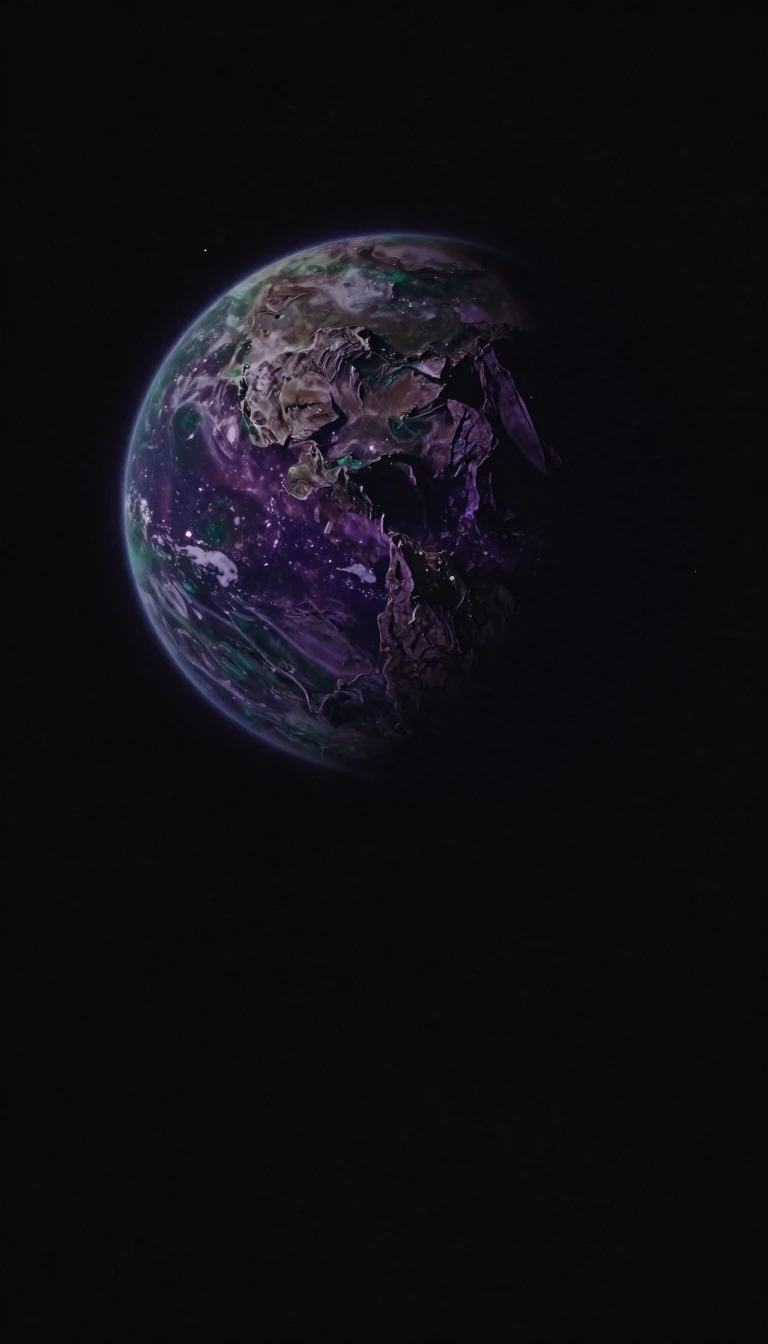
In short: We often define planets by where they sit in a solar system, but the universe works differently. From rogue wanderers ejected into the void to shrunken stars turned into heavy spheres, planetary-mass objects challenge our traditional categories, proving that geology—not just location—defines a world.
A planetary-mass object (PMO) is defined by its physics rather than its neighborhood. To qualify as a PMO, an object must be massive enough to achieve hydrostatic equilibrium—meaning its own gravity pulls it into a rounded, ellipsoidal shape—but not massive enough to sustain core fusion like a star. This geophysical definition creates a broad category that encompasses planets, dwarf planets, planetary-mass moons, and free-floating objects.
The diversity of these objects is vast. Some are 'rogue planets' ejected from their original systems into interstellar space, while others are 'sub-brown dwarfs' formed by the collapse of gas clouds rather than accretion. Others are products of extreme stellar evolution: in close binary systems, a star can lose so much mass to a companion that it shrinks into a planetary-mass object, such as the Jupiter-mass object orbiting pulsar PSR J1719−1438.
This classification highlights a major debate in astronomy regarding the definition of a planet. Proponents of geophysical definitions argue that location is irrelevant; they suggest dwarf planets are simply a subtype of planet because they share the same physical properties. However, the International Astronomical Union (IAU) chose to keep dwarf planets as a separate category. By looking at PMOs, we see a spectrum of existence where some worlds orbit stars, some orbit other planets as massive satellites like Titan or Ganymede, and others drift alone in the dark.
Understanding these objects helps scientists map the lifecycle of matter. Whether an object is a captured rogue planet in a wide orbit (between 100 and 105 AU) or a shrunken white dwarf becoming a helium planet, they all represent different pathways for how gravity shapes the cosmos.
Opens the Intellect+ feed with this card first. Swipe up for the next one.
Sources
- Summary by Intellect · source: Planetary-mass object
To cite this card, link to https://intellectplus.co.uk/app/space-planetary-mass-object.
How we source, check and correct cards: Editorial standards.
General information, not professional advice. Spotted an error? Flag the card or see corrections and complaints.
Intellect Plus is a visual educational discovery platform for exploring fascinating facts and ideas. Brain Food, Not Brain Rot. What is Intellect Plus?
Related
More in Planets · More in Space · Latest · A–Z · All topics
