 Intellect Plus
Cards starting with H
40,576 cards. Page 567 of 677.
 How physicists measure the invisible boundaries between crystals in a solid materialIn polycrystalline materials, grains meet at complex angles that define the material's structural integrity. Misorientation quantifies the difference in crystallographic orientati…
 How physicists measure the invisible movement of fluids through space and timeVolumetric flow rate is the fundamental metric for tracking how much fluid passes through a specific boundary over time. Whether you are monitoring ocean currents, engine performa…
 How physicists once planned to use a nuclear bomb to catch a ghost particleIn 1956, Clyde Cowan and Frederick Reines finally captured the elusive neutrino, a particle once thought impossible to detect. Before settling on a steady nuclear reactor, they se…
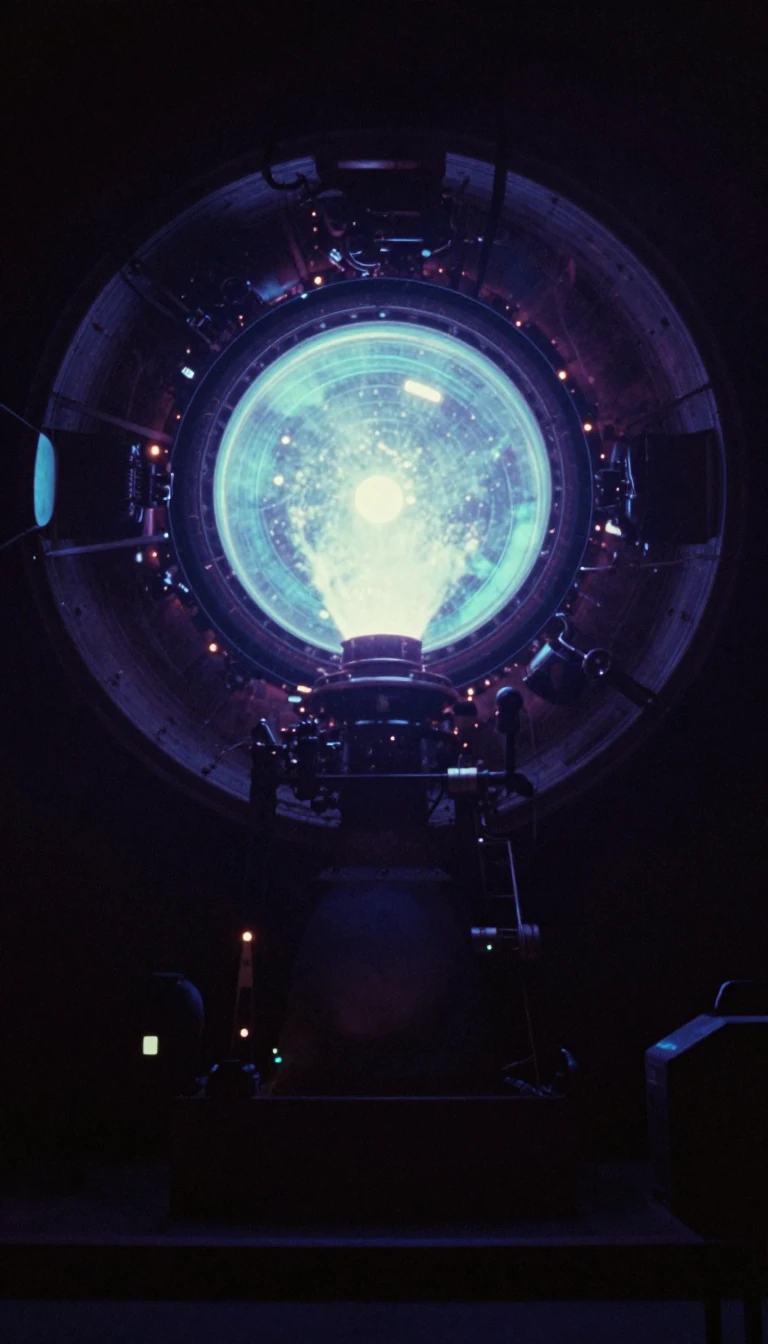 How physicists recreate the conditions of the universe microseconds after the Big BangBy smashing heavy ions together at near-light speeds, scientists are creating a primordial soup of quarks and gluons. This state of matter, which existed in the earliest moments o…
- How physicists recreate the primordial liquid that filled the universe after the Big BangAt Brookhaven National Laboratory, the Relativistic Heavy Ion Collider smashes atomic nuclei at near-light speeds to recreate the conditions of the early universe. By melting prot…
 How physicists shrink infinite spacetime into a single, manageable diagramA Penrose diagram is a two-dimensional map that compresses the vast, infinite reaches of spacetime into a finite, readable space. By using a clever mathematical technique called c…
 How physicists simplify complex fields using the elegant math of multipole expansionWhen dealing with complex electromagnetic or gravitational fields, calculating every interaction is impossible. Instead, scientists use multipole expansion to break down a field i…
 How physicists simplify the impossible by replacing complex interactions with a single averageCalculating systems with countless moving parts is often mathematically impossible. Mean-field theory solves this by replacing intricate, many-body interactions with one effective…
 How physicists tamed the infinite complexity of quantum field theory equationsQuantum field theory describes subatomic particles as field vibrations, but the math quickly becomes unmanageable. This video explores the clever techniques physicists developed t…
 How physicists track quantum systems when they are not perfectly isolated or knownIn quantum mechanics, state vectors are limited to pure, isolated systems. To handle the messy reality of mixed ensembles or entangled particles, physicists use the density matrix…
 How physicists turn complex two-body problems into simple, solvable single-body equationsCalculating the motion of two interacting objects is notoriously difficult. By introducing a hypothetical value known as reduced mass, physicists simplify these systems, treating …
 How physicists use a simple spinning model to decode the secrets of moleculesThe rigid rotor is a foundational tool in molecular physics, treating complex molecules as simple spinning objects. By ignoring internal vibrations, this model allows scientists t…
 How physicists use artificial intelligence to hunt for the universe's smallest secretsPhysicist Kathryn Coldham explains the Compact Muon Solenoid experiment at CERN. Discover how this massive detector, located 100 metres underground, uses advanced algorithms to fi…
 How physicists use educated guesses to solve the unsolvableIn quantum mechanics, finding the exact energy of a system is often impossible. Instead, scientists use the variational method: a clever mathematical strategy that turns a search …
 How physicists use four simple numbers to decode the complex dance of lightLight is rarely just a simple beam; it is a flickering, wobbling wave with a hidden geometry. In 1851, George Gabriel Stokes devised a set of four parameters to map this behavior.…
 How physicists use hypercharge to organize the chaotic zoo of subatomic particlesIn the mid-20th century, physicists faced a bewildering array of newly discovered particles. To bring order to this subatomic chaos, they developed hypercharge, a quantum number t…
- How physicists use imaginary objects to solve the most complex problems in the universeA test particle is a theoretical construct—an object so small or insignificant that it cannot alter the system it inhabits. By ignoring its own mass or charge, scientists turn imp…
 How physicists use oscillating electric fields to suspend atoms in thin airTo trap an ion, you cannot simply rely on static electricity; Earnshaw's theorem forbids it. Instead, scientists use ingenious devices called ion traps. By rapidly switching elect…
 How physicists used symmetry to decode the building blocks of matterExplore the architectural journey of the Standard Model. This video deconstructs particle physics brick by brick, tracing how scientists moved from observing a chaotic array of su…
 How physicists weigh the invisible energy of subatomic particles using massive detectorsIn the high-stakes world of particle physics, calorimeters act as essential energy scales. By forcing particles to collide with dense matter and shatter into showers of secondary …
 How physics allows us to simulate gravity in space using rotationArtificial gravity is not just science fiction. By utilizing rotation, we can generate acceleration that mimics the pull of gravity. This video breaks down the fundamental physics…
 How physics models the swing of pendulums from simple points to rigid bodies.This video explains the mechanics of pendulums, distinguishing between simple point masses and complex rigid systems. It provides a foundational look at how rotational physics and…
 How physics powers the design of rockets, lasers, and nuclear warheadsThis video explores how the game Children Of A Dead Earth uses established physics to model complex machinery. You will see how developers simulate the performance of everything f…
 How physics turns a simple jetski into a high-powered water-propelled flight machine.Flying a jetpack is more than just a thrill; it is a practical application of Newton's third law. This video explores the mechanics behind water-based flight, explaining how a jet…
- How physics unifies electricity and magnetism into a single, elegant four-dimensional structure.In classical physics, electricity and magnetism often appear as separate forces. Relativistic physics reveals they are two sides of the same coin, unified by the electromagnetic f…
 How Picasso used a single private sketchbook to map his creative evolution in 1913Scholar Neil Cox examines a personal notebook Picasso kept for his entire life. By decoding the artist's private jottings and Cubist sketches, this talk reveals the hidden mechani…
 How Pierre Bonnard redefined the boundaries of French modernismExplore the intimate interiors and still-life imagery of Pierre Bonnard. This talk examines his unique artistic process and compares his vision to both the Impressionists and gian…
 How Pierre Bonnard used color to escape into his own private worldIn this video, scholar Julian Bell examines the late interiors and still-life works of Pierre Bonnard. Discover how the artist's unique style fits within the broader movement of F…
 How Pierre Bonnard's luminous interiors redefined modernismExplore how the late paintings of Pierre Bonnard use radiant color and compelling metaphors to convey disquieting sensations, prompting a major reappraisal of his reputation in tw…
 How Pierre Restany redefined the role of art in a consumer-driven industrial worldPierre Restany was a French cultural philosopher who challenged the boundaries of art. From co-founding the Nouveau Réalisme movement to his later obsession with the Amazon rainfo…
 How Piet Mondrian used primary colors and straight lines to seek universal harmonyPiet Mondrian spent his career stripping art down to its most fundamental elements. By rejecting representational imagery in favor of pure abstraction, he sought to express a spir…
 How pilots command the skies: from manual wing warping to fly-by-wire intelligenceModern flight control systems are far more than simple levers. They are complex networks that translate a pilot's physical input into precise aerodynamic maneuvers. Whether using …
 How pilots landed a Tupolev TU-154M with no electrical systemsIn September 2010, the crew of Alrosa Mirny Air Enterprise Flight 514 faced a terrifying crisis. This video explores how the pilots managed to safely land their airliner after a t…
 How pilots navigate the invisible highways above the North AtlanticIn the vast stretches of the North Atlantic, radar coverage disappears. Discover how aircraft avoid chaos by following a structured system of daily tracks that function as a celes…
 How pilots use a rubber duck to master the art of zero gravity flightTo simulate weightlessness, pilots fly a modified Boeing 727 in precise parabolic arcs. While the maneuver requires intense focus and complex coordination between three crew membe…
 How Pink turned a stadium tour into a record-breaking, high-flying circus spectaclePink's Summer Carnival tour redefined the modern stadium concert, blending high-octane acrobatics with intimate vocal performances. Spanning from 2023 to 2024, the tour became a g…
 How pioneers brewed beer in 1860s TorontoStep inside a brewery nestled within Toronto's Black Creek Pioneer Village to discover the traditional methods used by settlers during the 1860s.
 How pioneers brewed beer in 1860s TorontoStep inside a reconstructed 1860s era brewery at Black Creek Pioneer Village to see how traditional beer brewing was practiced in the past.
 How Pipelines Hear a LeakHow pipeline leak detection works: pressure-wave timing, hydraulic gradients, their limits, and fibre-optic cables that turn a whole line into a sensor.
 How pit vipers use a sixth sense to hunt in total darknessPit vipers possess a remarkable biological superpower: infrared-sensing pits located between their eyes and nostrils. This sixth sense allows these venomous snakes to detect the b…
 How Pixar mapped the human mind through personified emotionsWhat if you could see your thoughts as characters? Pixar’s Inside Out transformed complex psychology into a cinematic world, using scientific consultation to turn abstract feeling…
 How Pixar turned a rat into a culinary artist in the heart of ParisThe 2007 film Ratatouille follows Remy, an ambitious rat with a refined palate who dreams of cooking in a professional kitchen. By forming an unlikely partnership with a clumsy ga…
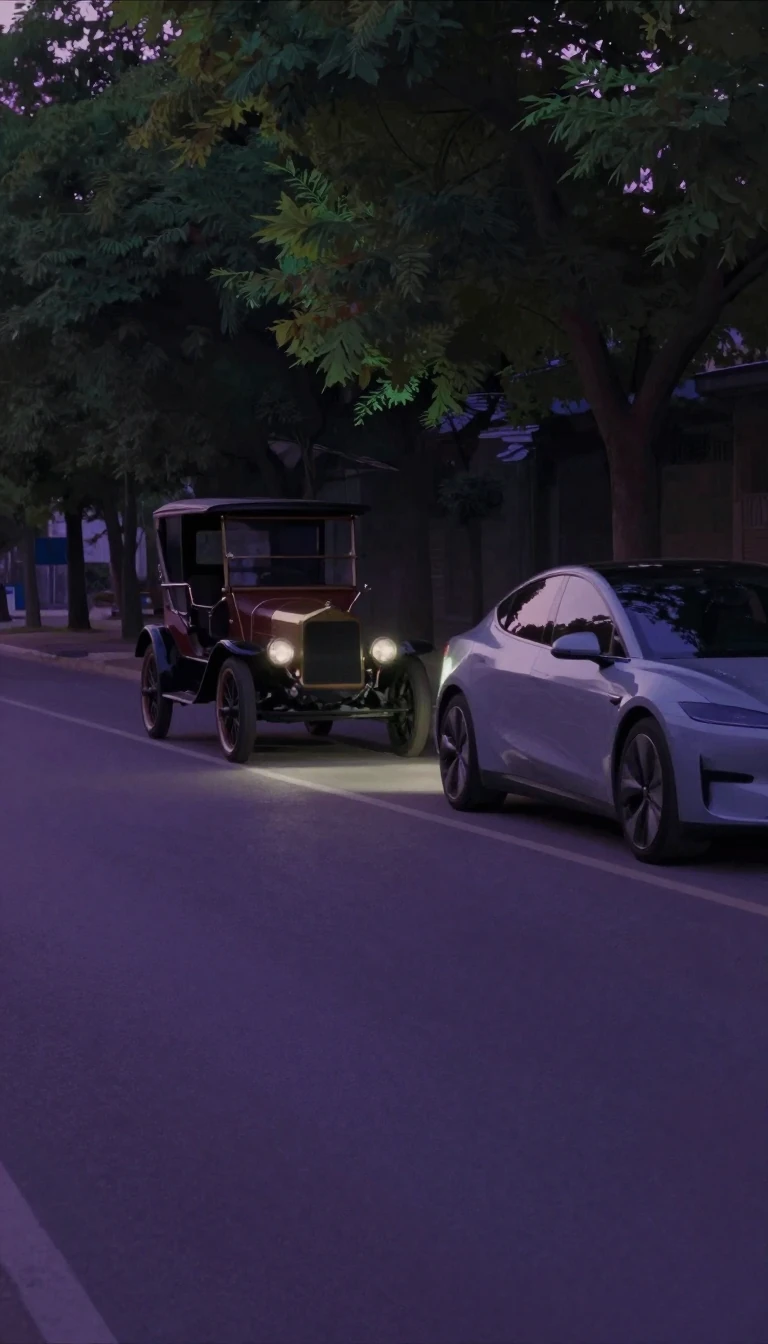 How Pixar turned a simple road trip into a genre-bending animated experimentPixar’s Cars on the Road series breaks from traditional storytelling by treating each of its nine episodes as a distinct genre experiment. Inspired by a childhood journey, the sho…
 How Pixar turned the complex architecture of human emotion into a cinematic landscapeWhen director Pete Docter noticed his daughter becoming quiet and reserved, he began to wonder what was happening inside her mind. The result was Inside Out, a film that maps the …
 How Pixar used advanced lighting technology to bring Monsters University to lifeMonsters University was the first Pixar film to utilize a revolutionary global illumination system. By imitating real-world light behavior through path tracing, the studio automat…
 How Pixar's First Female-Led Fairy Tale Sparked a Global Debate on Character DesignBrave was a milestone for Pixar, introducing their first female protagonist and female director. Yet, the film is remembered as much for its behind-the-scenes creative clashes and…
 How Pixar’s Coco became a cultural phenomenon through meticulous research and authentic storytellingPixar’s 2017 hit Coco broke new ground as the first nine-figure budget film featuring an all-Latino principal cast. By immersing its creative team in Mexican traditions and the vi…
 How Pixar’s Soul turned jazz history and existential philosophy into a visual masterpieceWhen Joe Gardner, a middle school music teacher, falls into a manhole, he enters a metaphysical realm that challenges the very meaning of purpose. Pixar’s 2020 film Soul explores …
 How pixelated lights and modular platforms define Hyundai's electric identityHyundai's IONIQ sub-brand uses a distinct design language to move away from one-size-fits-all motoring. From 8-bit inspired lighting to flexible interior layouts, the brand relies…
- How planetary survival changes the sandbox experience in Space EngineersThis video examines a major update to Space Engineers that shifts the gameplay focus from orbital mechanics to planetary survival, introducing new environmental challenges and hos…
 How planets move: understanding the mechanics of orbital motionThis ESA educational video explores the fundamental principles of orbital mechanics. It demonstrates how celestial bodies move through space, specifically focusing on the laws of …
 How plant cells use sunlight and rigid walls to build the worldUnlike animals, plants are built from the sun and structural polymers. By using specialized organelles called chloroplasts to convert light into chemical energy, these eukaryotic …
 How plantation agriculture forged a shared colonial identity through enslaved laborExplore how the British colonies in the West Indies and the American South became inextricably linked by a common economic engine: the plantation system.
 How plants conquered the land: a billion-year journey from algal scum to forestsPlants did not simply walk onto land; they spent hundreds of millions of years evolving from simple algal mats into complex organisms. This transition required revolutionary innov…
 How plants fight back against predators and microscopic invadersPlants are under constant assault from fungi, caterpillars, and even elephants. This video explores the sophisticated internal and external defense mechanisms that plants use to s…
- How plants grow when gravity is no longer a factorWitness a unique educational experiment conducted aboard the International Space Station, where astronauts demonstrate the fundamental properties of plant growth in a microgravity…
 How plants harness sunlight to fuel almost every living thing on EarthPhotosynthesis is the fundamental process that allows life to thrive by converting solar energy into chemical fuel. This video breaks down the mechanics of how producers capture l…
 How plants manage their growth through a delicate chemical balancing actPlants do not grow like animals. Instead of a fixed lifespan, they remain perpetually embryonic, relying on a sophisticated hormonal system to dictate when to divide, differentiat…
 How plants survive the planet's most hostile environmentsExplore the ingenious survival strategies of extreme plants, from fire-resistant bark to scents that mimic dung, as Nellie Nilsen journeys through deserts, tundras, and forests.
 How plants turn sunlight into chemical fuel using a solid-state quantum machinePlants do not just absorb light; they operate a sophisticated, solid-state electron transport chain that functions with near-perfect efficiency. By splitting water molecules into …