The textile so light it was once called woven air
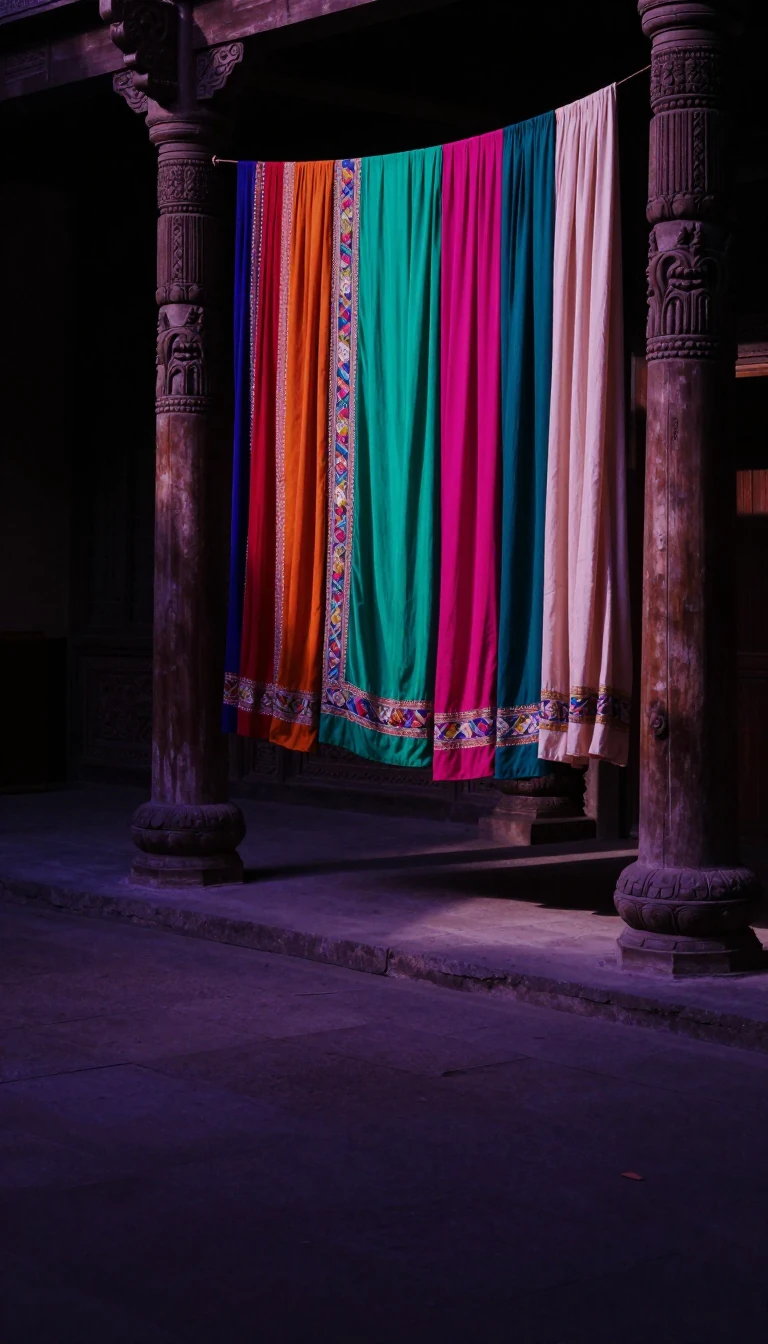
In short: Dhaka muslin was so extraordinarily fine that travelers claimed a whole sheet could be pulled through a signet ring. Prized by Mughal emperors and European royalty alike, this legendary fabric was a marvel of engineering, achieving thread counts that still baffle modern weavers.
Originating in the Ganges-Meghna delta of Bengal, Dhaka muslin reached its zenith between the 16th and 18th centuries. The secret lay in a specific local plant, phuti karpas, which produced a ribbon-like fiber that became exceptionally silky and strong when soaked. Artisans achieved warp densities of 800 to 1,200 threads per inch—an order of magnitude higher than standard muslins of the era, which typically ranged from 40 to 80. This technical mastery resulted in a fabric so sheer it was often described as resembling a spider's web or 'light vapours of dawn.'
The fabric served as a global luxury linchpin, fueling a vast trade network that reached Persia, Arabia, and Europe. In the Mughal courts, it was a primary status symbol; Emperor Jahangir’s court poet described it as 'dancing with the slightest breeze,' and the fabric was even used to wrap royal Egyptian mummies. It was so coveted that by the 18th century, it shaped the fashion of European icons like Marie Antoinette. However, its extreme transparency was so profound that it occasionally caused social scandal, with some contemporary observers joking that wearers were effectively naked.
The industry's collapse was a deliberate economic casualty of British colonial rule. Following 1757, the East India Company imposed punitive tariffs on Bengal textiles while flooding the local market with cheap, machine-made Lancashire cottons. This systematic destruction led to the extinction of the phuti karpas variety and the starvation of rural weaving communities. While the craft was nearly erased by the 20th century, recent efforts in Bangladesh have sought to revive the 'woven wind' through botanical rediscovery and new geographical indications.
Opens the Intellect+ feed with this card first. Swipe up for the next one.
Sources
- Summary by Intellect · source: Dhaka muslin
- Also: Art Institute of Chicago — Muslin · CC0 (data); description CC BY 4.0
To cite this card, link to https://intellectplus.co.uk/app/art-dhaka-muslin.
How we source, check and correct cards: Editorial standards.
General information, not professional advice. Spotted an error? Flag the card or see corrections and complaints.
Intellect Plus is a visual educational discovery platform for exploring fascinating facts and ideas. Brain Food, Not Brain Rot. What is Intellect Plus?
Related
More in Textiles · More in Art · Latest · A–Z · All topics
