Paolo Uccello: The Renaissance master who was intoxicated by the science of perspective
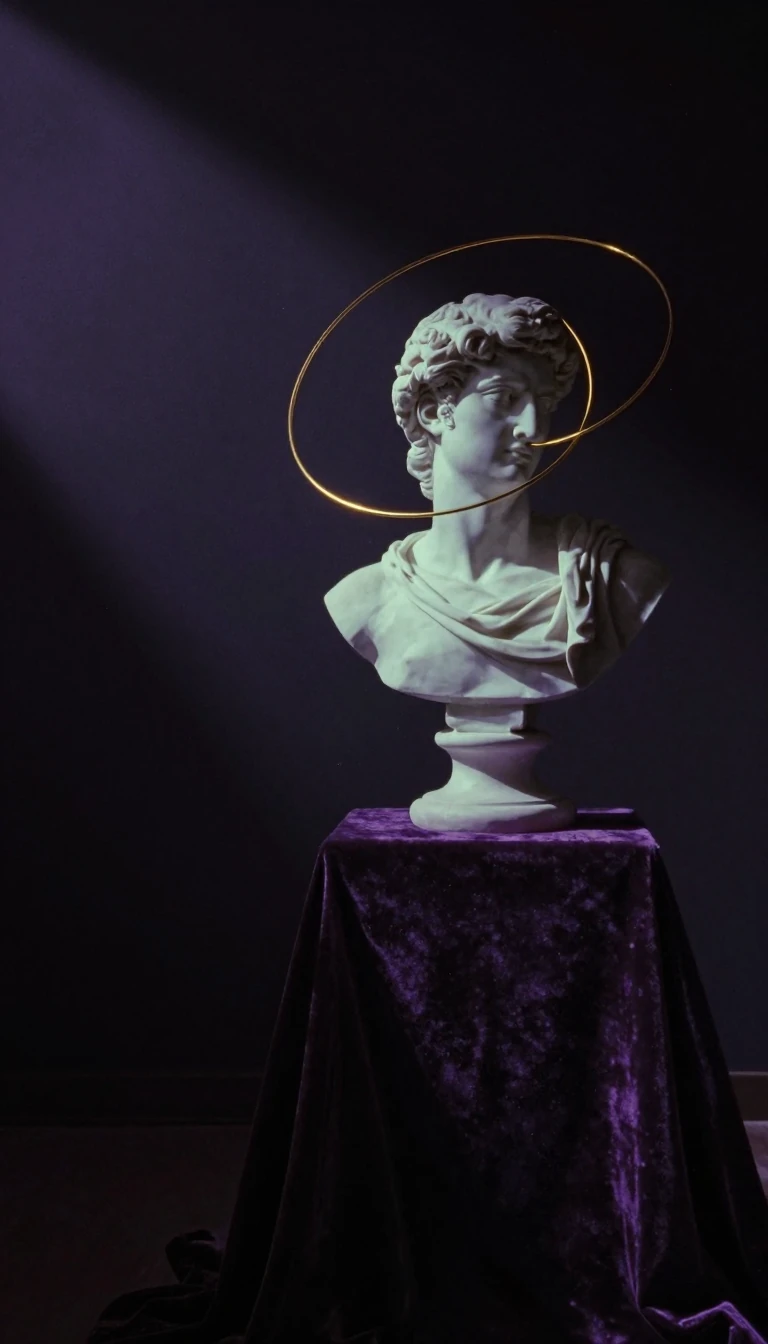
In short: Paolo Uccello bridged two worlds, blending the decorative elegance of late Gothic art with the heroic, scientific rigor of the early Renaissance. Obsessed with the geometry of space, he spent his nights calculating vanishing points, forever changing how artists construct three-dimensional depth on a flat, two-dimensional surface.
Born in 1397, Paolo Uccello began his training at age 10 in the workshop of Lorenzo Ghiberti, the sculptor famous for the Baptistery doors in Florence. This early exposure to sculptural composition profoundly influenced his later work. By 1414, he had joined the Compagnia di San Luca, and in 1415, he became a member of the official painters' guild, the Arte dei Medici e degli Speziali. His career took him to Venice in 1425, where he served as a master mosaicist, though all his work from this period has been lost.
Uccello is best remembered for his relentless, analytical pursuit of perspective. His 1436 monochrome fresco of the mercenary Sir John Hawkwood in the Florence cathedral demonstrates his ability to render figures with the weight and volume of sculpture. In his later masterpiece, The Flood (1447–48), he utilized a rapidly receding perspective scheme to unite two distinct scenes. His meticulous approach, often assisted by the mathematician Paolo Toscanelli, laid the groundwork for future Renaissance theorists, including Piero della Francesca and Leonardo da Vinci.
While his technical innovations were groundbreaking, Uccello’s style remained uniquely idiosyncratic. He often combined rigorous scientific perspective with the bright colors and elaborate decorative patterns characteristic of the late Gothic tradition. This synthesis was highly valued by patrons like the Medici, who acquired his famous Battle of San Romano panels. Although the 16th-century biographer Giorgio Vasari famously claimed Uccello was 'intoxicated' by perspective, modern historians emphasize that his enduring legacy lies in the decorative genius and unique charm of his compositions as much as his mathematical precision.
Uccello spent his final years in an increasingly reclusive state, dying in Florence on December 10, 1475. Despite his immense influence on the development of Renaissance art, he left no school of followers, remaining a singular, brilliant figure whose work serves as a bridge between the medieval past and the scientific future of Western painting.
Opens the Intellect+ feed with this card first. Swipe up for the next one.
Sources
- Summary by Intellect · source: Paolo Uccello | Italian Renaissance Painter & Architect | Britannica
- Also: Paolo Uccello
To cite this card, link to https://intellectplus.co.uk/app/art-paolo-uccello.
How we source, check and correct cards: Editorial standards.
General information, not professional advice. Spotted an error? Flag the card or see corrections and complaints.
Intellect Plus is a visual educational discovery platform for exploring fascinating facts and ideas. Brain Food, Not Brain Rot. What is Intellect Plus?
Related
More in Visual artists · More in Art · Latest · A–Z · All topics
