How a 19th-Century Palace Became the World's Largest Repository of Russian Art
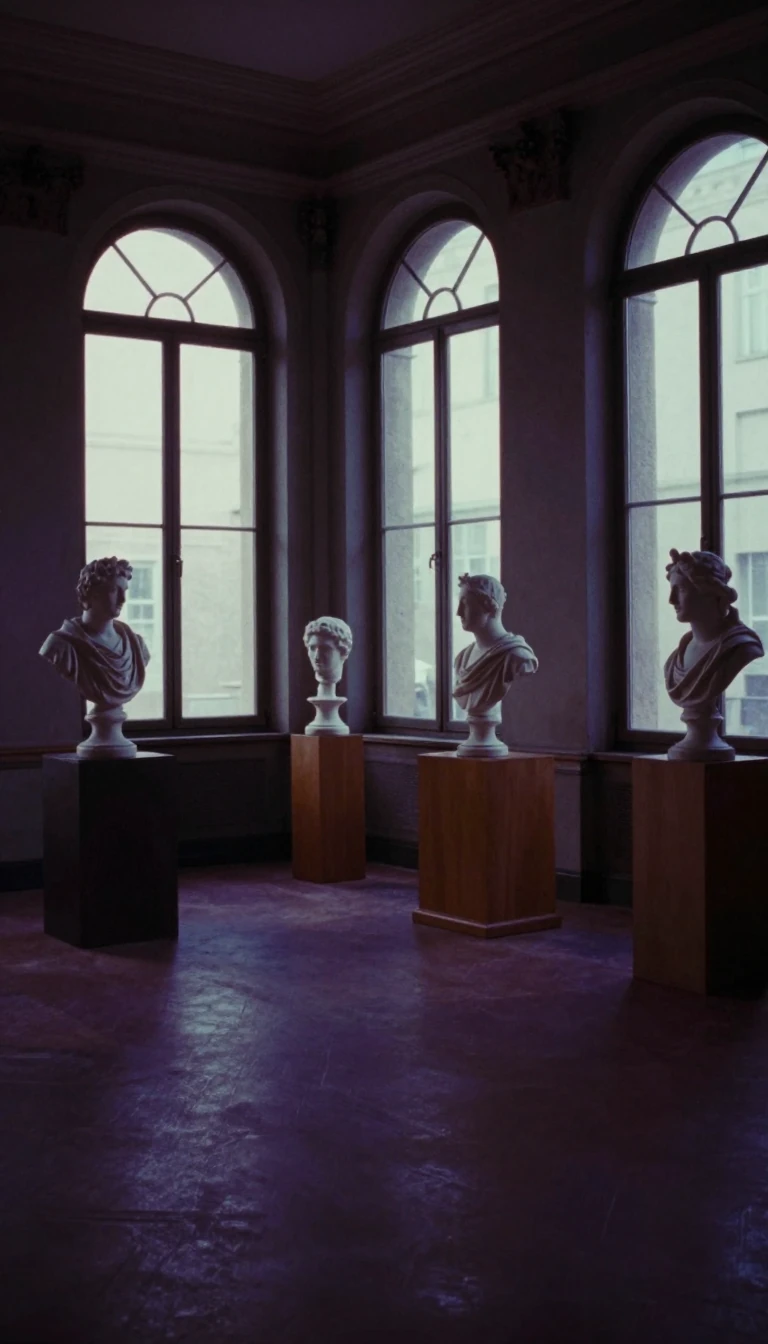
In short: The State Russian Museum occupies a vast complex, housing an unparalleled collection spanning centuries of Russian artistic achievement. Its physical growth and curated depth reflect a complex history of nationalization and architectural evolution, making it a monumental cultural archive.
The State Russian Museum, originally known by a different name honoring Emperor Alexander III, is recognized as the planet's most extensive collection of Russian fine art. Spanning over 30 hectares, the institution's sheer scale contributes to its status as one of the world's foremost art museums. Its visitor count reached 2,651,688 people in 2022, placing it twelfth globally in terms of visitation.
The museum's establishment process was layered. It was initially founded on April 13, 1896, to commemorate the enthronement of Nicholas II, and its initial holdings were sourced from institutions like the Hermitage Museum, the Imperial Academy of Arts, and the Alexander Palace. The grand opening followed on March 17, 1898, after Vasily Svinyin was tasked with restructuring the interiors for future exhibitions. Architecturally, the main structure is the Mikhailovsky Palace, a Neoclassical building erected between 1819 and 1825 by Carlo Rossi for Grand Duke Michael Pavlovich.
The museum's physical footprint expanded significantly through historical upheaval. Following the Russian Revolution of 1917, numerous private collections were absorbed and brought into the Russian Museum's custody, notably including Kazimir Malevich's Black Square. Furthermore, the complex incorporates several other sites, such as the Summer Palace of Peter I (1710–1714) and the Marble Palace of Count Orlov (1768–1785). The Benois Building, designed by Leon Benois between 1910 and 1912, was constructed starting in 1914 but was only completed for the museum in 1919.
The scope of the collection itself is vast, encompassing Russian art from the 10th century right up to the 21st century, covering every genre from old Russian icon painting to contemporary works. The museum's dedication to preservation is meticulous; the restoration department, which was first needed in 1906, was formally established in 1922. Today, it comprises 16 specialized workshops, staffed by 95 people, ensuring the care of diverse materials.
Opens the Intellect+ feed with this card first. Swipe up for the next one.
Sources
- Summary by Intellect · source: Russian Museum
To cite this card, link to https://intellectplus.co.uk/app/art-russian-museum.
How we source, check and correct cards: Editorial standards.
General information, not professional advice. Spotted an error? Flag the card or see corrections and complaints.
Intellect Plus is a visual educational discovery platform for exploring fascinating facts and ideas. Brain Food, Not Brain Rot. What is Intellect Plus?
Related
More in Cultural venues · More in Art · Latest · A–Z · All topics
