Franz Kafka’s final novel remains an unfinished, haunting exploration of unreachable authority and alienation.
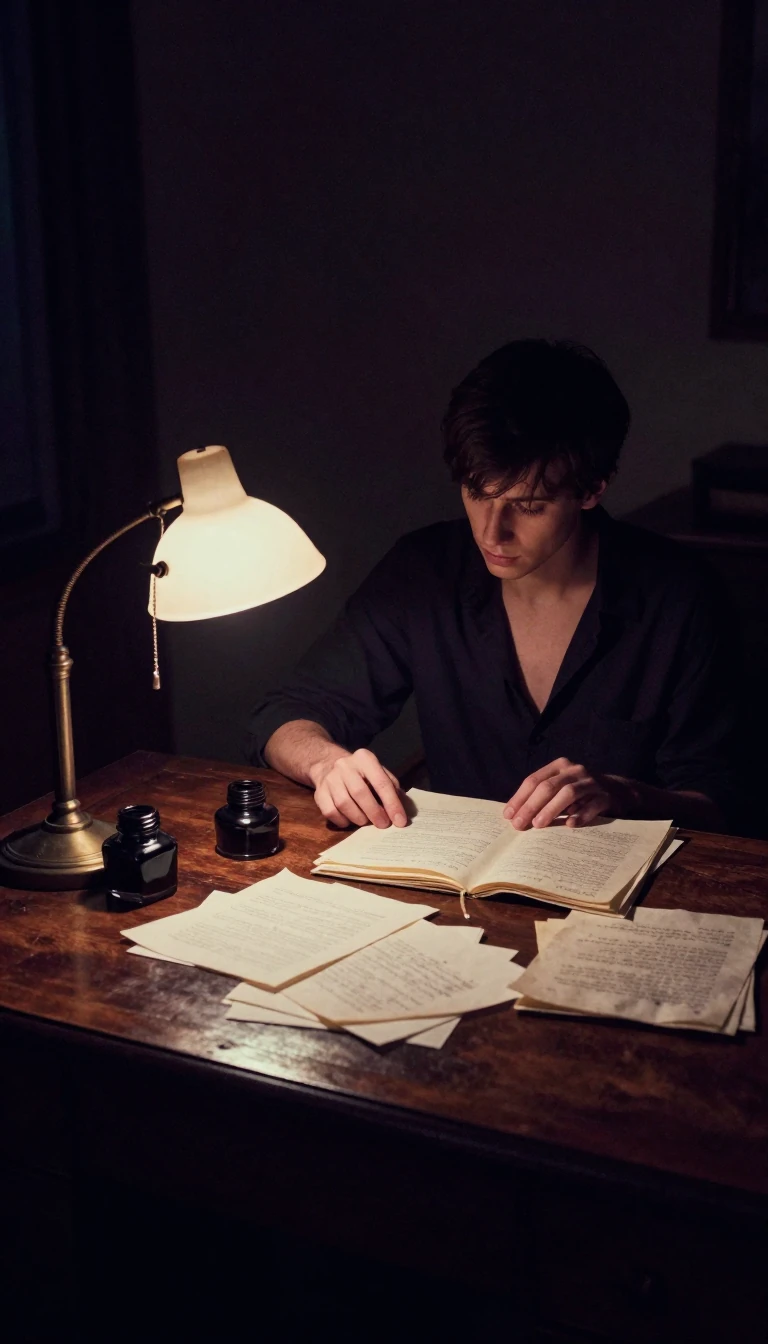
In short: In The Castle, a man known only as K. arrives in a village, claiming to be a land surveyor. He spends his remaining days fruitlessly attempting to contact the mysterious, bureaucratic authorities residing in a nearby castle. It is a surreal, dark masterpiece that ends mid-sentence, leaving its true meaning forever debated.
Franz Kafka began writing The Castle on 27 January 1922, shortly after arriving at the mountain resort of Spindlermühle. He died before completing the work, and his friend Max Brod, despite being instructed to destroy Kafka's unpublished manuscripts, oversaw its posthumous publication in 1926. The novel depicts a protagonist, K., who finds himself trapped in a village governed by an opaque, seemingly arbitrary bureaucracy. K. attempts to gain access to the castle authorities, but he is met with confusion, contradictory explanations from villagers, and a system that appears both all-powerful and fundamentally flawed.
The interpretation of the novel has been a subject of intense scholarly disagreement for nearly a century. Early translations by Willa and Edwin Muir, first published in 1930, were heavily influenced by Brod’s view that the work held deep religious and spiritual significance. Critics have pointed to the use of specific, mystical-sounding vocabulary in the Muir translations as evidence of this bias. Conversely, other readers view the book as a critique of the political climate of the era, citing the anti-Semitic atmosphere and the remnants of the Habsburg monarchy as key influences. Some contemporary critics, such as William Burrows, argue that focusing solely on bureaucracy is reductive, suggesting the novel is more accurately a study of human solitude and the desperate desire for companionship.
The text itself has undergone significant transformation. Max Brod heavily edited the original manuscript to gain public acceptance, a decision that has been the center of debate for decades. It was not until 1982 that a team of scholars, including Malcolm Pasley, published a critical edition through S. Fischer Verlag that restored Kafka’s original German text, including his unique punctuation. This edition revealed that the castle does not even resemble a traditional fortress, but rather a crowded, town-like complex of buildings. As the novel ends mid-sentence, Kafka’s true intent remains a mystery, though he once told Brod that the story was meant to conclude with K. dying in the village, only to be told on his deathbed that his claim to live there was invalid.
Opens the Intellect+ feed with this card first. Swipe up for the next one.
Sources
- Summary by Intellect · source: The Castle (novel)
To cite this card, link to https://intellectplus.co.uk/app/art-the-castle-novel.
How we source, check and correct cards: Editorial standards.
General information, not professional advice. Spotted an error? Flag the card or see corrections and complaints.
Intellect Plus is a visual educational discovery platform for exploring fascinating facts and ideas. Brain Food, Not Brain Rot. What is Intellect Plus?
Related
More in Literature · More in Art · Latest · A–Z · All topics
